

Real-time PCR for gene expression analysis is commonly used to quantify gene-specific RNA transcripts expressed by cells or viruses. However, gene expression analysis presents unique challenges, as experimental results often do not follow predictable patterns, and reliable positive controls are not always available. Additionally, reverse transcription can be affected by inhibitors and performance inconsistencies, making accurate quantification difficult. Predictions based on protein data are often unreliable, and the widely accepted two-fold quantitative discrimination objective requires a high level of precision. Among these challenges, assay specificity is perhaps the most critical and complex factor in ensuring reliable gene expression analysis. Fortunately, readily available solutions exist to address these challenges across various species.
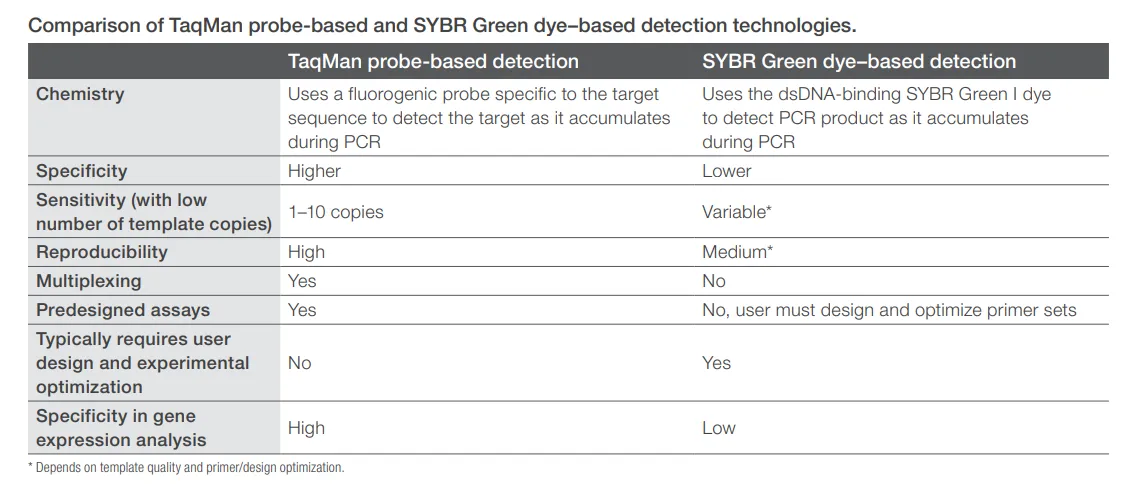
One of the key challenges in gene expression analysis is assay specificity, which refers to an assay’s ability to capture signal exclusively from the target sequence while excluding any contributions from non-target sequences. In an ideal scenario, an assay would have 100% specificity, ensuring no interference from unrelated sequences. However, in practice, completely eliminating non-target signals can be difficult. The acceptable level of non-target signal varies depending on the application. For example, in general gene expression studies, a 1% non-target contribution may be tolerable, as it would not significantly affect the final results. However, in critical research applications such as pathogen detection or cancer diagnostics, even minimal non-target signals can compromise the accuracy of findings.
To achieve high specificity in gene expression assays, it is essential to carefully select or design assays that:
Ensuring specificity is fundamental for optimal assay performance, enabling researchers to obtain accurate, reliable, and biologically meaningful gene expression data.