

Advancing Cancer Treatment Through Innovative ADC Manufacturing
Lakshmi, Editorial Team, Pharma Focus America
Antibody-drug conjugates (ADCs) are reshaping oncology by combining the targeting capabilities of monoclonal antibodies with the potency of cytotoxic agents. However, their therapeutic potential depends heavily on sophisticated manufacturing capabilities. From precision conjugation and advanced analytical technologies to containment, scalability, and quality assurance, innovative manufacturing is becoming a strategic priority. This article explores how pharmaceutical leaders can strengthen ADC production to accelerate innovation, improve consistency, and support the next generation of cancer therapies.
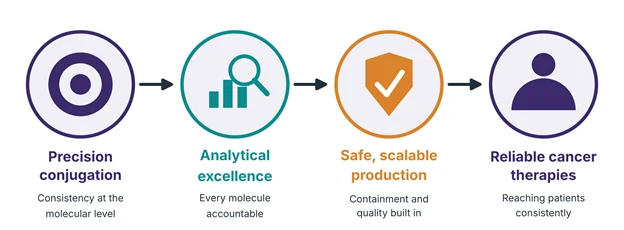
Figure 1: From precise conjugation to reliable cancer therapies
Transforming Cancer Care Through Precision-Engineered Therapeutics
Cancer treatment is entering an increasingly sophisticated era in which therapeutic precision, molecular understanding, and advanced drug delivery technologies are redefining the possibilities of oncology. Among the most promising developments are antibody-drug conjugates (ADCs), a specialized class of biopharmaceuticals designed to deliver potent therapeutic agents directly to cancer cells through targeted molecular recognition.
ADCs combine three essential components: a monoclonal antibody that recognizes a particular tumor-associated antigen, a chemical linker that connects the antibody to its therapeutic payload, and a highly potent cytotoxic agent intended to damage or destroy cancer cells. Their design aims to improve the delivery of powerful medicines while reducing unnecessary exposure to healthy tissues. Nevertheless, their clinical performance depends on considerably more than molecular design. Manufacturing precision, product consistency, and the stability of the complete molecular structure are equally important.
For pharmaceutical executives, ADC manufacturing represents both a scientific opportunity and an operational challenge. Unlike conventional biologics, these complex molecules bring together biological production and specialized chemical processing. Every stage, from antibody development to payload conjugation and final formulation, requires carefully integrated controls.
As oncology pipelines become increasingly sophisticated, pharmaceutical manufacturers must reconsider traditional production strategies. Investing in advanced manufacturing technologies, analytical capabilities, and integrated quality systems will be essential to translating ADC innovation into reliable, commercially viable therapies.
Beyond Conventional Biologics: Why ADC Manufacturing Demands a New Approach
ADC manufacturing occupies a distinctive position between biologics production and highly potent pharmaceutical manufacturing. The antibody component is typically produced through established biological processes, while the linker and cytotoxic payload require specialized chemical synthesis. These components must subsequently be combined without compromising their individual properties or the integrity of the resulting conjugate.
This combination creates several interconnected manufacturing challenges.
The first is molecular heterogeneity. Conventional antibody production already requires control over attributes such as aggregation, charge variants, and post-translational modifications. ADC production introduces additional variables, particularly drug-to-antibody ratio (DAR), conjugation-site distribution, and the presence of unconjugated antibody or free payload.
DAR describes the average number of drug molecules attached to an antibody. Variations in this ratio can influence molecular characteristics, stability, pharmacokinetics, and biological activity. Consequently, manufacturers must establish suitable process conditions and analytical controls to maintain an acceptable product profile.
The second challenge is process compatibility. Antibodies are sensitive biological molecules, whereas cytotoxic payloads may require organic solvents and specialized handling conditions. Manufacturing teams must identify process conditions that support efficient conjugation without causing protein degradation, aggregation, or unwanted chemical modifications.
For senior leadership, the implication is clear: ADC production cannot be treated as a simple extension of conventional monoclonal antibody manufacturing. It requires a purpose-built operating model that integrates biologics expertise, chemical engineering, occupational safety, and advanced quality management.
Precision Conjugation: Engineering Consistency at the Molecular Level
Conjugation is one of the most critical stages in ADC manufacturing because it determines how the therapeutic payload becomes attached to the antibody.
Traditional conjugation approaches commonly use naturally occurring amino acid residues, including cysteine and lysine. Although these methods are established, they can produce heterogeneous populations of ADC molecules with different drug-loading levels and attachment locations.
Emerging site-specific conjugation technologies offer opportunities to improve molecular consistency. By directing attachment toward predetermined locations, manufacturers can potentially achieve more controlled product distributions and improve the reproducibility of the resulting therapeutic.
These approaches include engineered amino acid incorporation, enzymatic conjugation, and other selective chemical strategies. Each has different requirements relating to process complexity, production yield, analytical characterization, and commercial scalability.
However, site-specific conjugation should not automatically be considered superior in every development program. The appropriate technology depends on the antibody structure, payload characteristics, intended therapeutic profile, and manufacturing economics.
Executives should therefore encourage early collaboration between research, process development, analytical development, and manufacturing teams. Selecting conjugation technology solely on laboratory performance may create difficulties when transitioning to larger production volumes.
A commercially successful process must demonstrate reproducibility, controllable critical quality attributes, manageable operating costs, and compatibility with the intended regulatory strategy.
Containment and Workforce Safety: Protecting People While Scaling Innovation
Digital transformation offers pharmaceutical manufacturers an opportunity to improve process visibility and reduce operational uncertainty.
ADC production involves multiple interconnected operations, including antibody preparation, linker-payload handling, conjugation, purification, concentration, formulation, and filling. Variations introduced at one stage can influence downstream product characteristics.
Integrating manufacturing execution systems, process analytical technologies, electronic batch records, and advanced process monitoring can provide a more comprehensive understanding of production performance.
Real-time monitoring is particularly valuable when evaluating parameters such as temperature, pH, mixing conditions, and process duration. These variables can influence conjugation efficiency, protein stability, and product consistency.
Artificial intelligence and machine learning may further support process development by identifying relationships between manufacturing conditions and critical quality attributes. Predictive models can help scientists investigate process variability, prioritize experiments, and identify potential deviations before they become significant production problems.
However, digitalization must be implemented within an appropriate quality framework. Data integrity, system validation, cybersecurity, access controls, and auditability remain essential.
For C-suite leaders, the objective should not be to introduce technology simply to demonstrate digital maturity. It should be to build an interconnected manufacturing environment in which reliable data supports faster decisions, stronger process control, and more predictable production outcomes.
Containment and Workforce Safety: Protecting People While Scaling Innovation
ADC manufacturing introduces significant occupational safety considerations because many payloads are highly potent cytotoxic substances.
Exposure risks can arise during material receipt, dispensing, equipment charging, processing, sampling, cleaning, maintenance, and waste handling. Consequently, containment must be integrated into facility design and operating procedures from the beginning.
Appropriate engineering controls may include closed processing systems, isolators, contained transfer technologies, specialized ventilation, and validated cleaning procedures. The specific controls should be determined through documented occupational exposure assessments and process-specific risk evaluations.
Facility segregation and carefully designed material flows can also reduce the possibility of cross-contamination between products and manufacturing areas.
Workforce training is equally important. Employees must understand the hazards associated with potent compounds, the correct use of protective equipment, emergency procedures, and the requirements for handling contaminated materials.
As production expands, maintaining consistent safety standards becomes increasingly important. A manufacturing strategy that prioritizes throughput without adequate containment can introduce significant operational, regulatory, and reputational risks.
Pharmaceutical leadership should therefore consider occupational safety a core component of manufacturing excellence rather than a supporting compliance function.
Analytical Excellence: Making Every Molecule Accountable
ADC complexity demands analytical strategies that go beyond conventional biologics testing.
Manufacturers must understand the identity, purity, potency, stability, and structural characteristics of the complete conjugate. They must also evaluate the antibody, linker-payload, unconjugated antibody, and free cytotoxic payload.
Several analytical technologies contribute to this assessment. Liquid chromatography, mass spectrometry, hydrophobic interaction chromatography, capillary electrophoresis, and specialized immunoassays can provide complementary information about molecular composition and product quality.
Drug-to-antibody ratio distribution is particularly important because an average DAR value alone may not fully describe the heterogeneity of a product. A comprehensive analytical approach should also consider the distribution of individual drug-loading species and the location of conjugation where relevant.
Stability testing is another essential element. Manufacturers must evaluate whether the linker remains sufficiently stable during storage and circulation while supporting appropriate payload release under intended biological conditions.
Advanced analytical platforms can help identify subtle changes that conventional methods may overlook. Nevertheless, introducing sophisticated instrumentation is not enough. Methods must be appropriately qualified or validated, scientifically justified, and suitable for their intended use.
For executives, analytical development deserves strategic investment because it directly supports development decisions, process optimization, regulatory submissions, and commercial batch release.
Scaling Without Compromising Quality: The Commercial Manufacturing Challenge
Transitioning an ADC from development to commercial manufacturing is a major operational milestone.
Laboratory processes may demonstrate promising conjugation efficiency and product characteristics, but larger manufacturing environments introduce additional variables. Mixing behavior, heat transfer, equipment configuration, material handling, filtration performance, and process hold times can influence product quality.
Scale-up should therefore be approached as a scientific exercise rather than a simple increase in batch size.
Manufacturers need to understand the relationship between process parameters and critical quality attributes. A quality-by-design framework can help identify critical process parameters, assess risks, and establish an appropriate control strategy.
Technology transfer also requires close coordination between development scientists, engineering teams, quality professionals, and manufacturing personnel. Inadequate documentation or incomplete process understanding can create delays and inconsistencies.
Capacity planning presents another strategic consideration. ADC facilities require specialized infrastructure, potent-compound containment, qualified personnel, and appropriate analytical capabilities. These requirements can make expansion more complex than conventional biologics production.
Executives should evaluate manufacturing capacity against development pipelines, anticipated demand, facility utilization, supply continuity, and capital investment requirements.
Flexible production strategies may offer advantages when managing multiple ADC programs, but flexibility must never undermine segregation, cleaning effectiveness, or product quality.
Regulatory Readiness: Building Quality Into Every Manufacturing Decision
Regulatory expectations are an integral part of ADC development and commercialization.
Because ADCs combine biologic and small-molecule components, their development programs require comprehensive chemistry, manufacturing, and controls strategies. Manufacturers must demonstrate control over the identity and quality of starting materials, intermediate products, drug substance, and finished drug product.
The U.S. Food and Drug Administration's March 2024 guidance on clinical pharmacology considerations for ADCs provides recommendations covering bioanalytical methods, exposure-response assessments, immunogenicity, drug interactions, and other development considerations. It reinforces the importance of understanding the behavior of the complete therapeutic system rather than evaluating its components independently.
Manufacturers should also establish scientifically justified specifications, validated analytical procedures, appropriate stability programs, and robust documentation practices.
Change management is particularly important. Modifications to conjugation chemistry, manufacturing equipment, raw materials, or production sites may affect product characteristics. Such changes require appropriate comparability assessments and regulatory evaluation.
A proactive regulatory strategy can reduce avoidable development uncertainty. Rather than treating regulatory compliance as a final-stage activity, pharmaceutical organizations should integrate regulatory considerations into process design and manufacturing decisions from the earliest development stages.
An Illustrative Case Study: Turning Manufacturing Variability Into Operational Strength
Consider a hypothetical U.S.-based oncology manufacturer developing an ADC for a solid-tumor indication.
During early process development, the organization identifies variability in drug-loading distribution between manufacturing batches. Although the antibody intermediate meets its established quality requirements, differences in conjugation performance create inconsistencies in the final product profile.
The issue becomes a cross-functional priority because the development team recognizes that reproducibility will be essential for clinical progression and eventual commercial manufacturing.
The organization responds through a coordinated improvement program.
First, analytical scientists strengthen characterization of DAR distribution, free payload, aggregation, and conjugation-related impurities. Second, process engineers investigate the relationship between material attributes and conjugation conditions. Third, manufacturing specialists evaluate equipment suitability, mixing consistency, and process monitoring requirements.
The company also introduces more structured process documentation and integrates risk assessment into development decisions.
Rather than relying on individual process adjustments, the team establishes a science-based control strategy connecting material characteristics, manufacturing parameters, and product quality.
The outcome is a more clearly understood manufacturing process with improved oversight of potential variability and a stronger foundation for future scale-up.
This example is illustrative, not a report of an actual commercial manufacturing result. Its central lesson is relevant across ADC development: manufacturing challenges are best addressed through integrated scientific investigation rather than isolated operational interventions.
The C-Suite Imperative: Investing in the Future of ADC Manufacturing
For pharmaceutical executives, ADC manufacturing requires a long-term investment strategy that connects innovation with commercial execution.
Several priorities deserve leadership attention.
First, strengthen integrated capabilities. Antibody production, payload chemistry, conjugation, purification, and analytical development should operate within a coordinated development framework.
Second, invest in specialized infrastructure. Facilities must be designed to accommodate potent compounds, appropriate containment, reliable material flows, and future production requirements.
Third, prioritize workforce expertise. ADC manufacturing depends on multidisciplinary talent across biologics, chemistry, engineering, analytical sciences, occupational safety, and quality assurance.
Fourth, advance digital and analytical capabilities. Reliable process data and sophisticated characterization can strengthen decision-making throughout the manufacturing lifecycle.
Finally, establish resilient supply strategies. Critical raw materials, specialized payload intermediates, qualified suppliers, and manufacturing capacity should be evaluated as interconnected elements of business continuity.
These investments should be assessed not only through immediate production costs but also through their influence on development timelines, operational resilience, quality performance, and long-term commercial readiness.
Conclusion: Engineering the Next Generation of Precision Oncology
Antibody-drug conjugates represent an important advancement in targeted cancer treatment, but their continued development depends on manufacturing systems capable of delivering consistent, high-quality products.
The complexity of ADC production requires a fundamental integration of biological science, chemical engineering, advanced analytics, digital technologies, and rigorous quality management. Precision conjugation, effective containment, scalable processing, and comprehensive characterization are no longer isolated technical considerations. Together, they form the foundation of successful ADC manufacturing.
For American pharmaceutical leaders, the opportunity extends beyond developing innovative cancer medicines. It involves building manufacturing capabilities that can translate scientific breakthroughs into dependable therapies while maintaining operational efficiency, workforce safety, and regulatory confidence.
The organizations that approach ADC manufacturing as a strategic enterprise capability will be better positioned to navigate the challenges of increasingly complex oncology pipelines. Ultimately, manufacturing innovation is not simply about producing more sophisticated molecules. It is about ensuring that scientific progress can reach patients through therapies manufactured with consistency, reliability, and uncompromising quality.

Lakshmi is a science writer with a foundation in the laboratory. She earned her master's in biotechnology and trained through research internships at ICGEB (JNU) and DIPAS, DRDO, with her work appearing in the Egyptian Journal of Veterinary Sciences. Now APCRM-certified and part of the editorial team at Pharma Focus America and Pharma Focus Europe, she reports on pharmaceutical technology, research, and innovation — giving complex science a clear and confident voice for industry leaders.