


Advancing Personalized Medicine Through Genomic Innovation
Lakshmi, Editorial Team, Pharma Focus America
Personalized medicine has moved from promise to mainstream practice, and genomic innovation is the engine behind that shift. This article examines how collapsing sequencing costs, genetically validated targets and biomarker-driven trials are reshaping pharmaceutical R&D economics in the United States. Through a landmark gene-editing approval, it shows what genomic medicine demands from pharma leadership and sets out the strategic choices that will separate category leaders from followers.
Why Personalized Medicine Now Belongs on the Pharma Boardroom Agenda
For most of the twentieth century, pharmaceutical development followed a population logic. Medicines were designed for the average patient, tested in broad populations and prescribed through a process that often amounted to informed trial and error. Some patients responded well, others experienced little benefit and a minority suffered harm, with limited ability to predict which group any individual would fall into.
Genomic innovation is dismantling that model. The ability to read, interpret and increasingly edit the human genome, which contains roughly three billion base pairs, allows drug developers to connect disease to its molecular root cause and to match therapies to the patients most likely to benefit. What began as a scientific aspiration when the Human Genome Project was completed in 2003 has become a commercial and clinical reality.
The numbers confirm the shift. In 2025, the US Food and Drug Administration approved 16 new personalized medicines, representing approximately 36% of all newly approved therapeutic molecular entities. Fifteen years earlier, personalized medicines accounted for less than 10% of new approvals. In 2025, they made up more than a third of new approvals for the sixth consecutive year.
For American pharma leaders, personalized medicine is therefore no longer a niche strategy pursued by specialist oncology teams. It is becoming the default architecture of innovation. This article explores the forces driving that transition, the evidence that genomics improves R&D productivity, a case study in genomic medicine at its most ambitious and the leadership priorities that will determine who captures the value.
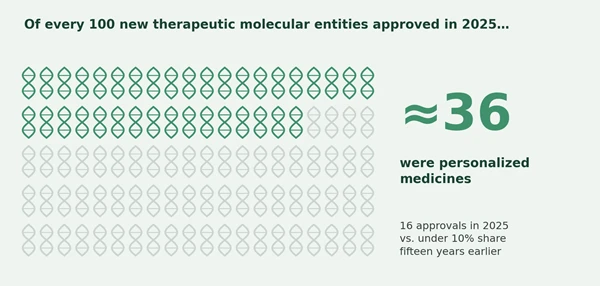
Figure 1: Pictograph – personalized medicines as a share of new US therapeutic approvals in 2025.
Source: annual analysis of FDA approvals, 2025.
From $100 Million to Under $1,000: The Genomic Cost Collapse Reshaping Pharma Strategy
Few technologies in history have fallen in cost as dramatically as DNA sequencing. Data tracked by the US National Human Genome Research Institute show that sequencing a human genome cost roughly $100 million in 2001. By 2019, the cost had fallen below $1,000, a decline of around five orders of magnitude in less than two decades.
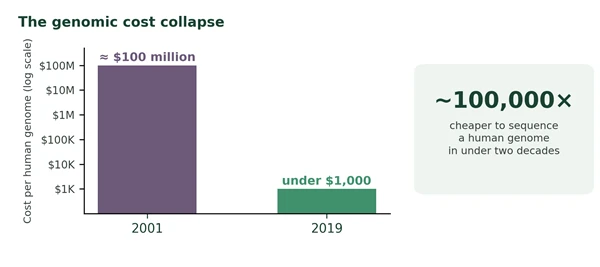
Figure 2: The cost of sequencing a human genome, 2001 versus 2019 (logarithmic scale).
Source: US National Human Genome Research Institute sequencing cost data.
This collapse has changed what is economically possible across the pharmaceutical value chain. Large-scale population genomics, once confined to government-funded consortia, is now accessible to sponsors seeking to validate targets. Tumor sequencing has become routine in many oncology settings, enabling therapies to be matched to specific mutations rather than to the organ in which a cancer arises. Genomic data can increasingly be linked with electronic health records, imaging and real-world outcomes to build a far richer picture of disease biology.
The same forces are also changing the patient journey. As sequencing moves closer to routine clinical use, more patients arrive at diagnosis with molecular information already in hand, and physicians increasingly expect therapies to come with clear guidance on which genetic profiles respond. That expectation raises the bar for every new launch, because a medicine without a defined responder population may struggle to compete against one that has it.
The strategic implication for pharma executives is significant. When the cost of generating genomic insight falls this sharply, the competitive advantage shifts away from simply having data and towards the ability to interpret it, integrate it with clinical evidence and act on it faster than competitors. Genomic capability is becoming a core competence of the modern pharmaceutical enterprise rather than a service purchased from outside.
Genomics as a Probability Engine: How Personalized Medicine De-Risks Pharma R&D
The most compelling business case for genomic innovation lies in its effect on clinical attrition, the single largest driver of R&D cost. An analysis of development programmes that entered clinical trials between 2011 and 2020 found that the overall likelihood of approval from Phase I was 7.9%. Programmes that used biomarkers to preselect patients achieved a likelihood of approval of 15.9%, roughly twice the overall average, driven largely by a Phase II success rate of nearly one in two.
Genetic evidence strengthens the picture further. A peer-reviewed study published in 2024 estimated that drug mechanisms supported by human genetic evidence have a probability of success 2.6 times greater than those without such support. The effect was not uniform across therapy areas, and it grew stronger as confidence in the causal gene increased.
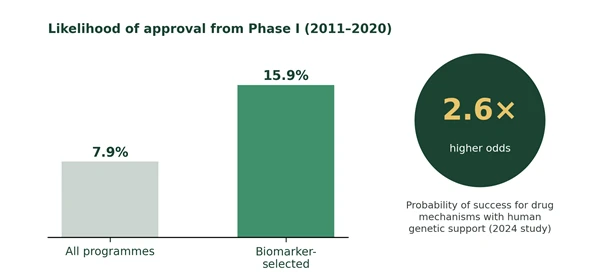
Figure 3: How genomic and biomarker evidence shifts the odds of clinical success.
Sources: analysis of clinical programmes, 2011–2020; peer-reviewed genetic evidence study, 2024.
For boards and investment committees, these figures reframe genomics from a scientific nicety into a portfolio management tool. Selecting targets with human genetic validation raises the quality of the pipeline at its entrance. Enriching trials with biomarker-defined patients sharpens the signal in the mid-stage studies where most programmes fail. Together, these practices do not eliminate risk, but they concentrate capital on the programmes with the strongest biological rationale, which is precisely what shareholders and patients expect of pharmaceutical R&D leadership.
The Personalized Medicine Value Chain: Where Genomic Insight Creates Pharma Advantage
Genomic innovation creates value at every stage of the pharmaceutical life cycle, not only in discovery. Leading organisations treat these stages as a connected system in which insight generated at one point strengthens decisions at the next.
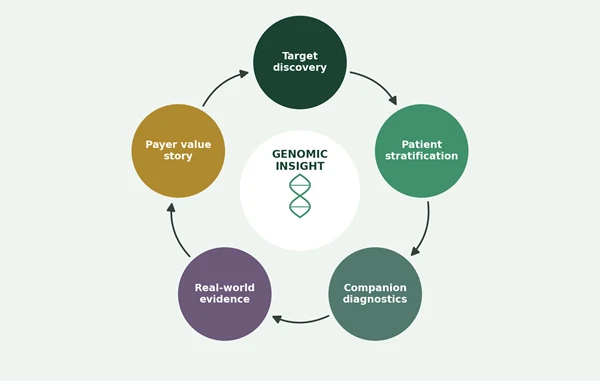
Figure 4: The genomic value cycle across the pharmaceutical life cycle.
The cycle begins with target discovery, where population genetics and functional genomics identify the genes and pathways causally linked to disease. It continues into patient stratification, where biomarkers define the populations most likely to respond. Companion diagnostics then translate that stratification into clinical practice, ensuring that the right patients are identified at the point of care. In development and post-launch, real-world genomic and clinical data refine understanding of who benefits most. Finally, that evidence strengthens the value story presented to payers, which in turn funds the next wave of discovery.
The companion diagnostic deserves particular attention from commercial leaders. A targeted therapy is only as successful as the testing infrastructure that finds its patients. Where testing rates are low, eligible patients go untreated and forecasts go unmet. Pharma organisations that co-develop diagnostics early, invest in laboratory and physician education and work to reduce turnaround times are building a durable commercial moat, because the diagnostic pathway itself becomes part of the standard of care.
Case Study: Editing the Genome, Rewriting the Pharma Playbook in Sickle Cell Disease
Sickle cell disease is a group of inherited blood disorders affecting approximately 100,000 people in the United States. A single mutation in the gene for hemoglobin causes red blood cells to take on a rigid sickle shape, restricting blood flow and triggering painful vaso-occlusive crises that can lead to organ damage, disability and early death. For decades, treatment options were limited, and a curative approach remained out of reach for most patients.
In 2015, a gene-editing biotechnology company built on CRISPR-Cas9 technology formed a strategic collaboration with a Boston-based pharmaceutical company to develop genome-editing therapies. The partners pursued an ex vivo approach in which a patient’s own blood stem cells are collected, edited to increase production of fetal hemoglobin and then returned to the patient through a one-time infusion.
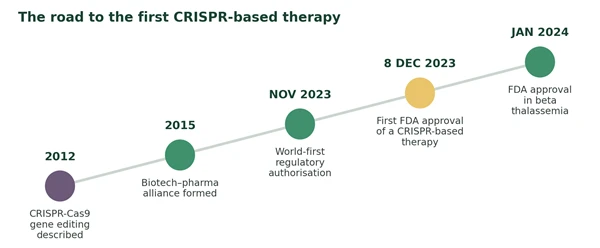
Figure 5: From gene-editing discovery to the first US approval of a CRISPR-based therapy.
On 8 December 2023, the FDA approved the resulting therapy for sickle cell disease in patients aged 12 and older with recurrent vaso-occlusive crises, making it the first FDA-approved treatment to use CRISPR genome-editing technology. The approval was based on an ongoing study in which 44 patients were treated. Of the 31 patients with sufficient follow-up, 29, or 93.5%, were free of severe vaso-occlusive crises for at least 12 consecutive months, and no patients experienced graft failure or rejection.
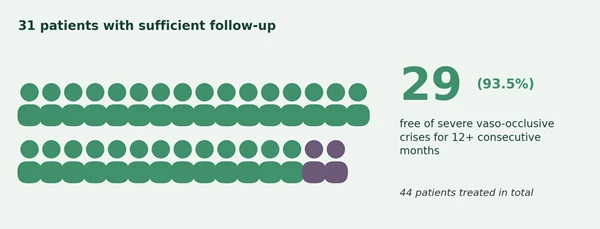
Figure 6: Pictograph – trial outcomes among patients with sufficient follow-up.
Source: FDA approval announcement, December 2023.
The lessons for pharma leadership are substantial. First, the programme showed that genomic insight can be translated into a therapy aimed at the root genetic cause of disease rather than its symptoms. Second, it required long-horizon partnership between platform science and development expertise, sustained across roughly eight years from alliance to US approval. Third, it demonstrated that approval is only the beginning. One-time, high-complexity therapies demand specialised treatment centres, rigorous long-term follow-up and new payment arrangements, including federal efforts to pilot outcomes-based access models for sickle cell gene therapies. Genomic medicine succeeds only when science, manufacturing, delivery and reimbursement are designed together.
Scaling Personalized Medicine in America: The Pharma Leadership Agenda
Translating genomic innovation into sustained commercial performance requires leadership choices that extend well beyond the laboratory. The first concerns data. Genomic insight is most powerful when linked to longitudinal clinical outcomes, yet such data sits across fragmented health systems, laboratories and registries. Pharma organisations that build trusted, privacy-preserving data partnerships, and that invest in the analytical talent to interpret them, will learn faster than those relying on episodic studies.
The second concerns equity and representation. Genomic reference datasets have historically overrepresented people of European ancestry, which can limit the accuracy of genetic insight for other populations. In a country as diverse as the United States, building representative datasets and diverse clinical trials is not only an ethical obligation but a scientific and commercial necessity, because therapies must work for the populations that will use them.
The third concerns value and access. Personalized medicines often serve smaller populations with greater benefit per patient, which challenges traditional pricing and reimbursement models. Outcomes-based agreements, installment payments and evidence-generation commitments are becoming important tools, and they require close alignment between medical, market access and finance leadership from early development onward.
The fourth concerns organisational design. Genomic medicine blurs the boundaries between therapeutics, diagnostics and data science. Companies that organise around patient populations and molecular pathways, rather than traditional functional silos, are better positioned to move quickly from genomic signal to clinical decision.
The fifth concerns regulatory strategy. Genomically defined therapies frequently target serious conditions with high unmet need, which can make them candidates for expedited FDA programmes such as breakthrough therapy designation and accelerated approval. Using these pathways well depends on early, candid dialogue with regulators about biomarker validation, companion diagnostic co-development and the post-approval evidence that will be required. Leadership teams that treat regulators as partners in defining the evidence package, rather than as a final checkpoint, tend to reach patients sooner and with fewer surprises.
Conclusion: Personalized Medicine Is Becoming Pharma’s New Operating Standard
Genomic innovation has changed the fundamental economics and ambitions of pharmaceutical development. The cost of reading a genome has fallen by several orders of magnitude, personalized medicines now make up more than a third of new US approvals and the evidence is clear that genetically supported, biomarker-guided programmes carry materially better odds of success. The first approval of a CRISPR-based therapy shows that medicine can now target disease at its genetic source.
Yet scientific capability alone will not determine the winners. The organisations that lead the next decade will be those that integrate genomics across the entire value chain, co-develop the diagnostics that find their patients, build representative and connected data assets and partner creatively with payers to make transformative therapies accessible.
For pharma leaders in the United States, the question is no longer whether personalized medicine will define the industry’s future. It is whether their organisations are designed to deliver it at scale, with the speed, rigour and responsibility that patients now expect.

Lakshmi is a science writer with a foundation in the laboratory. She earned her master's in biotechnology and trained through research internships at ICGEB (JNU) and DIPAS, DRDO, with her work appearing in the Egyptian Journal of Veterinary Sciences. Now APCRM-certified and part of the editorial team at Pharma Focus America and Pharma Focus Europe, she reports on pharmaceutical technology, research, and innovation — giving complex science a clear and confident voice for industry leaders.