


Bioprocessing & Bioproduction In-Depth Focus 2025
Kate Williamson, Editorial Team, Pharma Focus America
The bioprocessing and bioproduction sector of 2025 experiences fundamental changes through continuous processing and digitalization and sustainability and advanced therapeutic advancements. Advances in biotherapeutic demand have prompted the industry to incorporate smart technology together with regulatory development along with worker skill enhancement for building affordable patient-focused scalable manufacturing systems.
Introduction: A Defining Year for Biomanufacturing
The bioprocessing industry and bioproduction sector has been showing rapid transformation throughout the year 2025. Medical products based on biological substances along with cell and gene therapies and eco-friendly biomanufacturing approaches face unprecedented international market demand. This industrial expansion powers technological breakthroughs in biologic development while changing the entire discovery and manufacturing process.
The year 2025 will prove crucial by bringing together innovative disruptive methods with operational excellence strategies to meet biopharmaceutical industry requirements of cost reduction and rapid expansion and regulatory compliance demands.
The analysis looks at modern developments alongside novel technologies alongside regulatory knowledge and production trends of bioprocessing.
1. The Evolving Bioprocessing Landscape
From Batch to Continuous Bioprocessing
Continuous bioprocessing has reached a significant milestone in the year 2025. Leading biopharma businesses are now implementing continuous processing efforts because it enables them to improve efficiency alongside minimizing their production areas.
Key benefits include:
- Improved product consistency
- Reduced cycle times
- Lower capital and operating costs
- Real-time monitoring and control of critical parameters
The manufacturing sector of Sanofi, Amgen and Genentech shows how hybrid or complete continuous platforms deliver successful results during monoclonal antibody (mAb) production.
Upstream Innovations
The field of upstream processing advances through three major developments including advanced cell line development techniques as well as optimized media development and high-density perfusion systems. Although CHO cells serve as the main choice in biomanufacturing operations several alternative expression systems such as HEK293, Pichia pastoris, plant-based platforms are gaining market share.
Bioreactors that use perfusion mode and single-use platforms are becoming more popular because they enable elevated titers and lower the probability of contamination infections. The trend toward miniaturized bioreactor systems in 2025 accelerated the development of miniature scale-down procedures.
2. Downstream Advancements: Addressing the Bottleneck

The quality control sector encounters many facilities which face production delays because their downstream processes continue to exhibit bottlenecks. Chromatography resins and membrane filtration and continuous purification methods actively solve the current processing challenges.
Key 2025 trends include:
- Chromatography resins that have multimodal capabilities enable selective adsorption of multiple types of impurities.
- Automated continuous chromatography platforms called SMBC and PCC operate as a system to lower buffer utilization and enhance workflow velocity.
- The purification of viral vectors and mRNA benefits strongly from Membrane chromatography during polishing operations.
Business success depends on template-agnostic systems because of increasing biologic variations ranging from mAbs to antibody-drug conjugates and fusion proteins and bispecifics.
3. Cell and Gene Therapies: Bioproduction under Pressure
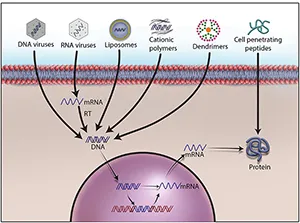
The high market performance of medicines like Zolgensma and CAR-T treatments currently puts massive pressure on manufacturing operations. Advanced therapeutic products necessitate sophisticated personalized production procedures which receive substantial manufacturing scale-out financing during this current year.
Viral Vector Production
Researchers consider Adeno-associated virus (AAV) along with lentiviral vectors as the definitive choice for delivering gene therapy. Manufacturing issues including low output volumes and expensive dosage costs and difficult purification procedures still exist.
Leading-edge solutions include:
- Stable producer cell lines enable manufacturing independence from transient transfection systems.
- The production infrastructure makes a transition to suspension-based systems in order to improve scalability.
- High-resolution chromatography and mass spectrometry enable advanced vector characterization analytics along with vector characterization.
CAR-T and Allogeneic Cell Therapies
Off-the-shelf allogeneic cell therapies require new manufacturing approaches because of their shift from autologous production methods. Designers are developing bioproduction platforms for the following functionalities:
- Large-scale T-cell expansion using bioreactors.
- Closed-system processing for sterility.
- Predictive analytics driven by artificial intelligence provides insights into donor variability data.
4. Digital Transformation and Smart Biomanufacturing
Various biomanufacturing facilities have completed their installation of digitalization as a standard practice by the year 2025. Manufacturers use Industrial Revolution 4.0 combined with IoT and AI technology together with machine learning to establish quicker smarter more resilient business operations.
PAT and Real-Time Release (RTR)
Online management and regulation systems function through Process Analytical Technology (PAT) tools. These include:
- Raman and NIR spectroscopy
- Dielectric spectroscopy
- Advanced chemometric models
The implementation of Real-Time Release (RTR) for select products enables fast batch release procedures thus creating responsive supply chain networks.
Digital Twins and Predictive Analytics
Digital twins consisting of virtual process replicates enable users to simulate operation while optimizing performance outcomes and prediction forecasting. These systems can provide the following functionality when they are integrated with machine learning approaches.
- Proactive deviation detection
- Dynamic process control
- Accelerated tech transfer
Organizations deploy complete digital systems which integrate information from lab operations with MES (Manufacturing Execution Systems) and ERP systems to support better choices and team harmony throughout manufacturing operations.
5. Sustainability in Biomanufacturing
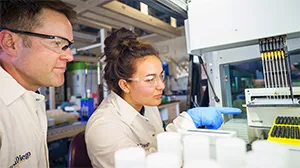
ESG (Environmental Social Governance) priorities continue to rise in popularity so sustainable bioproduction has become mandatory. Modern business compliance standards coupled with investor pressure compel companies to decrease their operational carbon emissions and water consumption as well as plastic waste generation.
With ESG (Environmental, Social, and Governance) priorities gaining momentum, sustainable bioproduction is no longer optional. Regulatory bodies and investors are driving companies to reduce their carbon footprints, water usage, and plastic waste.
Green Bioprocessing Strategies in 2025
- Engineering specialists have developed single-use technology equipment that includes recyclable or biodegradable components.
- Facilities now use modular low-energy structures alongside renewable energy systems for their design.
- Waste reduction in production processes starts from making standard the utilization of CIP systems via water saving design and solvent recollection methods.
- Companies now publish their decarbonization measurements next to their quality indicators within their official annual reports.
Synthetic biology together with cell-free systems enables sustainable complex molecule production by replacing the requirement of organic living cells.
6. Regulatory and Compliance Trends
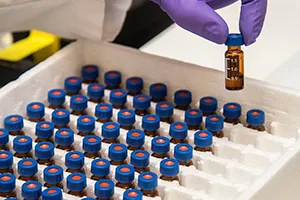
In 2025 the regulatory environment will follow a data-based and collaborative system of regulation. The FDA together with EMA and PMDA focus their attention on:
- Lifecycle management
- Digital validation
- Real-time quality monitoring
Regulatory Highlights
- ICH Q13 guidelines for continuous manufacturing are being adopted globally.
- Annex 1 (EU GMP) implementation is driving stricter contamination control strategies.
- FDA’s CSA (Computer Software Assurance) guidance is supporting faster validation of digital tools.
Major pharmaceutical companies obtain accelerated worldwide market access through harmonization initiatives which maintain their regulatory compliance standards.
7. Talent and Training in Bioproduction
Advanced bioproduction technologies have developed so rapidly that it created a fundamental deficit of qualified personnel. Business organizations face difficulties in locating qualified personnel who possess data science expertise together with biological knowledge.
To bridge the gap:
- Different training initiatives that integrate bioinformatics and AI with automation operations are now actively used to enhance workforce skills.
- Universities have started implementing combination programs which merge information technology tools with training in bioprocess engineering systems.
- Biopharmaceutical companies establish joint training programs that combine resources from CDMOs manufacturing facilities and startup development teams with equipment providers.
Workforce resilience establishes itself as a fundamental element for operational resilience in present-day business operations.
8. CDMOs and Strategic Partnerships

Bioproduction strategy keeps outsourcing as its fundamental component due to its crucial importance. Contract Development and Manufacturing Organizations (CDMOs) now operate as innovation access points which provide flexible technologically advanced manufacturing solutions to biopharma clients.
In 2025, CDMOs are:
- The construction of modular buildings will enable CDMOs to accommodate various product pipelines.
- A company delivers complete services which range from cell line creation through commercial manufacturing.
- The company uses its expertise to work alongside customers in technology scouting operations and digital transformation projects.
The successful development of time-sensitive medicine products like oncology therapeutics needs large pharmaceutical companies to extend their operations through joint ventures with specialized Contract Development and Manufacturing Organizations.
9. Future Directions: What Lies Ahead
Various substantial trends will drive the next ten years of bioproduction after we pass 2025.
- Hyper-personalization: Real-time manufacturing of patient-specific therapies
- AI-designed biologics: Accelerating drug discovery and manufacturability assessment
- Cell-free biomanufacturing: Portable, on-demand systems for remote locations
- Decentralized production: Microfactories near point-of-care for critical biologics
- Biologics 2.0: New modalities like RNA-editing therapeutics, exosomes, and synthetic cells
Biomanufacturing will enter its next decade because biology unites with data and engineering practices.
Conclusion
The upcoming year of 2025 brings vital changes to bioprocessing along with bioproduction operations. The industry is shifting into smart sustainable continuous operations based on innovation digitalization and patient-centered orientation.
Stakeholders need to adopt strategy combinations that link biology to technological advancements and establish flexible scales together with quality and sustainable principles. The industry will need to move beyond focusing on biologics costs and compliance because increased complexity requires higher patient expectations that lead to a necessity for improved resilience adaptation and readiness for the future.
The emphasis in bioproduction for 2025 has evolved from sheer productivity increase toward intelligent operation and accelerated production with environmental stewardship at its core.

Kate, Editorial Team at Pharma Focus America, leverages her extensive background in pharmaceutical communication to craft insightful and accessible content. With a passion for translating complex pharmaceutical concepts, Kate contributes to the team's mission of delivering up-to-date and impactful information to the global Pharmaceutical community.