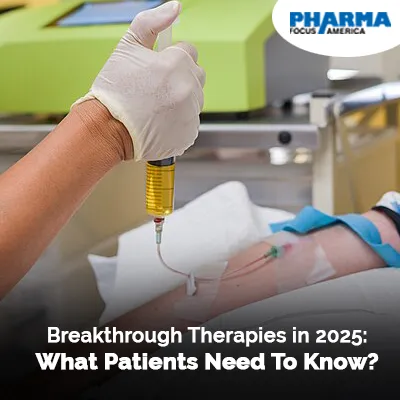
Breakthrough Therapies in 2025: What Patients Need To Know?
Kate Williamson, Editorial Team, Pharma Focus America
The ‘magical year’ for medicine could be 2025, when treatment for cancer will become immunological, gene treatment will eliminate inherited diseases, and people will know their own bodies better than their enemies thanks to artificial intelligence program. Concerning the latter we see innovations that are supposed to cure diseases that are chronic, increase accessibility and give hope in cases where cure is scarcely possible. Patients need to read, discuss options with doctors, and consider clinical trials in order to take advantage of this revolutionized form of healthcare.
Introduction:
Healthcare sector is rapidly changing and 2025 can be considered as the year of revolutionary therapies discovering. As technology improves, awareness of human physiology rises, and more international cooperation occurs, we are in the anticipation of a new period of medicine and promising turnaround. For anyone who ever thought about how chronic diseases, genetic disorders, or commonplace health issues will be treated in the future, this is the time to listen. Okay, let me enlighten you with what lies ahead and why that should concern you.
What are Breakthrough Therapies?
Approaches to Personalized Medicine: Breakthrough therapies are new and distinct treatments defined to treat grievous or life threatening diseases. They employ innovative advances in technologies like gene editing, an AI-driven drugs finding, or the notion of personalized medicine to deliver outcomes that before were hard to endorse. What one can call a “breakthrough” in therapy is not that therapy a new concept but that the treatment provides highly enhanced results for patients in contradiction to formerly known treatment procedures.
According to the forecast of experts, in 2025, the key directions in the field of medicine will remain oncology, genetic diseases, and such chronic diseases as diabetes and Alzheimer’s disease.
Top Breakthrough Therapies Expected in 2025
1. Gene Therapy Revolution
Hereditary disorders have been treated or cured by changing or correcting improper genes in the human body. By 2025, advancements in this field are set to provide groundbreaking treatments for conditions like:
- Sickle Cell Disease: CRISPR system is allowing genetic modification of mutated genes causing sickle cell anemia; millions can be cured.
- Inherited Retinal Disorders: Gene treatment is now helping its first patients – sufferers of rare hereditary eye diseases – to see again and improve their lives dramatically.
2. Cancer Immunotherapy 2.0
Currently cancer immunotherapy has been in the limelight for harnessing immune system to fight tumors. The next generation of these therapies includes:
- CAR-T Cell Therapies: These are CAR T-cells engineered immunotherapies, with these types of treatments gradually being made more available and successful against different cancer types, and not just blood cancers, but solid tumors, like lung and pancreatic cancer.
- Cancer Vaccines: These are not your ordinary vaccines for they are tailored to educate the immune system to concentrate its attacks on cancer cells only. The clinical trials of individualized cancer vaccines are gradually revealing positive outcome.
3. mRNA Technology Beyond COVID-19
The success of mRNA vaccines during the COVID-19 pandemic has opened doors for using this technology to tackle other diseases:
- HIV: mRNA vaccines are going into trials prior to something that even in a dream was impossible a while ago – an HIV vaccine.
- Rare Genetic Disorders: Generally, mRNA is being engineered for developing treatments for diseases such as cystic fibrosis, to a give a new lease of trying to patients.
4. Regenerative Medicine
Stem cells in regenerative medicines are directed to fix or enhance damaged tissues or organs. By 2025, we can expect:
- Stem Cell Therapies: Such treatments will start to be offered for ailments such as Parkinson Disease and Spinal cord injury.
- Bioengineered Organs: Advancements in 3D printing and tissue engineering can cause the replacement of transplants through lab grown organs.
5. AI-Powered Personalized Medicine
AI is now changing the face of healthcare since it makes it now possible to obtain treatments based on the patient’s genetic endowment and health history. By 2025:
- Drug Discovery: AI will act to minimize the time needed to invent new drugs and bring them to the market.
- Precision Medicine: Diagnosis and outpatient analysis through AI will contribute to the discovery of individual approach in the choice of a therapeutic modality.
Why Should Patients Care About These Therapies?
It is understood that breakthrough therapies imply more than innovation; it is about the difference they are going to make. Here’s why these advancements matter to you:
1. Better Outcomes
They also give out more success rates, fewer side effects and more lasting outcomes than the traditional treatments. For example, a one-time gene therapy could eliminate years of treating a patient with a recurrent disease.
2. Accessibility
Although breakthrough therapies are initially costly, much is being done to ensure that costs are reduced to make a product available to the market. Initiatives from these governmental and pharmaceutical organizations seek to guarantee that such valuable treatments are made available to as many beneficiary patients as is possible.
3. Hope for Untreatable Conditions
For people with a condition that is not well managed by the existing medical system, these new development open new hope. This is because diseases that were once thought to be out of bounds in terms of treatment, are now amenable to solution.
What Should Patients Do to Stay Informed?
1. Talk to Your Doctor
Only your healthcare team will be able to explain how you may be able to benefit from one new therapy or the other. Routine visits and discussions should be sufficient to make you informed on such developments.
2. Join Clinical Trials
Clinical trials are one of the means that patient have to be treated using new therapies before they are released to the general public. It also serves the purpose of moving the science forward to help innumerable others.
3. Stay Updated
New treatments become available for Hepatitis C all the time; check in with reliable sources like the FDA or academic journals and reputable news sources for updates.
4. Advocate for Access
Consult with patients’ organizations so as to make sure that the therapies shall reach the intended patients without them having to spend a lot of money. People united under a common course share a louder voice and can be heard making changes.
Challenges and Ethical Considerations
While the future is promising, breakthrough therapies come with challenges that must be addressed:
- Cost: The expensive treatments are available and this makes one to ask whether there is equal distribution of treatment.
- Ethical Issues: Deaths for gene editing and the concept of ‘designing’ people and the issues of data protection for an artificial intelligence healthcare system.
- Long-Term Effects: Some of the described therapies are relatively new, and, therefore, the effects of their regular use are still unknown to scientists.
Looking Ahead: A New Era of Healthcare
It appears that by 2025 the development of medicine will reach heights that have never been seen before. For the patients, these technological are not mere techno-scientific innovations, it is care and new options for a healthier life, for a cure, for new hope. So, you can be part of this process if you will raise your awareness and if you will be active not passive in this change process of selling.
These are not just a vision of a future world – these are the means to change the world for the better. Regardless of whether a person lives with a chronic illness, cares for someone who does, or simply wonders what is next for health care, the advancements of 2025 will deliver change. To the future we must go with the hope, curiosity and vigor in hearts.

Kate, Editorial Team at Pharma Focus America, leverages her extensive background in pharmaceutical communication to craft insightful and accessible content. With a passion for translating complex pharmaceutical concepts, Kate contributes to the team's mission of delivering up-to-date and impactful information to the global Pharmaceutical community.