


Personalized Medicine and Genomics: Charting a New Course in Drug Innovation
Kate Williamson, Editorial Team, Pharma Focus America
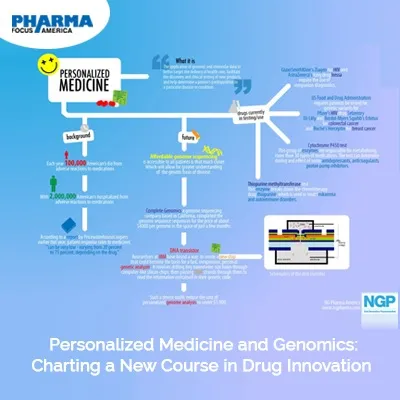
These are personalized medicine, which can be attributed to the enhancements in genomics as treatment procedures that are formulated according to people’s genetic make-up offers enhanced efficacy as well as safety. Hypothesizing and utilizing the concept of personalized medicine, doctors are now able to determine from blood samples, which drug is going to work best on each patient. That said, the approach is radicalizing pharmacology, despite certain obstacles including the cost and data security.
Introduction
Currently, the world of medicine is changing with the help of newly developing genomics. Precision medicine also referred to as customized medicine is a way of managing diseases with reference to the different features every patient holds. Such a switch from the conventional ‘the-same-for-everyone’ concept to a ‘different approach for every patient’ is changing the face of drug discovery and medicine.
The Basics of Personalized Medicine
Personalized medicine uses genetic information on the effects that various medications have on different people. Conventional medicine has been built around the middle, or mean, of a population’s reaction to medications. Still, this approach fails to consider the genetic differences in patients; thus, efficacy and side effects may differ. Personalized medicine here plans for treatment that corresponds with the genes of the patients and thus may produce safer and better healing remedies.
The Role of Genomics in Personalized Medicine
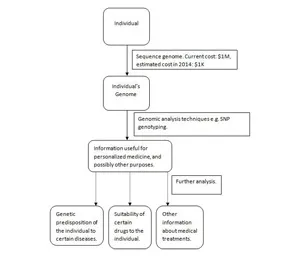
Genomics, the analysis of genes in an individual refers to as the complete genome, is a main determinant of the personalized medicine. When the physician assesses the genomes of a patient, he or she can determine certain genetic markers that may affect a patient’s reaction to a certain drug. For instance, the system can through genetic information predict whether a particular patient will metabolize the drug fast or slow affecting the corresponding effectiveness and side effects that will occur. From the said information, doctors are not only able to prescribe the right drug, but through the right dose, they avoid the occurrence of adverse effects.
How Genomic Data is Collected and Analyzed?
Genomic data usually entail sequencing of a patient’s DNA and this can be done using the patient’s blood spot or saliva. Once the DNA sequence is generated, computational biology evaluates the data in an attempt to find out biomarkers that may interfere with the drug response.
These results are then cross-referenced against large databanks of comprehension genomic data to establish the optimum treatment protocol. This has given a way of analyzing big data in genetics thereby making treatment plans more precise through integration of big data and artificial intelligence.
Case Studies in Personalized Medicine
Probably the most common use of personalized medicine is in the treatment of cancer. Depending on the specific disease, traditional chemotherapy may employ a laundry list of drugs, which are not very helpful to some patients and can result in significant side effects. Personalized medicine in cancer allows the oncologists to study the mutations that have led to formation of tumor in the patient and then use the therapies that are specifically designed to combat those mutations. For instance, Herceptin is a drug that has been developed for the treatment of breast cancer especially for patient whose tumors overexpress the HER2 gene. It has been mentioned that focusing on this specific genetic abnormality has enhanced the effectiveness of the Herceptin in many instances.
Another example is pharmacogenomics, whereby information about the patient’s genes is obtained to determine the likelihood that he or she will respond positively to certain drugs for ailments such as depression, cardiovascular disease, and diabetes. This leads to more rational prescribing and decreases the known ‘hit and miss’ method that is frequently associated with adverse effects and nasty side reactions which are a common drainage on the health care system.
Challenges and Ethical Considerations
Even as personalized medicine promises a number of benefits, it has a number of problems. The first and probably most significant obstacle is the high price of genetic testing and the subsequent interpretation of the results. Further, with enormous amounts of genetic data being produced, issues of data privacy and security come under caution. Therefore, it is necessary to ensure that this sensitive information does not fall into the wrong hands as this can reduce people’s trust in the system and institutions involved.
Even as personalized medicine promises a number of benefits, it has a number of problems. The first and probably most significant obstacle is the high price of genetic testing and the subsequent interpretation of the results. Further, with enormous amounts of genetic data being produced, issues of data privacy and security come under caution.
Therefore, it is necessary to ensure that this sensitive information does not fall into the wrong hands as this can reduce people’s trust in the system and institutions involved.
There are also issues of ethical usage of the genomic data. We still have a potential of genetic discrimination, whereby subjects may be discriminated against based on their genes.
Existing legal instruments such as the Genetic Information Nondiscrimination Act (GINA) of the United States of America have measures to check discrimination of such nature though they will persist as they have been in the past.

The Future of Personalized Medicine
The future of personalized medicine therefore looks bright owing to the on-going research that and emergence of new technologies that will provide better solutions to facilitate these treatments. More patients will be enjoying personalized medications once the cost of genomic sequencing is coming down even more. Besides, the use of artificial intelligence and machine learning in the analysis of these genomic data will improve the accuracy of disease risk factors and treatment response.
It is predicted that in the next few years, the direction of the personalized medicine will be diversified not only to oncology but also to neurology, infectious and genetic diseases. It has been argued that this change will give attention to individual patients through treating illnesses and eliminating futile practices hence enhancing the quality of patient care and practice outcomes, which can also serve to decrease the cost of health care.
Conclusion
Molecular medicine and genomics are shifting the direction of new drugs development by holding the promise of targeted therapy and less risk. Thus, this approach is helping to change the organization of health care and expand the prospects for treating diseases by introducing an individual approach rather than the average. Nevertheless there are some difficulties, and still the concept of personalized medicine has been called by many as one of the most promising trends of the modern medicine. They have recently started unveiling the true potential of individual genome, so the idea of the individualized healthcare is gradually emerging.

Kate, Editorial Team at Pharma Focus America, leverages her extensive background in pharmaceutical communication to craft insightful and accessible content. With a passion for translating complex pharmaceutical concepts, Kate contributes to the team's mission of delivering up-to-date and impactful information to the global Pharmaceutical community.