

Pharma Smart Manufacturing: Leveraging IoT and Digital Twins for Next-Gen Production
Kate Williamson, Editorial Team, Pharma Focus America
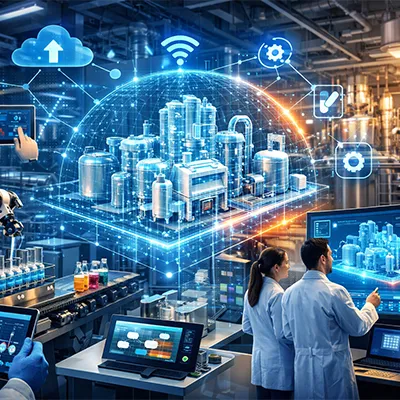
Pharma smart manufacturing is a combination of IoT, digital twin, and high-level automation in order to revolutionize the pharmaceutical production. Smart manufacturing in pharma allows streamlining of operations, adherence to regulations and scalability by facilitating real-time monitoring, predictive analytics, and process optimization, and contributes to the next-generation pharmaceutical manufacturing and long-term digital transformation efforts.
Introduction to Pharma Smart Manufacturing
There is a paradigm shift in the pharmaceutical sector, as the need to develop individualized treatment, quicker drug approvals, and improved regulations to be followed continue to increase globally. Old production models that depend greatly on manual control and responsive quality management are not applicable to the contemporary pharmaceutical processes. This change has given rise to pharma smart manufacturing which is a sophisticated model that incorporates digital technologies, automation and data-driven intelligence in the pharmaceutical manufacturing settings.
Pharmaceutical smart manufacturing is a result of the meeting between Industry 4.0 principles and highly controlled drug manufacturing. In the very essence, smart manufacturing in pharma is concerned with real-time visibility, predictive decription and constant optimization of processes. The IoT in pharmaceutical production and digital twins pharma are among the technologies that are helping manufacturers shift their production activities away from batch production and siloed production towards agile and connected and intelligent production environments.
Pharma manufacturing is turning into a strategic necessity instead of a technology trial to support the resilience, scalability, and compliance of pharma companies.
The Role of IoT in Pharmaceutical Manufacturing
The use of the IoT-enabled pharma production has transformed the manner in which pharma factories track, regulate and optimize production processes. Connected equipment, sensors, and IoT are always used to generate data on production lines, clean rooms, utilities, and packaging. Such data allow manufacturers to receive real-time information on such important factors as temperature, humidity, pressure, machine condition, and material movement.
To answer the question, How does IoT benefit pharmaceutical manufacturing? it would be appropriate to begin with visibility. The IoT platforms enable pharmaceutical organizations to identify any deviations in time, minimize batch failures and maintain the compliance with the Good Manufacturing Practices (GMP). The prediction of maintenance is one of the main advantages of IoT in pharmaceutical production that reduces the unplanned downtime by detecting equipment problems prior to their failures.
IoT is also useful in enabling audit preparedness in controlled settings by ensuring data records are automated and electronic batches. This enhances the integrity of data, accuracy of traceability and regulatory submission with verifiable data of production.
Table: IoT Applications in Pharmaceutical Manufacturing
| Area | IoT Impact |
| Production Monitoring | Real-time process control and deviation alerts |
| Quality Assurance | Continuous environmental and parameter validation |
| Asset Management | Predictive maintenance and lifecycle tracking |
| Supply Chain | End-to-end material traceability and inventory optimization |
Understanding Digital Twins in Pharma
Whereas the physical manufacturing environment is connected via IoT, the digital twin technology in pharma develops an image of the environment. A digital twin is a living and data-driven model that is a replica of a physical object, process, or whole plant in real time. To respond to the question, what are digital twins in pharmaceutical production?, the answer is intelligent simulations that receive the information on the real-world continuously to predict results and optimize their performance.
Digital twins pharma are applied to the complicated manufacturing processes, including granulation, blending, fermentation, and fill-finish. Manufacturers are able to test certain conditions of running the process by simulating its behavior without disturbing the active production. This is a direct explanation of how digital twins enhance the efficiency of pharma manufacturing, which is through a reduction in trial-and-error, reduce wastage, and accelerate the process validation.
Digital twins support Quality by Design (QbD) initiatives, as well, by determining important parameters of processes and determining how they affect product quality. Digital twins are becoming the focus of the pharmaceutical manufacturing strategies of the next generation as regulatory bodies are becoming more and more interested in data-driven validation.
Pharma Manufacturing Automation and Digital Transformation
The path to pharmaceutical manufacturing automation is closely tied to the pharma manufacturing digital transformation efforts in general. Automation will substitute manual interventions with controlled, repeatable, and validated processes whereas digital transformation will ensure that the automated systems are interconnected, intelligent, and adaptive.
Compliance, efficiency, and scalability should be considered to comprehend the reasons behind why is digital transformation important to pharma manufacturing. Digital transformation facilitates the use of integrated Manufacturing Execution Systems (MES), Laboratory Information Management Systems (LIMS) and Enterprise Resource Planning (ERP) systems that are working together. The integration will remove data silos and expand the cross-functional cooperation.
Digital transformation of the pharmaceutical manufacturing has more than cost-cutting effects. It facilitates quicker time-to-market, facilitates continuous manufacturing patterns, and improves patient safety through minimizing human error. Analytics and automation help to maintain the quality of the products and respond to the variable regulatory and market demands.
Smart Manufacturing Solutions for Pharmaceutical Industry
The latest intelligent manufacturing systems that serve the players in the pharmaceutical industry include a broad spectrum of technologies aimed at developing smart and interactive factories. Such solutions combine IoT technology, digital twins, robotics, advanced analytics, and artificial intelligence to allow optimization of end-to-end processes.
A pharma smart factory uses the technologies to attain real-time decision-making on the production, quality, maintenance, and supply chain functions. The latest trends in pharma smart factory technologies and trends are continuous manufacturing, AI-based quality inspection, cloud-based MES, and closed-loop process control.
Definition: Smart Manufacturing in Pharma
Smart manufacturing in pharma means an application of interrelated digital technologies, real-time data analytics, and automated processes to streamline the production of pharmaceutical products without compromising the quality of products and regulatory compliance.
The emphasis on the optimization of the manufacturing process of pharma makes sure that all production stages can be measured, predicted and constantly improved.
Implementation Strategies for Smart Manufacturing in Pharma
The problem that has arisen on the minds of industry leaders is how to put smart manufacturing into the pharma industry? An effective implementation needs to be in stages and strategic and in line with the business goals and regulatory policies.
The initial one is the digital maturity auditing to define any infrastructural, data governance, and workforce preparedness gaps. The manufacturers must then focus on the high impact use cases like equipment monitoring or optimization of batch release. Implementing the use of scalable IoT platforms in pharmaceutical manufacturing can provide the growth of the system in the future without having to update the system.
Management of change is a key aspect, since the adoption of the workforce is a vital component of success in the long term. Implementation strategies need to include training programs, cross-functional and cybersecurity frameworks. Lastly, the performance monitoring performance is sustained through continuous performance monitoring of smart manufacturing investments.
Consulting and Software Providers for Pharma Smart Manufacturing
With the complexity, an increasing number of organizations are collaborating with outside consultants who provide the services of pharmaceutical manufacturing. These consultants assist in the development of transformation road maps, regulatory alignment and technology integration.
The business vendors of leading pharma solutions of smart manufacturing, include ecosystem partners, with specialization in automation, IoT, and analytics. Pharma organizations also can use the digital twin software providers to develop high-fidelity simulations that can be continuously linked with live production systems.
Table: Key Provider Categories in Pharma Smart Manufacturing
| Provider Type | Role |
| Pharma smart factory technology providers | Hardware, automation, robotics |
| IoT platform vendors | Connectivity, data management, analytics |
| Digital twin software providers for pharma | Simulation and predictive modeling |
| Consulting firms | Strategy, validation, and compliance support |
Conclusion: The Future of Pharma Smart Manufacturing
Smart, responsive and interconnected manufacturing ecosystems are the future of drug manufacturing. Pharma smart manufacturing ceases to be a trend in innovation but rather an elemental competitiveness, compliance, and resiliency. Through the use of IoT in pharmaceutical production and digital twin technology in pharma, organizations have the ability to open up new tiers of efficiency, quality, and agility.
With growing regulatory worldviews and the growing focus of patient-centered models, smart manufacturing in pharma today will determine leadership in the industry tomorrow.
FAQs
What is smart manufacturing in pharma?
A digital enabled manufacturing process, Smart manufacturing in pharma, is a combination of automation, IoT, data analytics, and digital twins that can offer greater efficiency, quality, and regulatory compliance.
How does IoT benefit pharmaceutical manufacturing?
IoT assists real-time monitoring, predictive maintenance, enhanced quality control, and enhanced traceability, and decreases the downtime and guarantees of adherence to the regulations.
What are digital twins in pharmaceutical production?
Digital twins refer to the virtual representations of the physical processes or assets utilizing real-time data to simulate, predict and optimize pharmaceutical production processes.
Why is digital transformation important for pharma manufacturing?
Digital transformation guarantees scale, compliance, data integrity, and fastened innovation and reduces the costs and operational risks.

Kate, Editorial Team at Pharma Focus America, leverages her extensive background in pharmaceutical communication to craft insightful and accessible content. With a passion for translating complex pharmaceutical concepts, Kate contributes to the team's mission of delivering up-to-date and impactful information to the global Pharmaceutical community.