


Pharma Supply Chain Digitalization: 7 Strategies to Boost Transparency and Efficiency in 2026
Kate Williamson, Editorial Team, Pharma Focus America
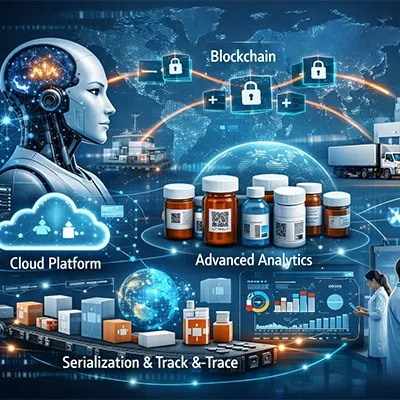
The future of the Pharma supply chain is digitalizing the industry in a way that it is reshaping operational resilience, transparency and efficiency in the year 2026. This article discusses seven strategic options, such as AI, blockchain, cloud platforms, and advanced analytics, which make end-to-end visibility, proactive risk management, regulatory compliance, and smarter pharmaceutical supply chain decision-making possible.
Introduction: Why Pharma Supply Chain Digitalization Is No Longer Optional
The pharmaceutical sector is passing into a stage of definition in which the operational sustainability, regulatory visibility, and patient safety are directly associated with digital maturity. With the growing interconnectedness of healthcare systems across the globe and the growing regulation intensity, the pharma companies could not afford to depend on the fragmented or manual supply chain models anymore. Pharma supply chain digitalization is no longer a long-term ambition but a business-level requirement quite recently, as this pharmaceutical supply chain in 2026 will be under an even more intense pressure due to the volatility of demand, geopolitical dangers, drug shortages, and fake threats.
Pharma supply chain digital transformation is not simply a question of automation or cost savings. It is concerning the development of a transparent, intelligent, and dynamic ecosystem that allows real-time making of decisions, end-to-end traceability, and proactive risk management. Online supply chain pharma model has become the centre point in ensuring compliance, enhanced efficiency and continued access to life-saving medicines.
The article discusses seven strategies that have been proven to digitalize the pharma supply chain in 2026, how new technologies, including AI, blockchain, cloud services, and advanced analytics, are transforming the management of pharmaceutical supply chains.
Understanding Pharma Supply Chain Digitalization in 2026
The digitalization of pharma supply chain may be understood as the integration of digital features in the procurement, manufacturing, quality control, warehousing, logistics, distribution and post-market surveillance. It is said that digitalization of the pharmaceutical supply chain of 2026 is linked, predictive and regulatory compliant transparency.
In contrast to the traditional supply chains, digital supply chain solutions in pharma make it possible to keep the flow of information between the suppliers and contract manufacturers, logistics partners, regulators, and healthcare providers. This transition promotes transparency in pharmaceutical supply chains, a better adherence rate to serialization and track-and-trace laws and regulations, and operational flexibility.
The core of digital transformation in pharma supply chain is linked to three major goals, namely, efficiency, resilience, and trust.
Strategy 1: AI-Driven Demand Forecasting and Inventory Optimization
Artificial intelligence has been incorporated as one of the foundations of pharma supply chain efficiency. AI pharma supply chain solutions evaluate the previous sales, prescription history, epidemiological changes, seasonal changes, and external market predictors to achieve some of the most precise demand forecasts.
AI-based forecasting applied in pharmaceutical supply chain in 2026 will reduce the number of overproduction and stockouts, both of which continue to pose significant issues in the supply curve because of their direct effect on revenue and patient outcomes. To be more precise, AI models allow organizations to modify the production schedule and inventory in a more dynamic way by learning new data inputs regularly.
AI also provides the ability to optimize inventory intelligently in multi geographies. Predictive analytics are capable of determining slow moving stock, optimizing safety stocks and suggesting redistribution before an expiry risk occurs. This will eliminate wastage to a large extent, and also maintain the steady supply of the products.
Making pharma supply chain more efficient with AI is not a theory anymore; it is becoming a common practice among the pharmaceutical manufacturers in the world.
Strategy 2: Blockchain for Pharmaceutical Supply Chain Transparency
Blockchain technology is significantly transforming pharmaceutical supply chain to make it transparent. The pharmaceutical supply chain with blockchain provides them with a decentralized and tamper-proof registry where each transaction, movement, and status change is stored permanently.
Blockchain pharma transparency is being more and more adjusted to global serialization and traceability requirements in 2026. Authenticity of every drug unit may be digitized since sourcing of raw materials to delivering to patients, which will decrease the chances of counterfeit drugs finding their way into the market.
Compliance is not the only way blockchain technology can make the pharma supply chain better. Blockchain enhances trust between partners in the supply chain, recalls can be done faster because of its capability to provide instant traceability, and audits can be made easier due to having one point of verified truth.
With the increase in the demands of regulatory agencies on the data integrity, blockchain in the pharma supply chain transparency is becoming a strategic investment and not a pilot project.
Strategy 3: End-to-End Serialization and Track-and-Trace Integration
Serialization of the pharmaceutical supply chain is a regulatory aspect of the pharmaceutical supply chain in several markets and in 2026 is also an effective operational tool. With digital supply chain platforms combined with advanced serialization systems, real-time visibility of product movement in the entire value chain is achievable.
Pharma supply chain traceability helps to swiftly recall, investigate quality, and maintain patient safety. Digitalserialization platforms Digitalserialization platforms dynamically link manufacturers, distributors, wholesalers and pharmacies via data exchanges that are standardized.
Serialised data when coupled with analytics and AI gives insights on demand trends, diversion risks and inefficiencies in distribution. This integration makes the serialization, which is driven by law, a value-creating digital ability.
Strategy 4: Cloud-Based Pharma Supply Chain Management Platforms
Digital supply chain pharma strategies have been anchored on cloud-based pharma supply chain management. Cloud computing systems have integrated ERP systems, manufacturing execution systems, warehouse management systems, transportation providers, and external partners to a centralized digital format.
Cloud-based technology would permit scaling, interoperability, and real-time partnership in all operations worldwide in the pharmaceutical supply chain of 2026. These platforms offer quick implementation of digital supply chain solution in pharma without needing upgrades of legacy infrastructures.
Cloud technology is also important in business continuity and disaster recovery whereby data is available, even during disruptions. Cloud-based supply chain management is flexible enough to meet the need to adapt fast as pharmaceutical firms enter emerging markets and complex biologics.
Strategy 5: Digital Risk Management and Predictive Resilience Tools
Pharma supply chain risk management has taken a new shape using digital tools. Digital transformation does not address the disruption once it has been made; it presupposes predicting the occurrence of risks and proactively managing them.
Pharmaceutical supply chain risk mitigation digital tools analyze the performances of suppliers, geopolitical risks, logistics disruptions, regulatory changes, and environmental factors. The dashboards using AI give early warning indicators, which organizations can use to mobilize contingency plans before the disruptions get out of hand.
The benefits of pharma supply chain resilience digital tools are especially effective in dealing with single-source dependency, cold chain susceptpsoness and transportation bottlenecks. In 2026, it is not the redundancy that will be used to build resilience but the intelligence-driven adaptability.
Strategy 6: Advanced Analytics for Performance and Compliance Optimization
High-tech analytic systems are in the process of redefining the measure of success in managing pharmaceutical supply chain management. Combining operational, compliance, and quality data, analytics tools will help see the entire picture of supply chain performance.
The transparency of digital transformation within the pharmaceutical supply chain allows organizations to access the most important indicators: the rate of order fulfilment, lead time, deviation patterns, and compliance among the indicators in real time. The insights based on analytics are used in the continuous improvement efforts and strategic planning that is supported by data.
Regulatory reporting and data audit readiness is also facilitated through automated data validation and documentation in regulated environments with an analytics streamlining the process of data reporting.
Strategy 7: Ecosystem Integration through Digital Collaboration Tools
The pharmaceutical supply chain of 2026 will be a connected ecosystem and not silos. The digital collaboration platforms allow smooth flow of information between the suppliers, CMOs, logistics providers, regulators, and healthcare systems.
Pharma Digital supply chain is a growing trend where solutions are integrated around API-based integration, standard data models, and real-time communication mediums. This connectivity has the advantage of enhancing coordination, minimizing delays, and increasing transparency among organizational boundaries.
One of the most significant and least considered strategy in pharma supply chain digitalization is ecosystem integration because the value of all other digital investments is multiplied by it.
Snapshot: Key Digital Technologies and Their Impact
| Digital Technology | Primary Impact on Pharma Supply Chain |
| Artificial Intelligence | Demand forecasting, inventory optimization, predictive risk |
| Blockchain | Transparency, traceability, anti-counterfeiting |
| Cloud Platforms | Scalability, collaboration, real-time visibility |
| Advanced Analytics | Performance monitoring, compliance optimization |
| Serialization Systems | Regulatory compliance, recall efficiency |
Common Challenges in Pharma Supply Chain Digitalization
Although there are the advantages, the issues with the digitalization of the pharma supply chain are still significant. Digital transformation initiatives may be slowed by the legacy system integration, data silos, cybersecurity, regulatory complexity, and barriers to change management.
Moreover, digital investments and business outcomes should be linked through governance and multifunctional schemes. The best practices in pharma supply chain digital transformation underline the principles of gradual realization, alignment of the stakeholders, and consistent development of capabilities.
How to Implement Pharma Supply Chain Digitalization Successfully
The implementation begins with an effective digital roadmap that is aligned to the business priorities. Organizations are advised to evaluate the level of digital maturity at present, recognize the most impactful use cases and choose scalable digital supply chain solutions in pharma.
Data quality, cybersecurity and regulatory compliance have to be mentioned at the outset when designing the system. It is equally important to have change management and training to ensure the uptake at the team and partner levels.
Frequently Asked Questions: Distilled Insights
What are the best digital strategies for pharma supply chain in 2026?
The most suitable strategies are AI-assisted forecasting, transparency through blockchain, cloud-based platform, advanced analytics, and integration into the ecosystem.
How does AI boost pharma supply chain efficiency?
AI can enhance the accuracy of demand forecasting, decrease inventory waste, increase the effectiveness of risk prediction, and improve faster and data-oriented decision-making.
What are the challenges of pharma supply chain digitalization?
The key issues are integration of the old systems, role of data governance, cybersecurity risks, regulatory complexity and resistance to change.
Is blockchain practical for pharma supply chains today?
Yes, blockchain in pharmaceutical supply chain is getting widely implemented in traceability, compliance and transparency, particularly in regulated markets.
Conclusion: The Digital Future of Pharmaceutical Supply Chains
Digitization of the pharma supply chain is transforming the industry in terms of how it operates, competitiveness, and value delivery to patients. Digital transformation is the only viable solution to transparency, efficiency, and resilience in the pharmaceutical supply chain in the 2026 environment, it is becoming more complex and regulated.
Companies that invest in AI, blockchain, cloud-based solutions, and embedded digital ecosystems will be in a position to deal with risk, regulatory needs, and market dynamics. After all, digital supply chain pharma strategies are not operational excellence only, are about the creation of trust, patient safety, and long-term growth in the ever-digitalizing healthcare environment.

Kate, Editorial Team at Pharma Focus America, leverages her extensive background in pharmaceutical communication to craft insightful and accessible content. With a passion for translating complex pharmaceutical concepts, Kate contributes to the team's mission of delivering up-to-date and impactful information to the global Pharmaceutical community.