Pharmaceutical Supply Chain Trends: Innovations, Best Practices, and Future Outlook
Kate Williamson, Editorial Team, Pharma Focus America
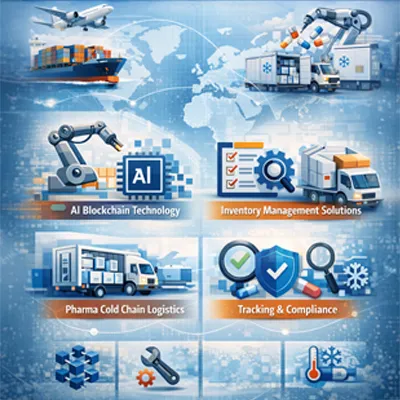
This article examines the changing trends in pharmaceutical supply chain, innovations, best practice and outlook. It explores digital transformation, AI, blockchain, cold chain logistics and transparency, and provides an insight into how pharmaceutical supply chain management can be used to improve resilience, compliance, efficiency, and value creation to B2B stakeholders.
Introduction to Pharmaceutical Supply Chain Management
Pharmaceutical supply chain is important to guarantee timely, safe, and quality medicines to patients. In comparison to traditional supply chains, pharmaceutical supply chain is very strict, temperature sensitive, and risky in nature, where accuracy is demanded in procurement, manufacturing, storage, and distribution. Pharmaceutical supply chain management encompasses the coordination of sourcing of raw materials, drug production, pharmaceutical logistics, and inventory control and last-mile delivery in accordance to strict world regulations.
Over the last few years, the international shocks, regulatory stress, and increased demand of customized medicine have revealed the vulnerabilities in the traditional pharma supply systems. These issues have increased the pace of implementing resilient, visible, and efficient advanced pharma supply chain solutions. Due to the growth of pharmaceutical companies across the world, pharmaceutical supply chain management is no longer a back operation function but a strategic focus of operation. Those companies that invest in innovation, digital transformation and best practices will be better placed to attain continuity, compliance and competitive advantage.
Emerging Innovations in Pharmaceutical Supply Chain
The innovation of pharma supply chain is redefining the complexity, uncertainty and scale management of manufacturers and distributors. The use of innovative technologies in the work of pharmaceutical supply chains is one of the most remarkable changes that include artificial intelligence, blockchain, IoT-based tracking, and sophisticated analytics. These technologies are assisting organizations to transform into reactive to predictive supply chain models.
The effects of AI on the pharmaceutical supply chain management are especially revolutionary. Artificial intelligence-based demand optimization enhances the precision of production planning, decreases inventory shortages, and minimized surplus inventory. Machine learning works out historical sales, epidemiological trends, and it studies regional consumption patterns in order to more accurately predict changes in demand. This also allows pharmaceutical firms to position inventory optimally and react to the needs of the market better.
Blockchain technology is becoming popular as the solution to counterfeiting, data silos and absence of traceability. When organizations pose the question on how blockchain can be of help to the supply chain in the pharmaceutical industry, it can be answered by stating that it can establish immutable shared ledgers where drugs can be tracked since the sourcing of raw materials till their eventual delivery. Blockchain can increase the confidence of the stakeholders and also increase the transparency of the supply chain in the pharmaceutical industry.
Pharmaceutical logistics and warehousing is also being redefined by automation and robotics. Automated picking, smart warehouses and robotic process automation minimize human error, enhance order precision and speed up the fulfillment process. All these innovations can be seen as a movement towards digitally interconnected, intelligent pharmaceutical supply chain ecosystems.
Best Practices for Pharmaceutical Supply Chain Optimization
It is important to understand that pharmaceutical supply chain management is a holistic process of integration between technology, processes, and people to optimize it. End-to-end visibility is one of the best practices that have been shown to be effective in pharmaceutical supply chain optimization. Companies should not stick to siloed businesses, and they need to embrace a platform that integrates procurement, manufacturing, quality, logistics, and distribution.
The management of pharmaceutical inventory is one of the cost leaders of optimization efforts. It is necessary to maintain the appropriate ratio between availability and cost, particularly with high value and short shelf products. High level models of inventory optimization contribute to minimizing working capital of any organization without lowering service levels. These models take into account the variability of demand, lead times, and the regulatory constraints in order to enhance decision making.
Another best practice is collaboration with trustworthy pharmaceutical logistics providers, which is applicable to its B2B. Strategic alliances help manufacturers to utilize specialized experience in international transport, customs, and temperature-sensitive logistics. This method enables the pharmaceutical firms to concentrate on the principal competencies and efficiency in distribution and complies.
It is also important to conduct continuous performance monitoring and the risk assessment. The leaders of the supply chain also tend to use real-time dashboards and key performance indicators to measure the reliability of suppliers, the efficiency of logistics, and the level of compliance. Such insights aid in proactive decision-making and the process of constant improvement of the pharmaceutical supply chain.
Pharmaceutical Cold Chain Management and Logistics
One of the most complicated and mission critical areas of pharmaceutical logistics is the Pharma cold chain management. Vaccines, biologics, and cell and gene therapies are products that are sensitive to temperature and need a well-controlled environment during storage and transportation. Even small temperature deviations have the potential to affect the efficacy of the products and lead to loss of money or legal proceedings.
One of the most complicated and mission critical areas of pharmaceutical logistics is the Pharma cold chain management. Vaccines, biologics, and cell and gene therapies are products that are sensitive to temperature and need a well-controlled environment during storage and transportation. Even small temperature deviations have the potential to affect the efficacy of the products and lead to loss of money or legal proceedings.
Cold chain failure is normally caused by a manual, poor infrastructure, or lack of coordination among the stakeholders. In order to tackle these issues pharmaceutical firms are investing in standardized procedures, training, and online solutions that combine cold chain information with more comprehensive pharmaceutical supply chain management systems.
With the ever-increasing advanced therapies, the significance of a strong cold chain logistics will rise. Companies that focus on cold chain excellence have a competitive edge within the organization in the provision of product integrity, regulatory compliance and patient safety.
Supply Chain Transparency and Risk Management in Pharma
The healthcare sector has turned to supply chain transparency as a regulatory and operational requirement in pharmaceuticals. Governments around the globe, through end-to-end traceability, would prevent counterfeits, offer safety to patients, and maintain the quality of products. Meanwhile, international shocks have raised the awareness of the increased level of supply chain risk management pharma strategies.
Transparency helps organizations to note areas that are vulnerable, evaluate supplier interdependences and react swiftly to interruptions. The digital traceability solutions offer real-time visibility on supplier performance, shipment, and inventory position. This visibility enhances quicker recall, enhanced compliance, and enhanced trust among the stakeholders.
Pharma initiatives of supply chain risk management are progressively revolving around diversification and resilience. Pharma businesses are lessening the dependability on one-source distributors and are putting resources into regional manufacturing centers. Scenario planning and predictive analytics assist organizations in determining the possible effects of an event or natural disaster caused by geopolitics, or regulatory alterations.
Upon questioning the reasons behind the importance of supply chain transparency in pharma, compliance is not the only answer. Transparency improves the operational agility, better patient safety, and brand reputation in the market which is under an intensively scrutinized market.
The Role of Software and Consulting in Pharma Supply Chains
Pharmaceutical supply chain software for businesses has become an aspect of operations in business. These platforms combine planning, execution, quality and compliance into integrated systems that enable the making of decisions based on data. High-tech software allows real-time transparency, automated reporting, and controlled documentation.
The pharmaceutical supply chain solutions aimed at manufacturers are frequently integrated between enterprise resource planning systems and serialization, cold chain management, and regulatory compliance module.
These tools are used to make work processes simple and at the same time maintain compliance with international standards like GDP and GMP.
Pharma supply chain risk assessment services and consulting firms are also important in transformation initiatives in addition to technology. The consultants offer strategy, process optimization and change management. They assist organizations in measuring existing level of maturity, creating future-state models and embedding scalable solutions in accordance to business goals.
With the increasing complexity involved in the pharmaceutical supply chain, the integration of sophisticated software and professional consultancy allows organizations to speed up innovation without taking too much risk.
Conclusion and Future Outlook for Pharmaceutical Supply Chain Management
Pharmaceutical supply chain is facing a radical change that is being brought about by innovation, regulation and changing needs of patients. Pharma supply chain innovation can no longer be considered an option; this is a necessity when it comes to ensuring resilience, efficiency and compliance in a volatile global environment. Those companies who will invest in digital technology, supply chain visibility, and optimal pharmaceutical supply chain practices will be in a better position to overcome uncertainty and continue to grow.
In the future, the pharmaceutical supply chain management will be described as being characterized by intelligent automation, predictive analytics, and collaborative ecosystems. AI, blockchain, and similar platforms will continue to revolutionize the methods of organization planning, implementation, and tracking of supply chain activities. Meanwhile, the regulatory demands will drive organizations towards increased responsibility and visibility.
To the stakeholders in the B2B sector, it should continue to focus on the creation of agile, compliant, and patient-centric supply chains. Through innovation and strategic alliances, the pharmaceutical companies can leverage their opportunities to the supply chain issues and convert them to long-term value generation.
FAQs
What are the latest innovations in pharmaceutical supply chain?
The latest trends include the application of AI to predict demand, traceability, real-time monitoring with the help of IoT, warehouse automation, and improved analytics platforms that will improve visibility and decision-making across the pharmaceutical supply chain.
How to optimize pharmaceutical supply chain management?
To optimize the management of pharmaceutical supply chain, end-to-end visibility, state-of-the-art inventory optimization, strategic logistics alliances, digital integration and continuous risk evaluation underpins with data-driven decision-making are mandatory.
Why is supply chain transparency important in pharma?
Transparency within the supply chains is a significant aspect of the pharmaceutical industry in ensuring that the market adheres to all the regulations, counterfeiting, patient safety and timely reaction to disruption. Openness increases confidence among the stakeholders and also strength of the operations.
What is the value of blockchain to pharmaceutical supply chains?
Blockchain is capable of improving pharmaceutical supply chain since products can be tracked through the value chain which provides secure and immutable products.

Kate, Editorial Team at Pharma Focus America, leverages her extensive background in pharmaceutical communication to craft insightful and accessible content. With a passion for translating complex pharmaceutical concepts, Kate contributes to the team's mission of delivering up-to-date and impactful information to the global Pharmaceutical community.