


Pharmacovigilance Strategies to Improve Drug Safety and Post-Market Surveillance
Kate Williamson, Editorial Team, Pharma Focus America
One of the most significant attributes of safety of a drug is pharmacovigilance as it is an ongoing observation of drugs during the post-market period. The regulatory compliance, high-technology, and international pharma-vigilance strategies are an opportunity that enables the drug companies to identify safety signals in their early stage, risk management, and better patient outcomes throughout the world.
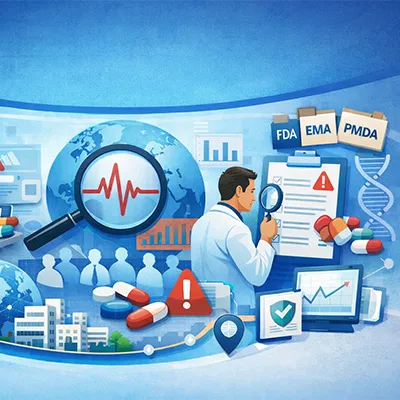
Introduction to Pharmacovigilance and Drug Safety Monitoring
What is pharmacovigilance and why is it important?
The science and the pharmacovigilance procedure is related to the detection, assessment, interpretation, and prevention of any repudiated outcome or any other drug proper issues.
The safety of drugs in use is of paramount importance as pharmaceutical products are no longer the subject of controlled clinical studies but actual practice, and as such, ensuring patient safety and ensuring that the population maintains its trust is of utmost importance.
Clinical trials being rigorous are confined in size, duration, and population diversity. The appearance of rare adverse effects, long-term safety concerns, and drug interactions is usually revealed once the usage is widespread. Post-market surveillance and pharmacovigilance programs are important at this point. By engaging in constant monitoring, the pharmaceutical companies and regulators are able to detect, assess and reduce the risk involved in the products offered in the market.
Drug safety management is a method that will help to guarantee that the benefit-risk profiles will be favorable during the lifecycle of a product. It also assists in pharmacovigilance compliance that is becoming especially challenging to the global regulatory authorities.
Understanding Post-Market Surveillance in Pharmacovigilance
How does post-market surveillance improve drug safety?
Post-market surveillance is the continuous monitoring of drugs that are approved to gather information on the adverse drug reactions (ADRs) and other safety issues under the actual conditions. Post-marketing drug safety surveillance, in contrast to pre-approval studies, is able to obtain data concerning large numbers of patients, including vulnerable populations such as elderly individuals, pregnant women, and those with comorbidities.
The most common surveillance methods to be used in the monitoring of drug safety include:
- Adverse drug reaction reporting from healthcare professionals and patients
- Spontaneous reporting systems
- Periodic safety update reports (PSURs)
- Post-authorization safety studies (PASS)
- Observational and real-world evidence studies
Through such strategies, the regulators and the manufacturers will be capable of looking ahead to see any safety warning signs and be in a position to formulate solutions in due time like correcting the labels, reducing the risk or in worst cases scenario, recall the products.
Key Pharmacovigilance Strategies for Effective Drug Safety Monitoring
What are the key components of a pharmacovigilance program?
Clear plans constitute a good pharmacovigilance system whereby, it would guarantee a systemic adverse event and risk avoidance monitoring. The most important pharmacovigilance measures to be implemented to identify adverse drug reaction include:
3.1 Adverse Event and ADR Reporting Systems
Pharmacovigilance is based on efficient adverse drug reaction reporting. The role of safety data collection is played by healthcare professionals, patients, distributors, and holders of marketing authorization.
3.2 Signal Detection in Pharmacovigilance
Pharmacovigilance signal detection implies detecting new or emerging safety issues out of big data. This involves the statistical data mining, the analysis of trends and medical examination of reported events.
3.3 Risk Management in Pharmacovigilance
The risk management plans (RMPs) define the process by which the risks are identified, tracked, and reduced. Such plans are dynamic documents which are revised during the product lifecycle.
3.4 Continuous Benefit–Risk Evaluation
The pharmacovigilance approaches lay stress on continuous assessment to ascertain that the therapeutic advantages are still greater than the risks in practice.
Regulatory Compliance and Pharmacovigilance Requirements
Role of pharmacovigilance in regulatory compliance for pharma
Regulatory bodies all over the world impose stringent pharmacovigilance conditions to accommodate the safety of patients. The regulations of drug safety (FDA, EMA, PMDA) outline the procedures according to which the pharmaceutical companies should gather, analyze, and report the safety data.
Key regulatory expectations include:
- Timely submission of Individual Case Safety Reports (ICSRs)
- Maintenance of pharmacovigilance system master files (PSMFs)
- Periodic safety reporting
- Compliance audits and inspections
The compliance standards of pharmacovigilance have harsh penalties as they may attract penalties such as fines, suspension of licenses, and recalling of products. The sustainability of the operations, in its turn, suggests that the balance between the pharmacovigilance measures and the regulatory expectation should be struck.
Modern Tools and Technologies in Pharmacovigilance and Post-Market Surveillance
What tools are used for adverse event reporting in pharmacovigilance?
The new technologies are changing post-market surveillance process and the pharmacovigilance software.
5.1 Pharmacovigilance Software Solutions
The contemporary platforms enable case reception, processing, reporting and signal identification. The systems make the systems efficient, precise of data and regulations compliance.
5.2 Artificial Intelligence and Automation
The screening of cases in the AI-powered applications can also be performed more rapidly, and automated code and predictive signals can be identified, which enhances the scale of the drug safety monitoring.
5.3 Real-World Evidence and Big Data
Post-marketing drug safety is enhanced by incorporating electronic health records (EHRs) and insurance claims and patient registries.
5.4 Global Safety Databases
Multinational organizations can use centralized safety databases to administer the post-market surveillance in all regions.
Challenges and Solutions in Pharmacovigilance and Post-Marketing Surveillance
Pharmacovigilance has a number of threats:
6.1 Underreporting of Adverse Events
There are still a lot of ADRs that are not reported because of ignorance or time. This gap can be addressed through training of the healthcare professionals and promoting patient reporting.
6.2 Data Quality and Volume
Big volumes of data may cripple teams. Quality and relevance are kept with the assistance of sophisticated analytics and defined work processes.
6.3 Regulatory Complexity
The differences in the global requirements have made it difficult to comply. Integrated operations and localized competencies are important solutions.
6.4 Pharmacovigilance Challenges in LATAM Markets
The pharmacovigilance issues in the LATAM markets are incomplete healthcare systems, conflicting reporting, and poor digital infrastructures. This can be defeated through local cooperation and premeditated pharmacovigilance programs.
Regional Perspectives: Pharmacovigilance in LATAM, Europe, and the US
7.1 United States
The FDA focuses on active drug safety control, post-market undertakings, and incorporation of real-world information.
7.2 Europe
EMA has very strict pharmacovigilance rules, such as risk management plans and centralized safety reporting through EudraVigilance.
7.3 LATAM
The markets of LATAM are changing very fast with an increment of conformity to global standards. Several countries, though, are variable and demand flexible and localized pharmacovigilance approaches.
Noteworthy is the fact that these regional variations are conversant with international drug firms that are compelled to undertake elaborate after-market monitoring procedures.
Best Practices for Implementing Pharmacovigilance Programs in Pharmaceutical Companies
How to implement pharmacovigilance in pharmaceutical companies
One will need a proactive and organized approach to implement it successfully. Best practices on after-market drug safety monitoring are:
- Putting in place a clear governance and accountability.
- Training of pharmacovigilance workers.
- Adopting proven pharmacovigilance computer programs.
- Periodical audits and inspections.
- Assuring cross-functional work of regulatory, clinical, and safety teams.
Credibility and trust to the company and the patients could also be achieved through effective pharmacovigilance programs to induce compliance.
Future Trends in Pharmacovigilance and Drug Safety Monitoring
What are the latest trends in pharmacovigilance and drug safety?
The future of pharmacovigilance is innovation, patient-centricity and data intelligence.
Key trends include:
- Increased use of AI and machine learning for signal detection
- Greater reliance on real-world evidence
- Enhanced patient engagement in adverse event reporting
- Global harmonization of pharmacovigilance regulations
- Predictive analytics for proactive risk management
With more medicines becoming intricate, pharmacovigilance will go on to change into a reactive compliance duty to a strategic pillar of drug safety surveillance.
Conclusion
Pharmacovigilance is no longer a back-end regulatory requirement - it is a strategic need to the assurance of patient safety, regulatory compliance and long-term product success. By means of proper post-market surveillance, innovative technologies, and properly organized pharmacovigilance, the pharmaceutical companies can identify risks at the first stage, control the adverse events in advance, and preserve the confidence of the population.
With the best practices and being proactive to the regulatory and technological changes; organizations can make pharmacovigilance a significant force in promoting post-marketing drug safety and healthcare excellence.

Kate, Editorial Team at Pharma Focus America, leverages her extensive background in pharmaceutical communication to craft insightful and accessible content. With a passion for translating complex pharmaceutical concepts, Kate contributes to the team's mission of delivering up-to-date and impactful information to the global Pharmaceutical community.