
How Proteomics Is Revolutionizing R&D across Biopharma and Life Sciences
Kate Williamson, Editorial Team, Pharma Focus America
Through proteomics, the biopharmaceutical research and development process gets revolutionized since it brings improved insights about disease mechanisms and speeds up drug finding methods while boosting precision medicine approaches. Advanced technology tools including mass spectrometry together with AI capabilities and single-cell proteomics systems help researchers discover new biomarkers and develop targeted therapeutic solutions. Healthcare faces future breakthroughs from proteomics linking with multi-omics systems although such integration results in challenging data and expense issues.
Introduction
The large-scale analysis of proteins known as proteomics delivers revolutionary changes to research and development (R&D) operations in biopharma and life sciences fields. The understanding of protein behavior together with their structure modification and interconnections severs as fundamental for medical diagnostics and targeted healthcare applications and drug evaluation procedures. What specific ways does proteomics create change for biopharma industries? What innovative discoveries have appeared along with the ways leaders in the industry use proteomics science to create innovative solutions?
The historical article examines proteomics' transformative effects on biopharmaceutical research development through detailed explanations about contemporary methods and future prospects in this technical domain.
The Role of Proteomics in Biopharma R&D
1. Unraveling Disease Mechanisms at the Molecular Level
Doctors explain that diseases usually develop when proteins become dysfunctional instead of exclusive genetic alterations. Proteomics surpasses the limited information from genomic studies by examining protein substance quantities with additional investigation of PTMs and protein-protein pairings to study disease processes. Military professionals need this information to locate innovative drug targets and biomarkers.
2. Accelerating Drug Discovery and Development
Pharmaceutical organizations now depend heavily on proteomic information to achieve three important objectives.
- Identify and validate drug targets
- Predict drug responses
- Optimize lead compounds
Industrial drug-protein testing through mass spectrometry-based proteomics establishes an efficient system to analyze drug effects and side effects during early clinical trials.
3. Personalized and Precision Medicine
The development of personal medicine depends on proteomics because it produces unique protein profiles for each individual patient. Medical professionals who combine proteomic data types with genomic along with metabolomic knowledge can create specialized treatment therapies which enhance the results and minimize adverse impacts for individual patients.
Medical researchers currently apply proteomic signatures to subtype cancer as a basis for selecting appropriate oncologic treatment approaches.
Cutting-Edge Proteomics Technologies Transforming R&D
1. Mass Spectrometry (MS)-Based Proteomics
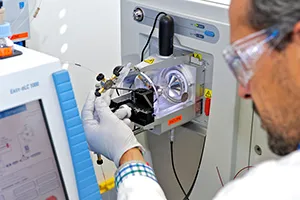
The identification and quantitative measurement of proteins gets its best benchmark from mass spectrometry. MS technology receives significant benefits from data-independent acquisition (DIA) along with tandem mass tag (TMT) labeling which has improved sensitivity and throughput.
Key Applications:
- Biomarker discovery
- Drug metabolism and pharmacokinetics (DMPK) studies
- Structural proteomics
2. Single-Cell Proteomics
Traditional proteomic methods process bulk protein mixtures derived from tissue samples yet single-cell proteomics performs protein analysis on cellular levels. This is particularly useful in:
- Understanding cellular heterogeneity in cancer
- Investigating immune responses
- Studying rare cell populations
3. Protein Microarrays
The research speed increases through protein microarrays that execute rapid analysis of protein interactions.
- Drug-protein binding
- Antibody-antigen interactions
- Protein biomarkers
4. Cryo-Electron Microscopy (Cryo-EM)
Through Cryo-EM scientists gained the ability to obtain detailed structural information about protein complexes and proteins at atomic scale. Drug discovery heavily relies on this technique because scientists need to create drugs that specifically reach protein structures.
5. Artificial Intelligence (AI) in Proteomics
AI-powered proteomics leverages machine learning algorithms to:
- Predict protein structures (e.g., AlphaFold by DeepMind)
- Identify disease-specific protein patterns
- Enhance data interpretation in high-throughput proteomics
Table: Comparison of Proteomics Technologies in Biopharma R&D
| Technology | Advantages | Key Applications |
| Mass Spectrometry | High sensitivity, quantitative | Biomarker discovery, drug metabolism |
| Single-Cell Proteomics | Resolves cellular heterogeneity | Cancer research, immune profiling |
| Protein Microarrays | High-throughput, cost-effective | Drug screening, antibody development |
| Cryo-EM | Near-atomic resolution | Drug design, structural biology |
| AI in Proteomics | Fast data analysis, predictive modeling | Disease diagnostics, protein function prediction |
Challenges in Implementing Proteomics in Biopharma R&D
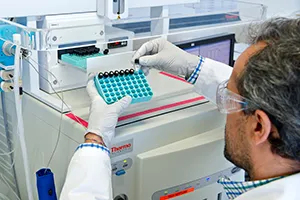
Despite its potential, proteomics faces several challenges:
1. Data Complexity and Interpretation
Large proteomic data requires complicated computational tools in order to produce significant interpretation results. Consistent data analysis methods have not been achieved yet.
2. Sample Preparation and Sensitivity Issues
The complete separation of biological proteins from their original samples combined with subsequent chemical analysis remains an advanced laboratory procedure. Studies of low-abundance proteins tend to face detection limitations because they contain important disease-related information.
3. High Costs and Infrastructure Requirements
The implementation of advanced proteomic equipment and skilled personnel and bioinformatics support demands significant financial resources and qualified personnel.
The Future of Proteomics in Biopharma
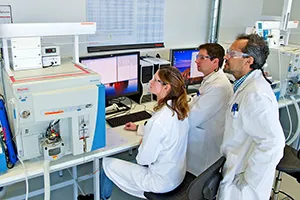
Proteomics research in R&D will progress how in the future. Multiple emerging trends in industry point toward interesting developments which are ahead.
1. Integration with Multi-Omics Approaches
Proteomic integration with genomic and transcriptomic and metabolomic (multi-omic) approaches delivers complete disease mechanism knowledge which drives systems biology discovery.
2. Expansion of Clinical Proteomics
The incorporation of automated instruments together with heightened sensitivity levels enables proteomics to transition from academic laboratories into clinical diagnosis applications. Proteomic testing of liquid biopsy samples shows the potential to transform the screening and supervision of conditions in their initial stages.
3. AI-Driven Drug Discovery
AI algorithms will improve proteomic analysis systems to speed up drug discovery periods while decreasing expenses for research and development.
4. Development of Targeted Proteomics Therapies
New therapeutic methods which use proteomics to selectively break down disease-causing proteins exist through PROTACs and molecular glues.
Conclusion
The use of proteomics methods leads a biomedical revolution that provides groundbreaking knowledge for disease studies and medicine individualization and drug creation processes. The future of healthcare is transforming through existing technological developments along with Artificial Intelligence advancements that aim to make proteomics a mainstream application.
The future development of proteomics depends on whether current technology has reached its capacity to extract complete protein universe potential. The upcoming decade will demonstrate what this field holds in store for medical and biopharmaceutical transformation.

Kate, Editorial Team at Pharma Focus America, leverages her extensive background in pharmaceutical communication to craft insightful and accessible content. With a passion for translating complex pharmaceutical concepts, Kate contributes to the team's mission of delivering up-to-date and impactful information to the global Pharmaceutical community.