


The Dimensional Evolution of Additive Biomanufacturing: 3D, 4D, 5D, and 6D Printing in Therapeutics and Regenerative Medicine
Baher Daihom, Associate Professor, Pharmaceutics and Industrial Pharmacy, Faculty of Pharmacy Cairo University
This comprehensive review evaluates the dimensional progression of additive manufacturing in pharmaceuticals and regenerative medicine. From static 3D drug delivery systems to stimulus-responsive 4D biofabrication, multi-axis 5D geometric modeling, and environmental-integrated 6D bioprinting, we analyze technical mechanics, clinical trajectories, and regulatory landscapes governing next-generation therapeutic formulation.
Introduction:
Beyond the Tablet Press: Why Pharmaceutical Manufacturing Is Going Additive
For most of its modern history, pharmaceutical manufacturing has been built on one assumption: make the same product, in very large numbers, as consistently as possible. Direct compression, wet granulation and batch-based organogenesis have served global supply chains well under that model. They were never designed for the patient who takes eight medicines a day, for the dose that needs to shift with age or body weight, or for a tissue graft that has to fit one specific defect in one specific body.
That gap in spatial, geometric and timing flexibility is where additive biomanufacturing comes in. It gives formulators and tissue engineers digital control over how a material is arranged, how fast it breaks down, and where cells sit within a construct, at resolutions below a millimeter.
Three-dimensional printing has already crossed the regulatory threshold. The FDA’s approval of (levetiracetam) in 2015 showed that a printed dosage form could reach patients. Since then, the field has moved well past fixed shapes. Materials that change over time, robotic print heads that move along several axes, and real-time sensing of the surrounding environment have given rise to 4D, 5D and 6D printing. Each tier adds its own mathematical, mechanical and biological capabilities, and each targets a long-standing bottleneck in targeted drug delivery, tissue engineering or living implants.
This article looks at all four tiers in turn: the chemistry behind them, what they can do in medicine, and what still stands between them and routine clinical use.
3D Printing in Pharma: Precision Architecture and the Rise of the Polypill
3D printing builds an object layer by layer from a computer-aided design (CAD) file. In pharmaceutical work, that covers several distinct techniques: Fused Deposition Modeling (FDM), Selective Laser Sintering (SLS), Stereolithography (SLA), Binder Jetting and Semi-Solid Extrusion (SSE).
What sets these methods apart from a tableting press is control over the inside of a dosage form. Printers can produce intricate internal geometries, porosity networks tuned to a target release rate, and multi-reservoir structures that conventional equipment simply cannot make.
Custom pharmacokinetic profiling is where this matters most clinically. Changing a tablet’s geometry, for instance producing a toroidal shape, changes how the drug is released.
The same capability makes the polypill possible: a single solid dosage form holding several distinct Active Pharmaceutical Ingredients (APIs), each kept in its own isolated compartment. For older patients and those managing multiple conditions, replacing a handful of daily tablets with one can make a real difference to adherence.
In regenerative medicine, 3D bioprinting uses cell-laden bioinks made from alginate, gelatin methacryloyl (GelMA) or collagen to build structural scaffolds for bone, skin and cartilage repair.
There is a ceiling, though. A 3D-printed structure is fixed once it leaves the printer. It cannot adjust as the body remodels tissue around it after implantation, and it cannot respond dynamically to its surroundings. Those limits are what drove the field toward the next dimension.
4D Printing: When Pharmaceutical Materials Learn to Change Over Time
4D printing adds time as a design variable. Skylar Tibbits first defined the concept in 2013. The approach relies on smart, stimulus-responsive hydrogels and shape-memory polymers (SMPs) that change their shape, properties or function when exposed to a physical or chemical trigger. Common triggers include body temperature, local pH shifts, magnetic fields, specific light wavelengths, enzyme activity and changes in ionic strength.
In drug delivery, this opens the door to highly targeted, site-specific release. Consider an oral dosage form designed to stay compact as it passes down the esophagus, expand in the stomach so it is not cleared too early (a gastroretentive system), and then fold into small actuators once it reaches the alkaline environment of the small intestine. Shape-memory polyurethanes, poly(N-isopropylacrylamide) (PNIPAAm) and crosslinked cellulose derivatives are frequently used to build self-folding micro-robots and deployable endovascular stents.
Tissue engineering has its own reason to care about time. Living tissue is never static. It contracts, stretches and organizes itself as it matures. 4D-printed biomimetic scaffolds can reshape themselves to match the complex micro-topography of a healing defect, or fold into tubular vascular channels as the surrounding bioink degrades. As the scaffold recovers its programmed shape, it delivers mechanical cues to the cells it carries, which can help steer stem cell differentiation.
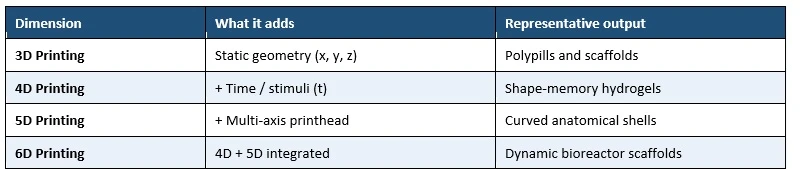
Figure 1: How each dimension builds on the last
5D Printing: Multi-Axis Motion for Stronger Medical Implants
Where 4D printing is about how a material behaves over time, 5D printing is about how the object is built in the first place.
A conventional 3D printer works on three perpendicular axes (X, Y and Z) and stacks flat layers on top of each other. That has two consequences. Parts tend to be weaker along the Z-axis, where layers can separate (inter-layer delamination). And curved objects need extensive temporary support structures during printing.
5D printing adds more freedom of movement, usually through a 5-axis robotic arm or a 3-axis printhead paired with a build stage that tilts and rotates on two further axes. Material can then be laid down continuously along curved, organic paths rather than in flat slices. For medical manufacturing, that means anatomically accurate curved parts, such as artificial joint surfaces, cranial plates and custom dental implants, can be printed directly instead of being approximated with stair-stepped layers.
On the pharmaceutical side, the benefits are greater mechanical durability and drug-release surfaces that work in multiple directions. Micro-channel networks inside a 5D-printed implant can be aligned with the paths of native blood vessels. This keeps fluid flow uniform and spreads stress more evenly under heavy physiological loads, which matters for orthopedic implants exposed to shear forces from many directions at once.
5. 6D Printing: Where Shape-Shifting Materials Meet Multi-Axis Robotics
6D printing brings the two previous tiers together. It combines the stimulus-responsiveness of 4D printing with the multi-axis motion of 5D printing. Smart shape-memory materials and bioinks are extruded by robotic arms along curved, non-planar paths, producing constructs that start with a complex geometry and then continue to change after printing.
This matters because human organs are rarely flat or still. Heart valves and the intestinal tract, for example, have fibers that run in non-planar orientations and are in constant motion, contracting and expanding. Reproducing that combination has been one of tissue engineering’s hardest problems, and 6D bioprinting is designed to address it directly.
A 6D-bioprinted heart valve construct shows how the two capabilities work together. The multi-axis printhead lays material along the natural orientation of the valve’s collagen fibers, which is the 5D contribution. The material itself is programmed to expand, contract or release anti-inflammatory factors in response to cyclic mechanical stress or biochemical signals, which is the 4D contribution.
6D printing also allows dense, vascularized implants carrying multiple drugs, with release profiles that shift as regeneration moves forward. The goal is the right therapeutic dose at every stage of healing, not a single fixed release curve.
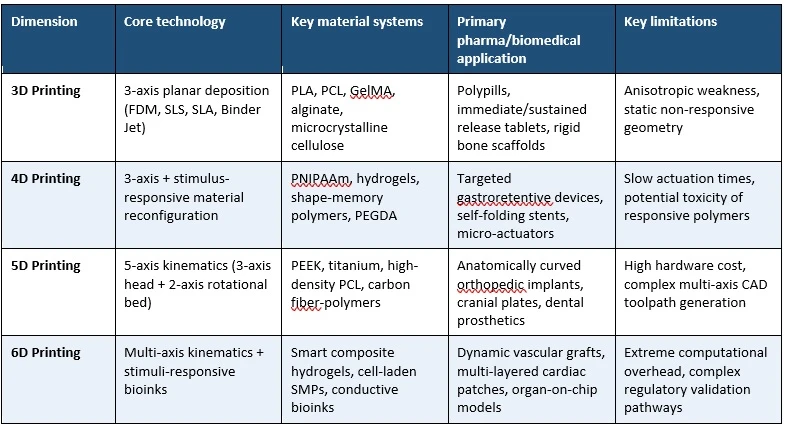
Table 1: Comparing the four dimensions in pharma and regenerative medicine
Bioinks and Smart Polymers: The Material Science Behind Multi-Dimensional Printing
None of these technologies reaches the clinic without the right materials. Bioinks and pharmaceutical polymers have to do two things that pull in opposite directions. They need shear-thinning flow behavior so they can be extruded cleanly and accurately. Once printed, they must hold their structure and keep encapsulated cells alive.
For 3D and 5D systems, thermoplastic polymers remain the gold standard: polycaprolactone (PCL), polylactic acid (PLA), poly(lactic-co-glycolic acid) (PLGA) and polyether ether ketone (PEEK). They are mechanically strong and degrade at predictable rates.
4D and 6D printing need more from their materials, specifically functionalized macromers. Hydrogels crosslinked through reversible covalent bonds, supramolecular host-guest interactions or photo-cleavable crosslinkers can undergo controlled shape changes. Adding conductive nanomaterials such as graphene oxide or carbon nanotubes lets printed constructs respond to electrical impulses, a property that is essential for cardiac and neural tissue regeneration.
Regulating 4D and 6D Printed Therapeutics: The Quality and Compliance Problem
The higher the dimension, the harder the regulatory question. The FDA, the European Medicines Agency (EMA) and other global regulators work within frameworks built for standardized, batch-produced medicines. Personalized, multi-dimensional constructs do not fit neatly into them, and they blur the long-standing boundaries between a drug, a medical device and a biologic.
Four obstacles stand out.
• Specifications that move: Standard release testing checks fixed attributes. A 4D or 6D product is designed to change over time and in response to physiological conditions, which makes conventional release testing and stability protocols difficult to apply.
• Validating the software and toolpath: 5D and 6D printing depend on complex, non-Cartesian slicing algorithms. Reproducible toolpaths, with no accidental collisions and no localized shear-stress hot-spots that can kill encapsulated cells, require rigorous software verification standards.
• Point-of-care manufacturing (PoCM): Moving production from central facilities into hospital pharmacies spreads quality management across many sites. That calls for real-time Process Analytical Technology (PAT), inline spectroscopic monitoring and sterile qualification at each location.
• Consistent raw materials: Smart polymers and cell-laden bioinks vary from batch to batch. Tight control of bioink viscosity, crosslinking kinetics and degradation profiles is essential for cGMP compliance.
“The shift from 3D to 6D printing fundamentally redefines biomanufacturing—transitioning from static structural scaffolding to living, dynamically adaptive therapeutic systems.”
From 3D to 6D Printing: What Comes Next for Personalized Pharmaceuticals
The journey from 3D to 6D printing is a turning point for pharmaceutical development and regenerative medicine. 3D printing proved that personalized dosage forms are feasible. The higher dimensions build on that foundation with new functions: 4D printing brings responsiveness over time, 5D printing brings mechanical strength and true anatomical curvature, and 6D printing combines both into a platform for dynamic organ synthesis.
Getting there will take sustained collaboration across disciplines that do not always work side by side: pharmaceutical scientists, robotics engineers, materials researchers and regulators. As computational modeling, AI-driven toolpath optimization and biomaterial synthesis mature, 6D biomanufacturing is expected to move from the lab into routine clinical practice. The prize is fully personalized therapy, matched to each patient’s anatomy, timing and physiology.

Baher Daihom is a translational scientist whose research centres on pharmaceutics, drug delivery, formulation, and nanotechnology. He has taught and conducted research as an Assistant Professor of Pharmaceutics and Industrial Pharmacy at the Faculty of Pharmacy, Cairo University, Egypt, and as a Visiting Research Scholar in the Department of Pharmaceutical Technology at the University of Tennessee Health Science Center (UTHSC), USA. He earned his B.Pharm. in Pharmaceutical Sciences from Cairo University with Highest Honors and Distinction (93.56%, ranking first). His master’s degree in Pharmaceutics, also from Cairo University, focused on nanocarriers as topical drug delivery systems. He completed the practical work for his Ph.D. in Pharmaceutics and Industrial Pharmacy at UTHSC, and the degree was awarded by Cairo University.