

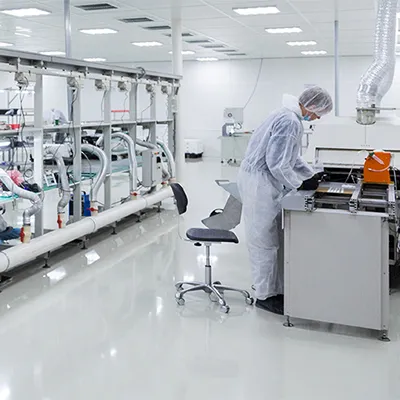
Pharmaceutical production enters a new era of production innovation, which is run by the State-of-Art machinery designed to adapt to production, reduce waste and increase the quality of the drug. In 2025, new technologies such as automatic rattan filling, high-core granular and AI-controlled inspection system bring revolution in the industry. This article highlights the best equipment beaches that define the future of pharmaceutical construction.
1. Continuous Manufacturing Systems
Continuous manufacturing system changes drug production by integrating all raw material stages into a single, uninterrupted process in the final product output. Unlike traditional batch treatment, which requires several stages and extended production time, continuous production enables more streamlined and scalable approach, reduces operating costs and increases production efficiency.
These advanced systems provide significant benefits, including better product stability, real-time monitoring and quality control increase. By combined these advanced analyses and automation, manufacturers can detect quickly and correct nonconformities, ensuring compliance with strict regulatory standards. The technique is especially beneficial for the production of active pharmaceutical material (API), oral solid dose forms such as tablets and capsules and biology, where accurate and real-time adjustments are important.
Since regulatory agencies such as FDA and EMA encourage continuous production of production, pharmaceutical companies invest in this technique to accelerate drug production, reduce waste and meet the growing market requirements effectively. With its ability to support agile and flexible production, continuous systems are determined to play an important role in the future of drug production.
2. AI-Operated Robotic Capsule Fillers
AI-operated robotic capsules filling machines set new standards in drug production by providing extraordinary accuracy, efficiency and flexibility. These intelligent machines streamline the capsule filling procedures while maintaining strict quality control. Considered to handle different capsules, sizes, types and formulations, they facilitate spontaneous transition between different products.
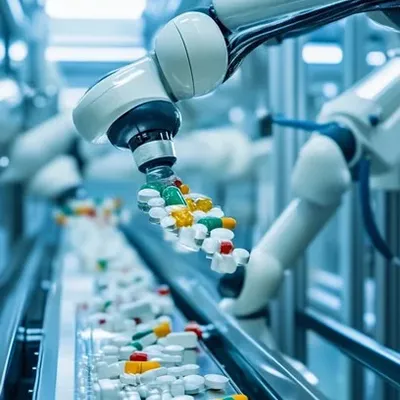
These machines are equipped with smart sensors and AI-operated analysis, and can detect real-time deviations and ensure compliance with stiff regulatory standards. Automatic response loop enables quick adjustments to maintain optimal quality in production. Much used in the production of pharmaceutical capsules, formulations of controlled release, nutraceuticals, supplements and individuals, increase these machines productivity and reduce human intervention. His ability to work with high accuracy and minimal waste makes him a significant innovation in modern drug production.
3. Automatic Aseptic Filling Machines
Handling aseptic filling processes presents important challenges due to the sensitivity of medication yoga. Automatic rotting filling machines addressed these concerns by maintaining the highest standards of sterility, accuracy and efficiency. By reducing human intervention, these machines ensure pollution-free production, which makes them ideal for the production of injection-capable medications, biology and other high-risk tactics.
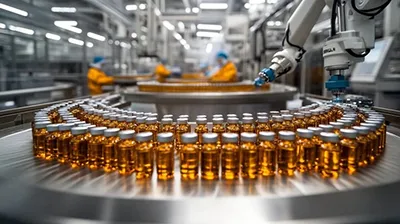
Various container types, including vials, sprayers and ampoules, are designed to adjust, these machines work on different fluid speeds, which provide flexibility for both small and large-scale production. Their integration process with advanced sterilization techniques and real-time surveillance systems increase reliability. With the strict regulatory requirements set by the FDA and EMA, these machines are widely used to fill sterile injection drugs, vaccines, monoclonal antibodies, insulin, eye solutions and other important drug products.
4. Single-Use Bioreactors
Single-Use Bioreactors appears as a viable alternative to traditional stainless steel bioreactors, and ends the need for extensive cleaning and sterilization between parties. By reducing water and energy consumption, they increase operating efficiency and scalability. Their disposable components, such as bags and pipes, reduce the risk of cross policy, ensure high product safety standards.
These are widely used in cell culture and microbial fermentation, including gene therapy and individual medicines for the production of monoclonal antibodies, vaccines, biosimilars and advanced treatments. Their adoption must be carefully considered for the environmental impact, especially about plastic waste management and stability problems.
5. 3D Printing Machines for Medicines
The 3D printing technique has been highly advanced in the drug sector, enabling the development of individual medicines, complex drug delivery systems and transplant medical equipment. Since 2015, regulatory bodies such as the FDA have approved 3D-printed medicines, including treatment for epilepsy, where further applications continue to expand.
These machines use additive production to produce complex dosage forms, including multilayer tablets and formulations of controlled-release. By using a production process for layer-by-layer, they provide accurate control over the composition of the substance, reduce physical waste and reduce production costs. In addition, 3D printing novels support translational research in drug delivery technologies, such as microneedles, which increase the patient's compliance and medical results.
6. High-Shear Granulators
Pharmaceutical production has High-Shear Granulators required, and converts nicely powder to uniform, dense granules. This process improves powder fluid, compression and uniformity a significant factor for tablet compression, capsules filling and coating applications. By ensuring persistent medicines, these machines reduce dust production, which improves both production security and hygiene.
Available in both models in laboratory and industrial models, high-shear granulators are much employed in API-excipient granulation, ensuring reliable and effective preparation of balls and capsules. Their ability to increase mixing symmetry and optimise the distribution of particle size makes them an important component of modern drug processing.
7. Advanced Lyophilisers (Freeze Dryers)
Advanced Lyophilisers play an important role in stabilising sensitive pharmaceutical products, as by removing water through highness. This process ensures structural integrity, stability and effect of vaccines, monoclonal antibodies, enzymes and genetic materials. With the increasing appearance of CDMOs and CROs, the lyophilisation technique is indispensable when it comes to distributing high-quality, stable wooden rates suitable for different customer requirements. These machines are equipped with a condition cutting-edge sensors and automated control systems, and regulate the correct temperature and pressure to adjust dryness and product quality.
8. Automatic Inspection Machines
Automatic inspection machines integrate AI, machine learning (ML) and advanced imaging techniques to inspect tablets, capsules, vials, syringes and injected products. These systems replace manual inspection, reduce human errors and improve efficiency. AI-operated algorithms analyse images to detect defects such as cracks, resolution, pollution or inappropriate seals. In addition, integrated sensors and laser measurements ensure uniformity in size, weight and size. These machines are capable of inspecting thousands of devices per hour and improving production accuracy and improving compliance with GMP and FDA rules.
9. Smart Packaging Machines
Smart packaging machines merge traditional packaging with advanced digital tools, such as IoT, sensor and data analysis, efficiency and product safety. These automated systems improve productivity by reducing manual labor and adapting packaging processes. Features such as RFID tags and QR code facilitate trace of real-time, and ensure the supply chain transparency and regulatory compliance. Integrated sensors monitor important parameters such as temperature and humidity, protecting sensitive drug products. In addition, smart packaging enables adaptation, allowing companies to allow tailor packing design for specific requirements.
10. Continuous Tablet Coating Machines
Continuous tablet coating machines provide better efficiency, accuracy and scalability in medicine production. Unlike batch treatment, these machines are continuously operated, ensuring a similar coating application. Integrated sensors and automated controls monitor main parameters such as spray speeds, airflow and real-time tablet movement. The energetic drying system increases productivity by maintaining compliance with GMP and FDA rules. These machines support high-quality production and reduce operating costs and resource consumption.
Emerging Trends and Future Opportunities
Pharmaceutical manufacturing is directed by automation, sustainability, and real-time data monitoring. AI-powered predictive maintenance is reducing downtime, while modular manufacturing units offer flexibility for personalized medicines. On Sustainability efforts, including biodegradable single-use components and energy-efficient machines, are gaining traction. The blockchain integration is enhancing supply chain transparency and security, helping combat counterfeit drugs. By these advancements will ensure a more efficient, adaptable, and secure pharmaceutical production landscape.
Final Thoughts:
The year 2024 received a significant bounce in AI-operated drug production technologies, with automation and intelligent systems increase efficiency, quality and compliance. While concern for automation instead of human roles remains, skilled professionals remain indispensable for the operation, maintenance and adaptation of these advanced machines.
Furthermore, integration of AI, IoT and data analysis will further limit production processes, and will allow future maintenance, surveillance of real time and more adaptation. In addition, stability will be an important focus, where companies invest in energy-efficient systems, biodegradable disposable components and waste-reducing technologies.
Regulatory bodies will continue to develop their guidelines to accommodate these innovations, ensure product safety and effect without technological progress. As harmonize with automation and human expertise, the pharmaceutical industry will move towards a smart, more sustainable future in drug production.