


Sustainability in the pharmaceutical industry has become a press control in the pharmaceutical industry due to the increasing effect of climate change, strict regulatory requirements and improvement of complications with the supply chain.
Climate change interferes with the availability of raw materials, production processes and distribution networks, making the supply chain flexibility. In addition, the industry addiction of complex global supply chains highlights weaknesses from lack of resource to transport.
A permanent pharmaceutical supply chain increases operational efficiency, reduces costs and ensures uninterrupted drug accessibility. Even more important is that it protects the patient's health by reducing the contact of environmental toxins, promoting moral purchasing and ensuring long life for medical innovations. By integrating sustainability into the most important commercial strategies, pharmaceutical companies can take environmental responsibility by maintaining profitability and compliance.
Sourcing of Raw Materials:
The industry's commitment to sustainability begins with the moral source of raw materials, especially active pharmaceutical ingredients (APIs) and excipients. To make sure that these materials are achieved responsibly, reduces environmental decline, reduces the risk of exploitation and promotes fair trade practice. Pharmaceutical companies actively adopt the supplier's transparency policy and are working on certified permanent sources certified to match global environmental and moral standards.
A main aspect of durable purchasing is to reduce the dependence on derivative materials for fossil fuels. Companies are looking for alternative, bio-based feedstock and green chemistry approach to develop APIs with low environmental impacts.
Sustainable agricultural facilities play an important role in pharmacological herbs and biology. The use of organic agricultural techniques, reduce pesticides and make sure that the conservation of biodiversity contributes to a long-term organic balance. In addition, permanent agriculture supports local economies and provides a stable supply of the necessary pharmaceutical materials, reduces deforestation and decline in soil.
By prioritising moral and durable sourcing, pharmaceutical companies can reduce their environmental footprints, increase the flexibility of the supply chain and meet regulatory expectations to green production practices.
Procedures for Green Production:
It plays an important key role in the environmental responsibility in the pharmaceutical industry. By using these principles of green chemistry, companies can reduce waste production, and process efficiency.
Such continuous construction helps to reduce chemical waste and energy consumption by increasing the dividend and cost efficiency.
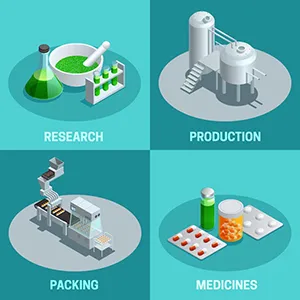
Energy-capable production facilities play an important role in reducing carbon emissions. Many pharmaceutical plants are effected by power operating in renewable energy sources such as sun, wind and biofuels.
Energy-efficient HVAC systems customise more advanced building design energy uses with smart lighting and automation. Using these measures not only reduces operating costs, but also corresponds to global sustainability obligations.
Water conservation is another important aspect of green production. Pharmaceuticals require significant water resources in both production and cleaning processes. Companies improve the methods of treatment of water to reduce recycling systems for closed loops, advanced filtration technologies and consumption and to prevent pollution.
Environmentally Friendly Packaging Solution:
Packaging is a major contribution to pharmaceutical waste, while packaging solutions are essential for reducing environmental impact. The industry goes towards biodegradable and reusable materials to reduce waste. Recycled aluminum blister packages and paper-based rooms further improved sustainability.
Reducing the use of plastic in secondary and tertiary packaging is another important strategy. Many companies replace multilateral plastic stairs with minimal, light packaging made of recycled paper, glass and plant-based plastic. Adding unnecessary packaging layers reduces the consumption of material and reduces carbon emissions associated with production and transport.

Innovation in smart packaging also changes sustainability efforts. Features such as dose-tracking sensors, temperature-sensitive labels and QR code-based information access reduces packaging size, and the material improves the patient's compliance by reducing waste.
By using environmentally friendly packaging solutions, pharmaceutical companies can significantly reduce environmental footprints, follow global sustainability rules, and green areas can meet consumers' expectations of health products.
Logistics & Distribution:
Pharmaceutical logistics and distribution significantly contribute to carbon emissions due to extensive transport and complex supply chain networks.
The supply chain plays an important role in reducing plan emissions. Strategies such as regional production customised delivery paths and shipments help reduce fuel consumption and transport-related emissions. Cold chain logistics, essential for temperature-sensitive pharmaceuticals, are improved with energy-capable cooling units and phase transit materials to reduce the environmental impact.

Digital tracking and smart inventory management further enhance sustainability by reducing waste and disabilities. The AI-operated future analysis helps to accurately demand and prevents overproduction and share loss due to expiry.
Blockchain technology enables tracing in real-time, and reduces unnecessary transport stages. In addition, stock automation and robotics contribute to energy savings and operational efficiency.
By doing these, pharmaceutical companies can make supply chains more durable by improving cost-effectiveness and compliance with regulations.
Waste Management and Circular Economy:
Waste management is necessary to reduce the environmental effects of drug production and consumption.
The main aspect is to disposal and recycling of expired medications, as pharmaceutical waste can contaminate water bodies and ecosystems if not handled properly.
Reverse logistics is another important strategy for unused medicines. This process involves collecting unused or finished medicines from consumers, pharmacies and hospitals to prevent unfair disposal. Many pharmaceutical companies in collaboration with the health care system reduce waste, and ensure compliance with environmental rules, in order to establish return residue initiatives.
In addition, solvent recycling systems and near-loop production processes contribute to reducing waste by reducing operating costs.
By using circular economics principles, the pharmaceutical industry can significantly reduce the resource, reduce environmental damage and create a more durable, flexible supply chain.
Compliance and Global Sustainability Initiatives:
Global regulations are drives on sustainability in Pharma. The European Union Green Deal is aimed at carbon neutrality by 2050, while FDA guidelines promote green production and waste reduction. Initiatives from industries such as SBTi and Net Zero Push Companies against lack of emissions and moral sources.
The leading companies from, GSK aiming for grid-zero emissions by 2030, and Novartis aiming for water conservation and Pfizer aiming to implement environmentally friendly packaging. With these rules and initiatives make sure a green areas and, more flexible drug supply chain.
Digital Transformation and AI in Sustainability:
Digital technologies bring revolution in sustainability in the drug supply chain. The AI-operated future indicative analyses optimize production, reduce waste and improve the demand forecast, prevents overproduction and share loss.
Blockchain technology increases opens and traceability, ensures moral sourcing and reducing fraud. It also streamlines regulatory compliance and supply chain verification.
IoT-activated monitoring improves resource efficiency by tracking energy, water and physical use in real time, enabling active protective strategies. Together, these technologies run more durable, skilled and flexible pharmaceutical industries.
Future Approaches and Recommendations:
Sustainability in the pharmaceutical supply chain develops with trends such as green production, digitisation and carbon neutral logistics. Companies should use renewable energy, environmentally friendly packaging and AI-operated adaptation to ensure long-term sustainability.
Main functions include strengthening regulatory compliance, investing in circular economy models and increasing the supply chain transparency. Industry collaboration with technology companies, decision makers and suppliers will be important to build up permanent innovation and achieve global environmental goals.
Conclusion:
Sustainability in the Pharmaceutical Supply Chain is no longer this is a requirement for environmental responsibility, regulatory compliance and long-term business flexibility. Companies can reduce their environmental footprint by embracing green production, moral sourcing, reduction in waste and digital changes, maintaining efficiency and profitability.
Collaboration in industries, compliance with global stability initiatives and continuous innovation will make meaningful changes. An active approach to stability not only ensures compliance, but also strengthens the supply chain flexibility, and finally companies, patients and planets finally benefit.