

Pharmaceutical innovation has made the difference between antibiotics and leading-edge gene therapies; it has given a second lease on life to people struggling with health challenges and made the difference between public health moving forward and backward. However, the industry role is not as innocent and perfect as it would appear. Its core business is to find, research, and market medicines, a conflict with purely commercial objectives. Investment in research and development is quite costly, yet the products offered end up being sold and marketed in a manner that will attract criticism on whether they are doing the right or wrong thing. The debates cannot be restricted to the fringe; they are a part of the business model.
The sphere has an impact on the healthcare policy, ownership of scientific data, and international impact, making it a strong player with significant ability to influence medical practice and patient outcomes. With such power, there is an acute ethical responsibility, especially when the decisions have to be made on who gets treated and at what price, under what conditions. The moral failures of a single individual within the industry can be disastrous not only on a level of a patient and the medical system, but also on the trust of all people all over the world in science and the medical profession.

The Morality of Price on Drugs
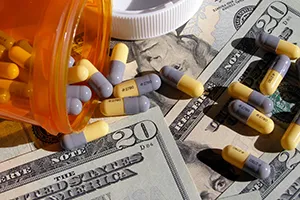
Pricing of medicines remains one of the highest and most emotional questions. The drug manufacturers claim that the prices are so high due to massive expenditure in research and development, which can take more than 10 years and be risky. Very few drug candidates manage to make their way into the market. Nonetheless, critics argue that the pricing practices tend to greatly exceed the recovery of investment, rendering access even in well-off countries a challenge. The gap is dramatic in low and middle-income economies, whose infectious disease treatment may cost more than most citizens can afford.
Medicines Access in Developing Countries
The wide disconnect between drug development and fair access is no more evident than in the area of global health. As diseases like malaria, tuberculosis, and some of the neglected tropical diseases are still affecting millions of people in lower-income areas, research on these conditions is consistently unfinanced because of their lack of return ability as investment.
Morally, it would depend on the presence of an ethical duty on the part of the company that has the capacity, with the available technology, to help, though lacking commercial interest. This question came to the fore in the COVID-19 pandemic when there was intense discussion about the equity of vaccines, waiving of intellectual property, and prioritisation of supplies. So-called pooling initiatives like the Medicines Patent Pool and Gavi, the Vaccine Alliance, have been set up to fill the gap, but are more limited than the full potential visualised without industry collaboration.

Intellectual Property and the Commons
Pharmaceutical inventions also require patents that offer businesses with proprietary right to sell new medications within a certain amount of time. This exclusivity is supposed to mitigate the risk, and motivate new investment into research. Nevertheless, patents can act as a barrier to affordable access in case of essential medicines as well.
The ethical concern is doubled when the life-saving treatment is not provided to generic manufacturers in countries with urgent healthcare needs. Those opposed to the current system call on the law regarding the protection of intellectual property to be adjusted to permit compulsory licensing under specific situations, whereas those who advocate the retention of the current status can warn that restriction of patent rights might inhibit further innovation. The sector should address these conflicting needs with apprehension towards serving the shareholders and society in general.

Clinical Trials Disclosure
Medical science can only be as good as it is well conducted and reported in a serious and straightforward manner in clinical tests. Nevertheless, questions have been raised against the issue of selective disclosure, whereby unfavourable outcomes are either under-reported or not reported at all. These practices constitute science corruption, evidence-based medicine distortion, and scientific attitude, rendering faith in the research and the public.
Transparency not only serves as an ethical privilege but also a health concern to the community. Complete reporting of either positive or negative trial results will permit the regulators, clinicians, and patients to make appropriate decisions. The moral standard in this setting is evident: when a product is going to be sold as one to be used in humans, all the evidence base must be accessible to appraisal.

Marketing and Prescribing
Drug companies put much money into advertising, and in most cases, they market their products to healthcare providers via sponsored conferences, teaching aids, and sometimes, rather significant financial gifts. Although these may share valuable information, it may result in conflicts of interest that affect the prescribing habits.
Human Subjects / Research Ethics
Human subjects cannot be avoided in a clinical trial and as such bring about some ethical considerations of ensuring the participants give valid consent, ensuring minimal harm, and establishing fairness when selecting the participants. It has been a problematic subject where trials have been performed in low-income countries which were done in conditions of flawed consent or did not give access to the medication under study once the trial was over.
Pharmaceutical manufacturing environmental impact
The ethical responsibility is not only related to the patients but also to the environment. Active pharmaceutical ingredients constitute manufacturing process that can be released to water systems and this leads to the antimicrobial resistance and ecological damage. There are similar problems regarding disposal of unused medicines.
Environmental stewardship is a phrase being increasingly used as part of corporate responsibility. The industry should factor in sustainability in their operations because the health of the public cannot be separated with the health of the environment
Conflicts between Stakeholder Value and Social Responsibility
Pharmaceutical companies operating as publicly-listed firms are under continuous conflict between the possible obligation to optimise their shareholder value and the ethical responsibility to help citizens stay healthy. When making decisions, especially those made by the executive, the issues related to price, research priorities and global distribution may be worded in terms of financial performance.
Ethically, one would ask whether, healthcare should be utilized mainly as a commodity or as a public good. This is not a black and white option, but the long-term legitimacy of the industry functions on the credible balance between them.
What is Regulatory Capture?
Regulatory agencies are supposed to be unbiased custodians of the safety of the people but their closeness in association with the industry may result in what is referred to as regulatory capture when the oversight agencies serve the industry more than the people. There are many moves of retirement executives in industries into regulatory backgrounds and vice versa, which raises issues of conflicts of interest.
The highly effective independent regulation should be maintained so that corporate convenience should not turn ethical principles into second-class citizens.
Ethical imperatives of Tomorrow: AI, Genomics and Personalised Medicine
New technologies have shown to be revolutionary when it comes to drug development and patient care promises. Artificial intelligence may speed discovery and genomic research makes it possible to practice precision medicine based on individual patients. But the innovations rise to a new set of ethical concerns, including data privacy, fair access, and the risk of genetic discrimination, to name but a few.
The pharmaceutical industry should be careful in addressing such frontiers proactively through integration of ethics in design phase rather than fitting security in response to problems.

Conclusion
The drug industry assumes an influential role of great responsibility. Its victories have been some of the finest exploits in human achievement but, its failures, whether linked to inability to afford medication, inexplicable trial processes, or morally weak surgical marketing, can cause permanent damage. Ethical issues in the sector are not marginal concerns, but they incorporate the undoing of the business and validity in the long term.
It will take a multi-stakeholder solution: an industry striving to impart ethical reasoning into strategy; regulators willing to act freely and transparently; and governments/civil society eager to serve as the guardian of all. Its best can be seen in the pharmaceutical sector which can be an example when it has both profit and a mission. The future direction is contingent upon the ability to acknowledge that quarterly earnings are not the real indicator of success but rather bringing a fair balance to human health.