

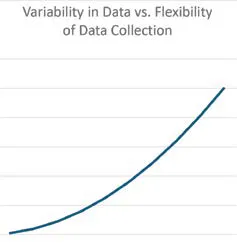
Virtual, digital, and decentralized are all descriptions of the novel ways that using technology changes how we conduct clinical trials. Decisions about using various technologies involve careful consideration to balance the flexibility of local providers and at-home tasks with the increase in variability of the data this flexibility will introduce. Digital technologies have the potential to expand participation in research, but the disparity in access and comfort with technology may also lead to the potential exclusion of certain groups. Sponsors, investigators, and IRBs should approach virtual decentralized trials with these complexities in mind. In this article, we will discuss virtual methods impacting various aspects of a clinical trial.
Digital Data Collection
Decentralized trials may involve using digital health technologies (DHT) to measure clinical events and characteristics remotely. The recently published FDA guidance, “Conducting Clinical Trials with Decentralized Elements” references another FDA guidance “Digital Health Technologies for Remote Acquisition in Clinical Investigations” for a more detailed discussion around verifying these technologies to be fit-for-purpose for the clinical trial. Additionally, the guidance instructs sponsors to consider whether DHTs are suitable for use by the population under study and to consider whether social or other barriers to the use of the technology could affect enrollment and retention in the trial.
Collecting data from participants at home or as they go about their daily activities instead of at discrete visits promises more data over time and accessibility for participants far from research sites. Researchers can record data via wearable medical devices like activity or sleep trackers or by smartphone apps like daily diaries. Sponsors will need to decide whether the study will provide technology or if participants will use their personal devices. Asking participants to use their own technology could make the activities easier on participants, but it might also be harder for site staff to troubleshoot issues in a diverse range of devices and operating systems. Additionally, even if a participant has their own technology, insufficient internet access in their home may be an issue for uploading data or using the device. If a study requires participants to supply their own devices, arrangements should be made for participants who do not have their own technology to ensure they are not excluded from the trial due to a lack of resources.
Replacing paper diaries is unlikely to increase the level of variability in data, but complicated remote data acquisition from medical devices used by participants may be more problematic. While the flexibility of taking measurements like vital signs or spirometry readings at home might reduce the number of clinic visits and increase flexibility, this will also introduce more variability in the data collected.
The FDA guidance on decentralized trials includes an example of self-collected home spirometry measurements versus in-office spirometry measurements. Participants may interpret instructions in unexpected ways, leading them to perform the tests differently whereas a designated, trained healthcare provider is more precise in administering the test. The benefit of home testing for recruitment and retention may still outweigh requiring participants to visit a clinic, but the increased variability in the data may require a larger sample size to demonstrate the same effect.
Additionally, as sponsors add more technology to a trial, sites are required to train staff and participants on how to use this technology. Sponsors should recognize this additional burden in clinical trial budgets and training plans for sites. In addition to participant input, sponsors should consider the perspective of sites in any decisions to digitize clinical trials. Sites report the increasing burdens of managing multiple clinical trial systems, and the associated training, password management, and fees for licenses and costs of purchasing devices.
Society for Clinical Research Sites (SCRS) conducted a site landscape survey in 2023 and reports that “other desired support included integrated, consistent technology to minimize duplicative data entry. 60% of sites polled in a May 2022 Sites NOW meeting said they are using 20+ systems daily. However, that number increases even more when considering other systems that are needed less frequently.” Each sponsor may only require a few systems, but sites may be working with several sponsors and have their own institutional technology to contend with – leading to the substantial technological burden they feel.
Sites also have a wealth of experience in understanding the needs of their participants. They can advise sponsors on the difficulties in managing a clinical trial in their field and community with certain types of technology. Working with sites early in the design can prevent delays at study startup. Similarly, working with patient advocacy groups can help inform sponsors of participant needs. Ideally, conversations among all three constituencies should take place early in the design process.
Data Privacy and Sharing
Another area of concern is related to data sharing across platforms. At each stage of data collection, sharing and storage, various data policies, laws, and regulations will apply. If data management strategies use third-party apps to collect and process the data, sponsors will need to understand the policies of the third parties regarding ownership, privacy, and security of the data to ensure they comply with all relevant laws and regulations. For example, imagine a study using an Apple watch to collect participant activity and sleep data, and an iPad for participants to record daily diaries of symptoms. Apple’s terms and conditions for these devices and apps will apply to the data collected. The study’s informed consent discussion should involve disclosing relevant restrictions and policies to participants and should include a discussion of any risks this poses to the security of their data.
Regulations regarding data use are increasing in complexity. A European sponsor collecting health data from participants in the United States will need to comply with both GDPR regulations and HIPAA regulations. Increasingly, U.S. states are passing data protection laws that may cover types of data in addition to data addressed by HIPAA or that require more stringent data security measures or breach notification procedures. This may necessitate state-specific informed consent disclosures. Sponsors should pay close attention to this rapidly evolving area of law.
Remote Visits and Related Activities – Who needs IRB Review?
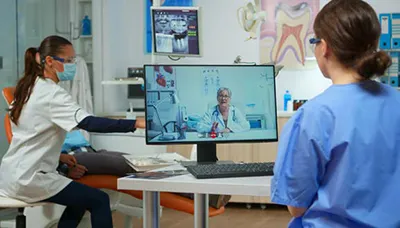
A variety of alternatives to face-to-face study visits can make clinical trials more accessible to a wider demographic of participants. Telehealth visits are face-to-face visits under FDA regulations, not electronic communications. There may be challenges to overcome in ensuring participants have access to adequate technology and bandwidth for video conferencing. Additionally, at-home visits, whether virtual or with visiting health care providers (HCPs), may lead to privacy concerns depending on the participant’s living situation.
Virtual Visits
Telehealth research visits surged during the COVID-19 pandemic due to concerns about transmission of the virus and the need to continue valuable health research. PCORnet® is a large, distributed network of clinical research sites, funded by PCORI to support comparative effectiveness research in health care. PCORnet® published a public query report, “Characterizing Telehealth Visits Across Clinical Research Networks Participating in PCORnet®, The National Patient-Centered Clinical Research Network,” including data from 13,000 clinical sites and thirty million participant encounters describing trends in telehealth research visits between 2019 and 2022. In 2019, less than 1% of participants had at least one telehealth encounter each month. This surged to 14% during the height of the pandemic and then settled at 5 – 7% by 2022. Looking at unique encounters rather than monthly encounters, in 2022 43% of participants had at least one ambulatory encounter and 34% had at least one virtual encounter, showing a substantial change from 2019 when 50% had at least one ambulatory encounter and less than 1% had at least one virtual encounter. These results, representative of sites across the U.S., ranging from large academic medical centres to community health clinics, demonstrate that telehealth visits are increasingly prevalent in clinical research.
Participants join and complete clinical trials when the perceived benefits outweigh the perceived burden. There is a risk that by increasing virtual encounters and reducing face-to-face visits we could alter the benefit-burden ratio to make trial participation less attractive. Do participants lose any perceived benefit in participating in clinical trials if most visits are virtual? The three top benefits reported by participants were hoping for a cure, helping future patients, and actively treating their disease. Participants ranked the top burdens as receiving a placebo, needing to rearrange one’s life, experiencing side effects, realizing the seriousness of one’s disease, and paying for trial-related expenses. Telehealth visits have the potential to reduce the burden of rearranging one’s life, reported by 41.9% of those surveyed as a significant burden.
Are participants able to feel hopeful, that they are helping patients, and that they are actively treating their disease as strongly in a virtual setting as they are in the clinic? Do they lose a sense of care by meeting with study staff and physicians remotely? These are the questions that still need answers. In a recent guest essay in the New York Times, Dr. Helen Ouyang described how telehealth visits during COVID increased rather than decreased her connection with her patients. It is possible that this sense of connection is reciprocal, but more research is needed to fully understand the research participant’s perspective on virtual visits.
eConsent
The FDA guidance document “Use of Electronic Informed Consent Questions and Answers” defines eConsent as “...the use of electronic systems and processes that may employ multiple electronic media, including text, graphics, audio, video, podcasts, passive and interactive Web sites, biological recognition devices, and card readers, to convey information related to the study and to obtain and document informed consent.” Despite the promises of eConsent, many sites still rely on paper consent or an e-signature on a standard electronic document. While both participants and IRBs report valuing eConsent, it is more expensive to set up at the initial review and to manage amendments during the life of the trial. Participants demonstrate better understanding when using eConsent, and it allows them to review materials in the comfort of their homes. IRBs recognize the benefits of eConsent but reviewing video or other multi-media content can be time-consuming and expensive for sites due to needing to provide screenshots of all content to the IRB.
Synthetic Data Sets and Digital Twins
Up to this point, we have discussed traditional clinical trials with human research participants and replacing face-to-face or analogue methods with virtual/digital technologies. Another type of virtual clinical trial that is earlier in development is the idea of using synthetic data sets or digital twins to conduct trials with virtual participants.
Even five years ago, this possibility seemed like science fiction, but with the advent of powerful generative AI technology over the last few years, this idea has gained more traction. In October 2024, NIH, NSF, and FDA announced a joint funding effort to support digital twin technology in the clinical trial space. Over six million dollars was awarded to develop digital twins for clinical and therapeutic use.
What is a digital twin? “Foundational Research Gaps and Future Directions for Digital Twins” defines digital twins as "a set of virtual information constructs that mimics the structure, context, and behaviour of a natural, engineered, or social system (or system-of-systems), is dynamically updated with data from its physical twin, has a predictive capability, and informs decisions that realize value. The bidirectional interaction between the virtual and the physical is central to the digital twin." In time, synthetic data sets and digital twins may allow for more targeted clinical trials, extrapolation from adult data to predict better pediatric starting doses, or even replacement of some clinical trials.
In summary, most clinical trials today involve some digital components as our world is increasingly digitized. Digitizing clinical trials may improve access for participants who live far from research sites or who find travel difficult. Sponsors should approach novel trial designs with openness to site and participant perspectives to maximize their investment in technology. An uneven adoption of digital technologies by participants based on geographical and socio-economic differences means that care must be taken to ensure equitable access and to support robust recruitment and retention in clinical trials.