
1. What motivated you to integrate both foundational pharmacology and advanced micro/nano-scale engineering concepts into a single unified textbook on drug delivery systems?
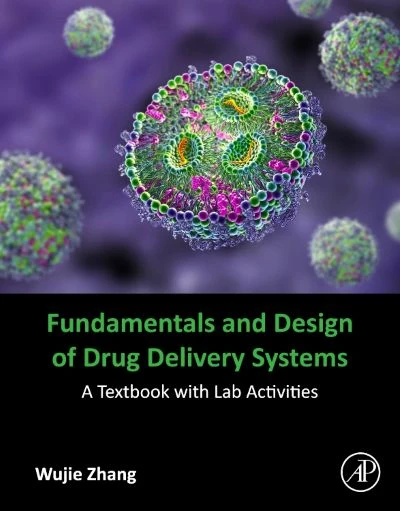
Answer: Most engineering students lack foundational pharmacology knowledge, yet advanced drug delivery system design must be grounded in pharmacological principles. I wanted to provide a resource that bridges this gap and equips engineers with the biological context necessary to design meaningful delivery platforms.
2. Your research spans biomaterials, tissue engineering, nanotechnology, and cancer therapy. How did these multidisciplinary experiences influence the structure and scientific depth of this book?
Answer: I am fortunate to conduct research across multiple fields, and my teaching experience, especially in an undergraduate setting, has exposed me to many textbooks in the discipline. Insights from both research and teaching helped define the structure and scientific depth of the book, allowing it to serve undergraduate students, graduate students, and professionals.
3. You have taught Engineering Controlled Drug Delivery for over a decade. What key learning gaps or misconceptions among students inspired the creation of this textbook with hands-on lab activities?
Answer: As mentioned earlier, most engineering students lack fundamental pharmacology knowledge. A common misconception is that drug development only concerns the design of new molecules. The lab activities help students understand that drug delivery extends beyond chemistry and requires engineering principles and systems-level thinking.
4. The book emphasizes biological barriers - physiological, immune, and cellular. Which of these barriers currently poses the greatest challenge for next-generation drug delivery platforms, and why?
Answer: All these barriers pose major challenges, though some are more intensively studied than others. The interplay between the host immune system and drug delivery systems has drawn increasing attention, for example, immune responses to PEGylated systems. Ultimately, the most critical barrier is application-dependent.
5. Nanotechnology plays a central role in your research and in this text. What are the biggest misconceptions about nanoscale drug delivery systems in academia and the pharmaceutical industry?
Answer: A major misconception is that nanoscale drug delivery systems are the solution in themselves. Delivery platforms must be designed based on real clinical applications. Other misconceptions include assuming that in vitro success guarantees in vivo performance, or that clinical failure reflects bad science.
6. Your book explores biomimetic and stimuli-responsive delivery systems. How close are we to seeing these technologies adopted in real-world clinical or commercial settings?
Answer: There are already clinical trials involving biomimetic and stimuli-responsive drug delivery systems. Several examples are included in the book.
7. Micro/nano-robotic drug delivery is considered futuristic by many. From your perspective, what breakthrough application will likely reach practical implementation first?
Answer: The earliest breakthroughs will likely occur in highly constrained and minimally invasive environments where the physics is favorable and biological variability is limited, such as localized gastrointestinal delivery.
8. You highlight 3D-printed and patient-specific drug delivery devices. How do you envision additive manufacturing reshaping the personalization of therapeutics in the next decade?
Answer: Additive manufacturing will reshape personalization by enabling patient-specific dosing and drug release profiles, as well as anatomically conformal implants that provide localized drug delivery.
9. AI-assisted drug delivery is an emerging theme in your book. In practical terms, how can AI accelerate formulation optimization or improve targeting accuracy in drug delivery engineering?
Answer: Artificial intelligence transforms drug delivery from a traditional trial-and-error approach to predictive design. AI can reduce development timelines, refine formulations more efficiently, and increase clinical relevance by guiding platform selection and optimization.
10. From a translational perspective, what are the biggest roadblocks preventing innovative delivery systems from moving beyond laboratory success to clinical or commercial adoption?
Answer: New drug development is a long process, and drug delivery system design is often overlooked or integrated too late. Collaboration across disciplines and industry sectors is critical; the Pfizer-BioNTech COVID-19 vaccine is an excellent example of how partnerships accelerate innovation.
11. Scale-up failures often hinder micro/nano delivery technologies. What engineering principles or strategies do you recommend to researchers to ensure manufacturability from day one?
Answer: I always emphasize avoiding unnecessary complexity in engineering design. Interdisciplinary collaboration is also essential. Maintaining curiosity and learning from nature, through nature-inspired and biomimetic designs, often leads to more scalable and robust solutions.
12. Your work frequently intersects with cancer therapies. Which targeted drug delivery approaches do you believe hold the greatest promise for transforming oncology care?
Answer: Targeted delivery systems that incorporate multiple targeting strategies show great promise. Integrating stimuli-responsiveness is also critical to ensuring that drugs are released in the desired manner within the tumor microenvironment.
13. The book’s lab activities emphasize experiential learning. What laboratory skills do you consider essential for preparing the next generation of drug delivery engineers?
Answer: Experimental design is the most critical skill, especially for engineers. Beyond hands-on experimentation, following SOPs, maintaining proper documentation, and performing data analysis, including statistical interpretation, are all essential.
14. Looking ahead, what emerging technologies - such as CRISPR delivery, organ-on-chip systems, or biohybrid microrobots - do you believe will redefine the future editions of this textbook?
Answer: All the above. Gene editing technologies like CRISPR, organ-on-chip systems, organoids for testing, micro- and nano-bots, and more. In addition, the growing role of artificial intelligence will likely expand significantly in future editions.