

1. Can you describe your expertise in integrating real-world data (RWD) and real-world evidence (RWE) into clinical research and decision-making processes?
Real world data and real world evidence (RWD/RWE) and being patient centric continues to gain importance in drug development, clinical research, healthcare and regulatory decision making. Navitas Life Sciences has been leveraging our experience and expertise in RWD/RWE through comprehensive capabilities in implementing and managing clinical registry programs. The purpose of implementing a registry program is to characterize a disease and its progress, to define patient population and sub-populations, and to examine the use of certain approved drug or medical devices. A registry can be very valuable for informing future clinical trial design(s), for targeting possible participants for recruitment, and for care cost, and policy decisions.
The clinical registry programs provide valuable insights into the effectiveness and safety of medical interventions in real-world settings. It is essential to utilize the collected data efficiently by implementing clinical registry programs that support data aggregation and analysis. The efforts in real-world data (RWD) and real-world evidence (RWE) also empower scientists and researchers, creating incentives for centers of excellence and sites to partner with the government, disease foundations, and collaborate with pharmaceutical and biotech companies. Most importantly, clinical registry programs connect with patients, caregivers, and patient advocacy groups. While gathering patient data, it is crucial to protect patients' privacy and provide them with insightful information using the right tools to support and engage them. Leveraging our capabilities in clinical registries with RWD and RWE is essential for informing treatment decisions, optimizing patient outcomes, and ultimately improving the quality of healthcare delivery.
2. What motivates you to utilize RWD and RWE, and how do these data sources complement traditional clinical trial data?
Navitas Life Sciences’ years of experience in implementing RWD/RWE registry programs motivate us to support sponsors and their stakeholders in planning programs with scientific rigor. Our scientific leads and subject matter experts direct and oversee landscape analysis and study plan development. We possess the necessary skills and experienced team to support registry operations, manage sites both in the US and internationally, provide regulatory support, and offer data coordinating center services.
Properly assessing the registry data sources is crucial for running a successful registry program. Registries typically include RWD/RWE and other data from EHR/EMR systems, as well as data collected directly from patients, such as patient-reported outcomes, imaging data, and genetic data. Data standardization and common data elements, including HL7, CDISC, and disease-specific controlled terminologies, are vital for harmonizing and integrating multiple data sources and metadata definitions. Data quality control, management approaches, and software choices can differ significantly from those in clinical trials. A one-stop clinical registry repository powered by AI/ML becomes a valuable tool for efficiently and effectively handling the five Vs of data: volume, variety, velocity, veracity, and value. RWE and ‘Patient Centric’ are all hot topics and in high demand these days. Many organizations rush to start a registry program without enough strategic planning and careful evaluation. The common pitfall we have observed is that before starting a registry program, some organizations did not have a clearly defined purpose and goals. We have also observed that some of the registry programs may attempt to include too much data into the registry program and eventually lose focus and must then face the scope and cost constraints. Navitas understands that it is critical to start with a defined list of questions and find the answers. Some registry programs start with limited registry stakeholder consideration and a lack of registry community consideration (for example, patient engagement, participation and involvement of clinicians and researchers).
3. Could you discuss specific examples where RWD and RWE have led to significant advancements in healthcare interventions or improved patient outcomes?
A disease-specific registry study was awarded to Navitas Life Sciences as a "rescue" project, previously managed by another CRO. The project goals for Navitas were to provide registry operation and regulatory support to the sponsor and the US and ex-US sites, and to serve as the Data Coordinating Center. We leveraged our deep experience in managing registry programs, building registry platforms in less than three months, and supporting metadata-driven data harmonization and system integration to develop and implement this registry program. This registry project serves as a model for our clinical registry coordinating center and Clinical Study Rescue services, which have become a major marketing thrust for Navitas to future clients. The project also demonstrated the Navitas team’s capability to rapidly respond to evolving client requirements and tight deadlines, further refining our approach to providing timely "rescue" of clinical registry studies that require high-quality, customized deliverables to meet the needs of the sponsor and multiple stakeholders.
4. What are the primary challenges you face when harnessing RWD and RWE for clinical insights, and how do you address them?
Clinical trials and clinical registry studies based on RWD/RWE) include patients ‘data from standard care, patient reported outcomes, medical history and disease and treatment, and other information. Some trials and registries also include data from caregivers. A lack of clear objectives can result in poor quality or less usable data due to improper protocol design or insufficient scientific rigor. RWD/RWE-specific considerations should include:
• Protocol design and strategy
• IRB and regulatory consideration
• Data and data sources
• eSolution choices, system integration and inter-operability, especially EHR/EMR data vs. clinical research data; stakeholders
• Data sharing
• Data insights and secondary uses, and
• Sustainability
A large Disease Foundation has a multi-center community and offers genetic testing to create genetic data and sample repository. This registry program also provides genetic counselling to the participants. The foundation required the services of a Registry Coordinating Center to support their large genetic registry program. We overcame challenges and streamlined processes across 100 US and ex-US sites, implemented robust data management, successfully integrated clinical and genetic data for over 15,000 patients, and facilitated data sharing with influential global entities and government agencies and other organizations.
5. What role do technological advancements, such as AI and machine learning, play in analyzing and interpreting RWD and RWE for clinical insights?
Increasingly, clinical research involves RWD/RWE collected from various sources and systems, with disparate data types and formats. Validating RWD sources and dealing with RWD data quality can be challenging. Harmonizing, integrating and interpreting such data requires clinical data scientists with a more complex background and skillset. Generative AI in healthcare and clinical research is expanding rapidly by generating content and results through analyzing large data and training examples. eSolutions empowered by AI/ML can deliver a more streamlined and automated solution for executing clinical data by using AI to integrate and automate processes from data aggregation to the generation of validation-ready datasets for data mining and insights.
More than ever, advanced statistical models and AI/ML algorithms are required to monitor data continuously throughout a trial, including RWD/RWE, as the complexity and volume of data expands. Modern technology and system integrated Modeling and Analysis Programming (MAP) offering allows data scientists and biostatisticians to seamlessly develop data models using SAS, R, and Python, with no data transfers or exports required. Models can be developed using real-time data curated in as well as imported in external historical and RWD/RWE data sets. Data Scientists can use pre-built models to perform correlation analyses, identify duplicate patients, and uncover digit preferences, or they can create new models to perform predictive analytics. Statistical models can also be created to test hypotheses, set benchmarks, and monitor data throughout the trial.
6. How important is collaboration among stakeholders in leveraging the full potential of RWD and RWE, and what strategies do you employ for effective collaboration?
It is very important to identify the stakeholders as early as possible; this will determine and drive the study plan, governance and policy, and maximize the potential of RWD/RWE. A team of experts in scientific, clinical research and standard care should serve as the Scientific Lead and oversee the development of the scientific study plan and the landscape analysis. The scientific lead will interact with the principal investigator and the external experts on any relevant scientific issues regarding RWD/RWE. They will also direct RWD/RWE data and other data to be collected and scientific questions that need to be answered, help establish inclusion and exclusion criteria; strategize recruitment and retention efforts for facilities, providers and patients. Collaboration with patients’ partners and caregivers can result in efficient and effective collection of RWD, produce valuable RWE and ultimately gain useful data insights.
A fully functioning Coordinating Center to provide support for clinical study and research operations, regulatory support, and data coordination is another crucial element to the success in RWD/RWE programs. A successful Registry Coordinating Center is made up of a team of experts that ensures that the data collected across multiple sources is accurate, adheres to appropriate local and federal regulations, and has been quality reviewed. This team should have the knowledge and experience to maintain high-quality systems and platforms throughout the RWD/RWD program life cycle and implement advancements to adapt to research and technology advancements in the field.
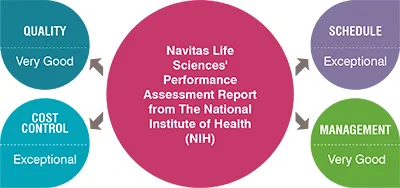
Our unique effective collaboration approach and effort includes supplying long-term support to various National Institute of Health (NIH) Institutes and Centers (ICs), Department of Defense (DoD), and the Centers for Disease Control and Prevention (CDC), as well as disease focused foundations, commercial biopharmaceutical and medical device companies, and academic institutions. In addition, Navitas has been partnering with various organizations, vendors, networks and center of excellence. Together, our team is very agile and responsive, and able to supply the depth of RWD/RWE capability, network of subject matter experts (SMEs), and trusted experience necessary to fully implement requests and future needs.
7. What are your views on data sharing and privacy concerns related to RWD and RWE, and how do you ensure ethical considerations are met?
RWD/RWE is based on access to patient data and is essential for the advancement of medical research and the improvement of healthcare outcomes. To address data sharing and privacy concerns, ethical considerations must include obtaining informed consent from patients, implementing robust data anonymization techniques to protect patient identities, ensuring data security through advanced protection measures, maintaining transparency about data usage policies, and adhering to regulations like The General Data Protection Regulation (GDPR) and The Health Insurance Portability and Accountability Act (HIPAA). These measures collectively ensure the ethical use of patient data while protecting data from piracy.

8. Where do you see the future of RWD and RWE headed in terms of their impact on clinical research and healthcare interventions?
The future of RWD/RWE is poised to significantly impact clinical research and healthcare interventions. These data sources will enhance clinical research by providing valuable insights that lead to more effective and personalized treatments. They can expedite drug approvals as regulatory bodies increasingly consider RWE in their decision-making processes. Additionally, RWD and RWE will improve patient outcomes by enabling healthcare providers to tailor interventions to individual needs. The integration of innovative technologies like AI and machine learning with RWD will further uncover previously unattainable patterns and predictions, revolutionizing healthcare delivery.
9. Can you share insights on the strategic integration of RWD and RWE into clinical decision-making processes and their contribution to improved patient outcomes?
Clinical registries play a vital role in collecting RWD and RWE, reflecting patient experiences in everyday clinical settings. This data provides insights into treatment effectiveness, safety, and quality of care. By leveraging clinical registries, healthcare professionals can discern patterns in patient outcomes and develop personalized treatment plans.
Integrating clinical registries with RWD/RWE enhances patient safety, quality of care, and evidence-based decision-making. These registries help identify knowledge gaps, optimize treatment options, and inform clinical trial designs. Additionally, they aid in policy making and cost management by providing a comprehensive understanding of medical practices and outcomes.
10. What advice would you give to organizations looking to integrate RWD and RWE into their clinical research and decision-making processes effectively?
RWD/RWE integrate more closely with today’s clinical research. We would advise other organizations that it is important to consider the following points when planning and implementing a clinical research program:
o Start a clinical study and/or registry with a landscape analysis and study plan, incorporating scientific rigor to inform the registry development and road map.
o Identify the stakeholders as early as possible as this will determine and drive your governance and policy; in addition, focus on patient centric needs.
o Evaluate the operation skills required to implement a clinical registry program: define resources and specialties to run a registry program including balanced consideration of the internal expertise and capacity, and the need of an experienced CRO to serve as the coordinating center.
o Consider RWD/RWE data and other data sources, platform selection and modern technology and AI/ML to streamline the process and automation.
o Work closely with the regulatory authorities, develop public-private partnerships to support ongoing activities, engage patient advocate groups, and appropriate use and share data.
11. Is there anything else you would like to share about your work or insights on harnessing RWD and RWE for clinical advancements?
Over the years Navitas Life Sciences has provided clinical trial support to over 100 institutions from the biopharmaceutical and medical device industries, academic institutions, disease research-based foundations, and the U.S. Federal Government. Navitas has been providing high QUALITY deliverables and FLEXIBLE and RESPONSIVE “High-Touch” services to the client, resulting in both significant praise for the team as well as continued requests to perform additional services in support of the client’s RWD/RWE programs.