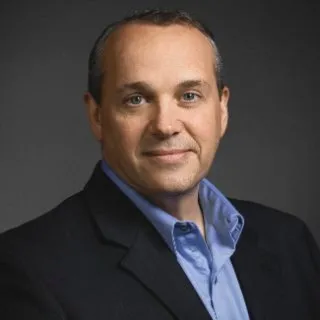
Together, they’ll help us explore where the real momentum lies, what’s hype versus reality, and how we can navigate the evolving terrain of advanced therapeutics with clarity and impact.
1. All Panelists - Each of you represents a unique domain - analytics and strategy (Carl), synthetic biology and commercialization (Lee), and operational CGT development (Brian). How do you each define the current "frontier" in RNA, CAR-T, and CRISPR-based therapies - and which of these is advancing fastest toward clinical and commercial maturity?
Brian: CAR-T leads commercially, but CRISPR is redrawing the scientific map.
CAR-T has matured with approvals, reimbursement, and expanding use, but now it’s optimizing, not reinventing. RNA is scaling fast, especially with mRNA and circular RNA innovations, but delivery still lags. CRISPR, though early, pushes the boldest frontiers, editing the genome with increasing precision. The commercial winner today is CAR-T. The clinical fast-mover may be RNA. But if you're chasing the bleeding edge of biology, CRISPR is where the future is being rewritten.
Carl: The “frontier” isn’t just the next shiny mechanism, it’s where science meets scalable market reality. siRNA is moving fastest, with platform agility and manufacturing maturity that puts it ahead of CAR-T and CRISPR on a commercial timeline. CAR-T has momentum but is grinding through the operational realities of scaling, especially in solid tumors. CRISPR has the most disruptive upside, but it’s still very early innings, constrained by delivery and editing precision. Each is pushing boundaries but not at the same pace.
Quote: “siRNA’s lapping the field on commercial readiness, CAR-T is grinding through scale-up pains, and CRISPR is the wild card with the highest upside but the longest road.”
Lee: CRISPR - due to its precision, durability, and programmability. Commercial maturity is being driven by allogeneic models, scalable nanoparticle delivery, and platform INDs that de-risk development. When combined with synthetic gene circuits, it allows cells to sense, compute, and respond to complex disease signals with precision. This moves us beyond one-time edits toward dynamic, responsive therapeutics. As multiplex editing, controllable promoters, and modular circuit design mature, CRISPR will evolve from a gene-editing tool into a programmable platform for intelligent, adaptive medicine.
2. Carl, based on your experience in indication road mapping and pipeline strategy, how are companies prioritizing between these platforms? Are there any therapeutic areas where the commercial potential of CRISPR or RNA is being undervalued?
Carl: Pipeline prioritization is increasingly a resource-allocation exercise: where’s the sweet spot between biology, manufacturability, and competitive landscape? mRNA, for example, wins on paper in programs that benefit from speed, iteration, and breadth of application. One can see this in the cell therapy space, with ex vivo cell therapies moving into earlier lines of therapy with (often) mRNA-based in vivo cell therapy approaches only in early clinical development. CRISPR is being deployed selectively in rare, high-value indications where the economics support risk or in knock-out settings. Commercial upside is still underappreciated across extra-hepatic indications, but the delivery needs to mature more to truly make those programs relevant.
Quote: “Companies are following the capital-efficiency curve: RNA for speed and breadth, CRISPR for rare, high-value wins.”
3. Lee, Houdini Bio is advancing synthetic biology to enhance gene expression. Can you elaborate on how programmable gene control mechanisms can enhance the precision and safety of RNA and CAR-T therapies?
Lee: Synthetic biology is enabling therapies that decide when, where, and how to act. At Houdini Bio, we’re engineering gene systems that allow therapies to act under their own control, and not at the mercy of the hostile environments they end up in. These systems improve safety, durability, and control. We’re moving beyond “fire and forget” toward living therapies that adapt within the patient in real time.
4. Brian, with your deep CGT operational background, what is the biggest misconception biotech startups have when it comes to scaling CAR-T therapies from bench to bedside?
Brain: That it’s going to be simple. Too many startups assume a promising preclinical signal will translate smoothly into the clinic. But CAR-T is not plug-and-play. They underestimate the complexity of manufacturing, the regulatory nuances, patient variability, and especially the financial and operational cost of scaling a therapy that’s still largely handcrafted. Success requires more than good science; it demands infrastructure, patience, and capital most early-stage teams haven’t accounted for.
5. Carl, regulatory harmonization for advanced therapies remains inconsistent across markets. How can agencies and innovators work together to streamline global regulatory pathways for CRISPR-edited and RNA-based treatments?
Carl: Regulatory harmonization has moved slowly but in the right direction. Agencies can borrow from each other’s playbooks through reliance models, shared assay standards, and agreed frameworks for long-term safety tracking. Innovators can help by overdelivering on data quality and making it easy for regulators to say “yes.” The faster we align globally on potency, specificity, and durability metrics, the faster the next wave of CRISPR and mRNA programs will clear the runway.
Quote: “Global regulatory harmonization is possible if agencies share playbooks and innovators make it easy to say ‘yes.’ The goal: one high-quality data package, many market approvals.”
6. Brian, with early CAR-T products facing hurdles in pricing, access, and logistics, what commercialization lessons can newer CRISPR or RNA-based therapeutic developers learn from those case studies?
Brain: Simplify early.
Even breakthrough therapies will stall if delivery is too complex. CRISPR and RNA developers must design with the last mile in mind including scalable systems that work in standard clinics, not just elite centers. Prioritize ease of administration, clinician education, and workflow integration. If it’s hard to prescribe, it won’t be prescribed. Areas of real-world friction like logistics, access, and payer barriers, must be addressed early. Great data alone won’t drive adoption if the therapy doesn’t fit the system.
7. Lee, coming from a strong business development role at CGT Catapult, how do you assess collaboration models - such as biotech-tool provider partnerships or public-private ecosystems - in accelerating innovation in synthetic and cell-based therapies?
Lee: Innovation in advanced therapies is increasingly driven by collaborative models that go beyond traditional partnerships. In the UK, initiatives like the Cell and Gene Therapy Catapult and the Centre of Excellence in Regulatory Science and Innovation exemplify how shared infrastructure and pre-competitive collaboration accelerate progress. We're seeing biofoundries co-developing with therapeutic companies, and regulators engaging in design-phase sandboxes. These embedded ecosystems enable open innovation—where risk, insight, and intent are shared—unlocking faster, safer, and more scalable translation of complex therapeutic platforms.
8. Carl, how is the industrialization of gene editing and RNA therapeutics influencing the tools, platforms, and CDMO market landscape over the next 3–5 years?
Carl: We’re watching the tool and CDMO market shift from artisanal to industrial. mRNA synthesis lines, high-throughput editing workflows, and in-line analytics are becoming plug-and-play modules. The winners will be CDMOs that can flex capacity across modalities, layer in proprietary delivery tech, and collapse timelines from sequence to IND. Over the next 3–5 years, expect less bespoke tinkering and more standardized, digitized manufacturing that scales like a product.
Quote: “Advanced therapy manufacturing is going from artisanal to industrial. Winners will have modular capacity, proprietary delivery, and the ability to go from sequence to IND without breaking stride.”
9. Brian, considering your background across tools, services, and therapeutic firms, how do you see automation, digital manufacturing, and modular bioprocessing reshaping CGT production economics?
Brain: Automation and modular bioprocessing can transform CGT economics, but only if built in from the start.
Too many teams lock into manual, bespoke workflows that don’t scale. Designing for platform compatibility early enables repeatable, cost-effective development across programs. Digital tools won’t replace good process design, but they prevent scale-up from becoming a reinvention. It’s not about optimizing too early, it’s about avoiding bottlenecks later by building a foundation that’s flexible, transferable, and ready for growth.
10. Lee, we're beginning to witness cross-platform innovations, like CRISPR-edited CAR-T cells or RNA-regulated cell functions. Which such synergistic therapeutic designs do you find most promising for durability, safety, or scalability?
Lee: Modular therapeutic systems must integrate the right tool for each task—CRISPR for editing, RNA for conditional control, and synthetic circuits to manage cell behaviour. Platforms like RNA-guided switches in allogeneic cells enable clinicians to fine-tune responses post-infusion, improving safety and reducing bespoke manufacturing. Companies like ArsenalBio and Allogene are leading, but others are quickly advancing. These programmable, logic-driven systems will make advanced therapies safer, scalable, and viable within real-world healthcare settings where cost and control are critical.
11. Looking at emerging markets and underserved indications, where do you see the next breakout opportunity for RNA, CAR-T, or CRISPR platforms beyond oncology?
Brian: The next breakout will come where unmet need, genetic tractability, and delivery align. That points to rare monogenic, chronic viral, and select autoimmune diseases. The key is using each platform where it fits naturally:
• RNA excels in liver-targeted diseases like AATD
• CRISPR suits permanent correction in CNS/neuromuscular disorders
• CAR-based cell therapies can redefine care in autoimmunity/infectious disease
Force-fitting technologies wastes time. Delivery feasibility should guide indication, not vice versa.
Carl: Beyond oncology, autoimmune and inflammatory diseases are shaping up as the next breakout chapters. mRNA and CRISPR can go after chronic biologic markets with one-time or infrequent interventions. CAR-T is finding surprising traction in autoimmune reset — lupus is the early flagbearer. And in emerging markets, mRNA’s lighter manufacturing footprint makes it the easiest to scale into new geographies without breaking the cost model.
Quote: “The next wave is autoimmune and inflammatory — turning chronic biologic markets into one-and-done interventions.”
12. All panelists - Which of these three platforms - RNA, CAR-T, or CRISPR - do you believe will have made the most transformative impact on healthcare? And what will have been the biggest catalyst or barrier in that journey?
Brian: Long term, CRISPR stands alone in curative potential. While RNA and CAR-T have led early success, CRISPR can rewrite our genetic code, offering durable cures for monogenic and complex diseases alike. Delivery, specificity, and safety remain hurdles, but innovations in in-vivo, base, and prime editing are expanding what’s possible. The key is to unlock safe, targeted delivery beyond the liver. CRISPR is slower out of the gate but it's running the race that truly changes medicine.
Lee: CRISPR is set to redefine medicine—not just by treating disease, but by enabling durable, multiplexed genomic correction. The shift to allogeneic models, platform-based INDs, and maturing delivery technologies is accelerating commercial viability. Lipid nanoparticles and organ-targeted vectors now allow precise, scalable in vivo editing. Add evolving reimbursement models, and CRISPR is moving from a bespoke tool to a platform play. Its future lies in programmable, multi-gene systems designed with intent—not just to repair, but to intelligently rewrite biology.
Carl: CRISPR will likely deliver the most qualitative shift — single-dose, potentially curative interventions. The catalyst will be broad in vivo delivery; the barrier will be making it safe, repeatable, and affordable. For quantitative reach, mRNA will touch more patients, faster, thanks to speed and versatility. The common denominator challenge? Economics. If these platforms can’t bring cost of goods down while proving durable benefit, the science won’t translate into system-wide impact.
Quote: “CRISPR will deliver the most profound cures; mRNA will reach the most patients. Both will stall if they can’t crack the delivery problem.”
Thank you to our panelists for the thoughtful discussion. What we’ve heard today is that RNA, CAR-T, and CRISPR each hold powerful promise but their greatest impact will come through integration, innovation, and practical execution.
The future of medicine is being built now, and collaboration across science, strategy, and systems will be key to making it real.
Thanks for joining us.