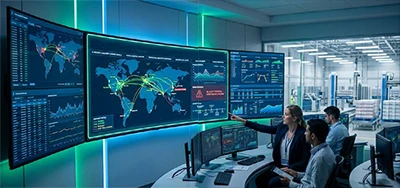
The pharmaceutical industry faces a defining moment. For over a decade, companies have invested billions in securing drugs while storing as well as throughout the supply chain. Last few years, industry see spend increased due to serialisation and track-and-trace systems to meet regulatory mandates. Yet many organisations still put the majority focus on meeting compliance and regulations rather than building it as a strategic asset. The next evolution—embedding AI/ML through the Serialization and traceability software solutions from L2 through L5 —promises to transform serialisation from a necessary cost center into a powerful business advantage while strengthening Right first time, Operation efficiency, supply chain security, quality assurance, and patient safety.
Traditional supply chains dependent on manual oversight and reactive problem-solving are giving way to intelligent networks that prevent errors before they occur, predict failures with precision, and automatically implement corrective actions. This represents a fundamental reimagining of how Industry ensures every medication reaches patients in perfect condition, fully traceable from manufacturing to consumption.
The Serialisation Foundation
The European Union's Falsified Medicines Directive (2011) and the U.S. Drug Supply Chain Security Act (2013), and many other legislations worldwide, catalysed massive industry transformation. The motivation was clear: a global counterfeit drug epidemic costing between $200 billion and $400 billion annually while endangering patients with fake cancer medications, HIV therapies, weight-loss drugs, and counterfeit Botox. The World Health Organisation estimates that 10% of pharmaceuticals in developing countries are substandard or falsified.
The industry has largely completed the initial level of foundation for serialisation in recent years: unit and package barcoding, packing-line serial number management, site-level orchestration, enterprise serialisation systems, and connected trading partners either via direct channel or via network providers. Now, due to interoperability, the critical challenge lies in execution excellence. Every point where data capture, store or transfer is happening could be a vital data points and insight could be generated. These data points could be leveraged with AI/ML innovation to achieve right first time, enhance operational efficiency. Identifying the errors/gaps before they occur andbeing able to respond promptly to the error would be vital for manufacturers/supplier and their customer success, where hundreds of thousands of players manage data tied to billions of orders annually throughout the global supply chain.
Six Pillars of AI-Driven Supply Chain Intelligence
Preventing Errors Before They Happen
Traditional quality control catches problems after they occur. AI prevents them from starting. Machine learning models continuously monitor manufacturing parameters, environmental conditions, and operational patterns, identifying signatures that precede errors.
Computer vision systems inspect every label in real-time, verifying serial numbers, expiration dates, and regulatory markings before products leave facilities. One major manufacturer reported that AI-powered inspection systems reduced labeling errors by 92% within six months. Environmental monitoring systems track temperature, humidity, and light exposure across storage facilities. When conditions drift toward problematic ranges—even before excursions occur—systems automatically adjust HVAC settings, preventing cascading failures.
Predicting Failures with Precision
Predictive analytics represents AI's most transformative capability. AI algorithms monitor vibration patterns, temperature fluctuations, and energy consumption across manufacturing equipment. When machinery begins showing degradation signatures—even weeks before actual failure—systems alert maintenance teams. Companies implementing predictive maintenance report equipment downtime reductions of 35% or more, saving millions annually.
Supply chain disruption prediction extends this capability. AI systems ingest weather data, geopolitical intelligence, carrier performance histories, and seasonal demand patterns. When analysis suggests potential delays, systems automatically propose alternative routing options before problems materialise.
Comprehensive Error Tracking and Real-Time Visibility
AI-augmented traceability software Solution transform operations through unprecedented visibility. Consider this scenario: A manufacturer produces a medication batch, generates serial numbers, labels products, and transports them to a wholesaler's warehouse 30 minutes away. The enterprise serialisation repository captures data—potentially thousands of messages—and sends them to the wholesaler.
If something gets garbled and the wholesaler receives only partial data, traditionally the manufacturer's team hunts for problems across multiple IT systems, taking 15 minutes or more. If the problem lies with the network provider or wholesaler system, that adds more time. With trucks already in route, Trading Partners have less than 30 minutes to avoid supply chain disruption.
AI-augmented traceability software automatically ingests, summarises, and compares current issues with past patterns, pointing operations staff directly to problems within minutes. DSCSA requirements mandate that wholesalers quarantine products without valid accompanying data—a few minutes saved could mean the difference between product returns and smooth operations.
Root Cause Analysis at Machine Speed
AI-powered analysis completes investigations in hours versus weeks. Natural language processing algorithms review batch records, maintenance logs, environmental data, and communications, identifying correlations humans might miss. Machine learning models trained on thousands of previous deviations recognise patterns: packaging errors following incomplete training, temperature excursions correlating with weather patterns, and serialisation failures linked to equipment configurations.
One manufacturer implementing AI-driven deviation analysis reduced investigation timelines from 23 days to 6 days while identifying systemic issues that manual investigations had missed.
Intelligent Solution Proposals
Beyond diagnosing problems, AI systems propose specific corrective actions. When serialisation discrepancies arise, AI analyses error patterns and suggests targeted solutions. Errors clustering around specific products trigger label redesign recommendations. Errors correlating with shifts flag training needs. Errors spiking during peak seasons suggest staffing adjustments.
For compliance challenges, AI systems maintain comprehensive regulatory knowledge bases, automatically updated as requirements evolve. When new FDA guidance emerges or EMA standards change, systems identify affected processes and propose specific protocol modifications.
Automated and Guided Corrective Actions
Advanced implementations automatically implement solutions within appropriate oversight boundaries. For environmental control, temperature trends toward excursion limits trigger automatic cooling system adjustments. For complex decisions requiring human judgment, AI provides guided action protocols with pre-analyzed options showing costs, timeframes, and impacts. Human operators make final decisions while AI handles analytical heavy lifting.
Meeting Pharmaceutical Compliance and Quality Challenges
Real-Time GxP Compliance Monitoring
Traditional compliance verification happens retrospectively. AI enables real-time compliance monitoring, flagging deviations as they happen. Electronic batch records reviewed by AI ensure every required step gets completed in the correct sequence. If operators attempt to skip critical quality checks or environmental conditions drift outside validated parameters, systems immediately alert supervisors, preventing non-compliant batches from progressing.
The U.S. Food and Drug Administration's December 2024 guidance on Predetermined Change Control Plans for AI-enabled devices acknowledges this capability, allowing manufacturers to implement AI-driven quality systems within predefined validation boundaries. The FDA's 2025 draft guidance establishes frameworks for using AI outputs to support regulatory decision-making regarding drug safety, effectiveness, and quality.
Dynamic Documentation and Audit Readiness
AI systems automate documentation work. Natural language generation creates investigation reports by synthesising data from batch records, environmental monitors, maintenance logs, and operator notes. When audits occur, AI systems provide instant access to comprehensive documentation. Companies report that AI-enabled documentation systems reduce audit preparation time by 60% while improving audit outcomes.
Validation and Continuous Verification
The European Medicines Agency's 2024 guidelines emphasise continuous monitoring of AI systems used in GxP processes (9). Before deployment, AI models undergo extensive testing with historical data. Post-deployment, continuous monitoring compares AI predictions against actual outcomes, retraining models when performance drifts.

Serialisation Revolution: AI-Augmented Traceability Software Solutions
Level 5 serialisation requires more than connectivity. AI-augmented traceability software combines secure cloud technology, AI-powered analytics, and collaboration capabilities to enable immediate supply chain visibility with quick issue detection and resolution.
Intelligent Serialisation Verification
AI-enhanced systems analyze serialization data for patterns indicating problems. Machine learning algorithms detect duplicate serial numbers, identify sequential breaks suggesting manufacturing issues, and flag suspicious scanning patterns indicating diversion or counterfeiting. One pharmaceutical company discovered a sophisticated counterfeiting operation through AI analysis when the system noticed certain serial numbers being scanned in markets they shouldn't have reached yet.
End-to-End Product Journey Visualisation
AI platforms aggregate serialisation data from manufacturers, wholesalers, distributors, pharmacies, and hospitals, creating complete product journey visualisations. This visibility proves invaluable during recalls. Rather than broad market withdrawals, companies identify precisely which packages might be affected and where those specific units are located, minimising patient impact while reducing recall costs.
Traceability software Solutions Economics and Business Value
The economics work for companies of all sizes, critical because countless smaller players who couldn't justify major track-and-trace system costs must also participate. Cloud-based traceability software built on open standards enables participation across the entire supply chain.
Integrating serialisation data into common data layers shared with ERP and manufacturing systems enables pill-bottle-level supply chain understanding. This detail drives better demand forecasting, matching production to demand, reducing warehouse and cold-chain capacity needs, and eliminating waste—particularly critical with perishable drugs.
Logistics Excellence: Continuous Monitoring and Dynamic Management
Real-Time Environmental Monitoring
IoT sensors throughout supply chains continuously transmit temperature, humidity, shock, and light exposure data to AI platforms. When the temperature in refrigerated transport trends upward—even while within acceptable ranges—AI algorithms calculate whether the current trajectory will lead to excursion before shipment reaches destination. If yes, systems automatically alert carriers and propose corrective actions: adjust refrigeration, reroute to closer facilities, or expedite delivery.
Automated Carrier Performance Management
AI systems evaluate carrier performance across on-time delivery rates, temperature excursion frequencies, handling damage incidents, and documentation accuracy. When planning shipments, AI platforms automatically select carriers with the best performance histories for specific routes and product types. High-value biologics requiring stringent temperature control get routed through carriers with proven refrigerated transport capabilities.
Dynamic Route Optimization
AI systems continuously optimise routes based on real-time conditions. Traffic delays threaten delivery. Systems calculate alternative routes and communicate changes to drivers. Weather threatens distribution hubs. Shipments reroute days in advance. Port congestion delays imports? Domestic suppliers activate to compensate. Companies implementing AI-driven logistics optimisation report transportation cost reductions of 15-20% while improving delivery reliability.
Proactive Excursion Prevention
When excursions occur, AI systems minimise impact through rapid response. The moment sensors detect conditions outside acceptable ranges, automated protocols activate. For shipments experiencing temperature excursions, AI systems immediately calculate product stability implications, tracking cumulative exposure and determining whether products remain usable or must be quarantined. Automated notifications go to all relevant stakeholders—what previously required hours happens automatically in minutes.
The Market Imperative
Industry investment is accelerating dramatically. The global AI supply chain market is projected to exceed $51 billion by 2030, growing at nearly 39% annually. Within pharmaceuticals specifically, AI market value is expected to surge from approximately $1.9 billion in 2025 to over $13 billion by 2034. Companies implementing comprehensive AI-driven supply chain systems report operating margin improvements from 20% to 40%.
Conclusion
The integration of AI and machine learning into pharmaceutical supply chains represents a fundamental evolution in how the industry ensures product quality, regulatory compliance, and patient safety. Through preventing errors before they occur, predicting failures with precision, tracking deviations comprehensively, analysing root causes at machine speed, proposing intelligent solutions, and implementing automated corrective actions, AI transforms supply chain management from reactive crisis response to proactive optimisation.
AI-augmented traceability software and technology solutions elevate serialisation from a compliance requirement to a strategic business advantage, enabling real-time supply chain visibility, faster issue resolution, and greater operational efficiency across global drug distribution networks. The pharmaceutical industry will never run on a single shared IT platform. But achieving the vision of end-to-end traceability with real-time issue resolution demands AI-driven traceability solutions based on open standards, available at a reasonable cost throughout the supply chain.
As regulatory frameworks mature and technologies advance, intelligent supply chain management will become industry standard. The question facing pharmaceutical leaders isn't whether to adopt AI but how rapidly they can integrate these capabilities while maintaining the rigorous safety and quality standards that define pharmaceutical excellence. The future of pharmaceutical supply chains is predictive, automated, and resilient, powered by artificial intelligence and shaped by those committed to delivering safe, effective medicines to every patient who needs them.