



Oral Smart Pills: Sensing and Intervening from the Inside
In the past, monitoring gastrointestinal status required invasive procedures or imaging tests external to the body. Now smart pills traversing the digestive tract can directly examine tissue microenvironments, capture disease signals and release targeted drugs in real-time through AI guidance (Nguyen et al., 2022). Enabled by breakthroughs in material miniaturization and microelectronics integration, digital pills can autonomously regulate therapies based on dynamic personal biology.
The Philips IntelliCap pill senses biosignals via embedded electrodes as it travels through the GI tract, gathering temperature, pressure and transit metrics wirelessly transmitted to physicians (Philips, 2023). Future iterations envision the capsule releasing medications at ideal intestinal locations when antibiotic levels dip or inflammation markers spike.
Meanwhile, the SmartPill system utilizes a range of sensors including manometry, pH, pressure and temperature detectors to assess motility patterns, analyze gastric emptying functionality and pinpoint intestinal aberrations over 24-48 hours via location-stamped data (Rao & Yan, 2022). Dysmotility profiles help diagnose gastrointestinal disorders like gastroparesis or chronic constipation.
AI algorithms can continuously process streams of sensor measurements from the indigestible pills, modulating drug diffusion rates from reservoir wells on cue. This could enable insulin release spikes after measuring elevated post-prandial glycemia or anti-emetic discharge when vomiting motions are sensed. AI personalizes treatments to the host body’s momentary conditions for optimized, timely interventions.
Such smart pill pipelines herald a coming wave of automated, individualized medicine via miniaturized drug delivery systems responsive to our dynamic inner physiology inaccessible before to external monitoring or control.
Wearable Drug Delivery: On-Demand Dosing Wherever You Go
Transdermal patches have long offered continuous drug input through the skin. Now wearable drug delivery platforms integrated with artificial intelligence (AI) analytics and connectivity establish closed-loop systems modulating dosing based on the wearer’s changing biology and activities (Wang et al., 2022). Apps sync with patch data including sweat biomarkers, heart rate, oxygen saturation, sleep cycles and motion patterns. Cloud analytics inform AI models controlling drug diffusion from reservoirs via onboard micropumps, with doses personalized to the patient by continually sensing individual physiological responses.
For diabetics, a smart insulin-release patch could monitor interstitial glucose via sensors pricking dermal interstices along with tracking carbohydrate intake and exercise. AI then regulates insulin infusion rates to maintain euglycemic equilibrium. This avoids overcorrection extremes the way fixed-schedule injections may induce occasionally. Meanwhile, neural stimulation patches help manage substance withdrawal syndromes by detecting craving biomarkers, physiological arousal or contextual addiction triggers. The patch intervenes with customized electric nerve stimulation for relieving these states based on the person’s unique characteristics.
Such self-regulating closed-loop drug delivery implants free patients from continual self-monitoring and complex manual self-dosing decisions. AI empowerment helps overcome the challenges of accounting for multidimensional lifestyle and health data by automating systemic, subcutaneous or nerve targeted drug input tailored to your changing biology. You simply live life while your intelligent patch therapeutically adapts as needed!
Implanted Microdevices: Automated Therapies Within
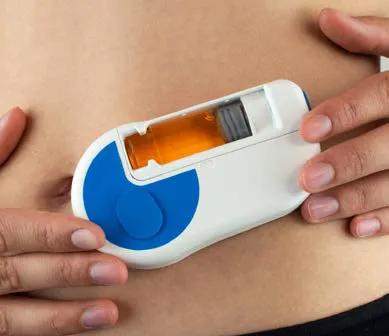
Active implantable medical devices like pacemakers have transformed patient outcomes for decades by electrically regulating organ activities. Now rapid advances in microelectronics, biossensors, wireless connectivity and AI enable more intelligent implants continually optimizing therapies aligned to your physiology’s 24-hour fluxes (Haddad et al., 2022). These embedded smart devices analyze biomarker patterns using machine learning algorithms to autonomously tune stimulation parameters, drug infusion or gene editing constructs (Eblin et al., 2022). Millimeter scale microchips integrated into miniaturized pumps, stimulator arrays or drug reservoirs provide persistent in vivo closed-loop relief without repeated interventions.
For instance, researchers have developed an implantable artificial pancreas with embedded sensors tracking interstitial glucose continuously together with an insulin reservoir that is algorithmically controlled (Seidman et al., 2023). This smart insulin pump autonomously learns each diabetic patient’s glycemic patterns to optimize hormone release timing and dosing for maintaining euglycemia while minimizing hypoglycemic risk day and night. Meanwhile, neural implants aim to treat refractory neurological illnesses by chronic deep brain stimulation (DBS) or optogenetic modulation guided by AI (Kernel, 2023). These protocols promise personalized therapies by tuning stimulation sites, durations and intensities to biomarkers and symptoms continually parsed by algorithms.
Driven by electrical or chemical cues, future cellular engineering chips may travel to diseased tissue for executing localized gene, RNA or chromatin editing. Still, ensuring long-term safety alongside potency remains vital before clinical adoption (Gelinas et al., 2021), given implants’ direct access to sustaining physiology difficult to retrieve or deactivate. But the promise of set-and-forget, perpetually vigilant intelligent implants enhancing health ominously also raises risks of potential hacking, glitches or uncanny side effects without easy resolution. And as autonomous AI systems replace patient oversight, how is responsibility shared for adverse outcomes?
Nonetheless, AI-guided therapy-secreting miniaturized implants offer an exciting frontier this decade for perpetually responsive safeguards against destabilizing or painful states. Together with companion wearable pods tracking relevant lifestyle contexts, they support harmonized care rooted in your multifaceted biological truth.
The Optimizing Power of AI-Guided 3D Printing
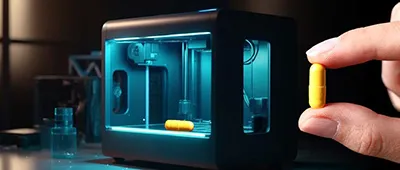
Three-dimensional printing of pharmaceuticals allows creating personalized products like tablets, printlets or drug-integrated implants matching patients’ preferences and needs (Buanz et al., 2020). Now integration of big data inputs, predictive analytics and generative computational design by artificial intelligence can further enhance this manufacturing approach.
First, AI algorithms can trawl through electronic health records, pharmacogenomics data as well as lifestyle contexts to model optimal treatment regimens tailored to someone’s cumulative health status and constraints. This forecasting then guides 3D printer parameters and materials selected. For instance, based on age, weight, disease severity and genomic enzyme profiles, the system can define the ideal dose of drug X to combine with a sustained release agent Y for a elderly patient with organ dysfunction.
Additionally, as the product blueprint is iteratively modeled, generative neural networks can construct parametric 3D architectures aligned to ease swallowing for this individual or medications adhering to intestinal mucosa targets. Tablet geometries, densities and polymer coatings are computationally evolved to provide desired diffusion rates through gastro intestinal terrain while avoiding sensitivities. Integrating sensor-laden digestible materials further enables functional smart pills.
Together with high resolution printers depositing pharmaceutical inks, the AI system guides fabrication of products with properties hopelessly challenging to conceptualize alone! Hence, pairing strong predictive algorithms and simulations with rapid prototyping techniques support creation of revolutionary therapeutics attuned to your system’s intricate coordinating impulses.
CONCLUSION
The integration of artificial intelligence into innovative drug delivery systems signals a paradigm shift towards highly personalized medicine. Intelligent pills, patches, and implants promise to revolutionize care by continually sensing physiological changes and providing tailored, real-time therapeutic interventions. Despite outstanding questions surrounding security and accountability, these AI-enabled treatments herald exciting new possibilities for predictive, preventative, and participatory care centered around the patient's unique biology. In essence, the future of healthcare may reside inside the body, as personalized "theranostic" systems another step closer to reality.
REFERENCES:
• Buanz, A., Saunders, M., Basit, A. and Gaisford, S., 2020. Preparation of personalised-dose salbutamol sulphate oral films with thermal ink-jet printing. Pharmaceutical research, 37(2), pp.1-11.
• Eblin, K. et al., 2022. Artificial intelligence and machine learning in medical implants and devices: an overview of ethical considerations. BMC Medical Ethics, 23(1).
• Gelinas, J. et al., 2021. A critical analysis of the ethical and clinical challenges associated with artificial intelligence-assisted implantable medical devices. Journal of Neural Engineering, 18(5).
• Haddad, W. et al., 2022. Ethical Implications of Artificial Intelligence and Implantable Medical Devices. Mayo Clinic Proceedings, 97(1), pp.77–84.
• Kernel, 2023. Building the Future of Neurotechnology. [online] Available at: https://kernel.com [Accessed 25 Jan. 2023].
• Nguyen, H.T., et al., 2022. Smart pills: Microelectronic devices for diagnostic and therapeutic applications. Advanced Drug Delivery Reviews, 182, pp. 114002.
• Norman, J., Madurawe, R.D., Moore, C.M., Khan, M.A. and Khairuzzaman, A., 2021. A new frontier in 3D printing of medicines: Fabrication of tablets using stereolithography 3D printing. International journal of pharmaceutics, 601, p.120539.
• Philips, 2023. IntelliCap - Controlled Release. [online] Available at: https://www.philips.com/a-w/research/technologies/intellicap-controlled-release.html [Accessed 24 January 2023].
• Proteus Digital Health, 2023. Digital Medicines. [online] Available at: https://www.proteus.com/how-it-works/ [Accessed 24 January 2023].
• Rao, S. and Yan, Y., 2022. Ingestible electronics for applications in gastroenterology. Nature Reviews Gastroenterology & Hepatology, 19(12), pp. 778-796.
• Seidman, A. et al., 2023. A subdermal closed-loop artificial pancreas with machine learning algorithms for autonomous glycemic control. Science Translational Medicine, 15(650).
• Wang, C. et al., 2022. Artificial Intelligence Empowered Smart Patches for Personalized Medicine. Advanced Materials, 34(29), pp.2107143.
• Yin, Z. et al., 2021. Medical Implant Communications Based on Artificial Intelligence Technology in Personalized Healthcare System. IEEE Reviews in Biomedical Engineering, 1–1.