


Sponsored by:

Efficient gene expression profiling for biomarker identification using multiplex quantitative PCR
Quantitative PCR (qPCR) has long been recognized as a powerful tool for analyzing nucleic acid levels. When combined with reverse transcription of RNA to cDNA before qPCR (RT-qPCR), researchers can sensitively and specifically determine the relative quantities of mRNA transcripts in samples.
Quantitative PCR (qPCR) has long been recognized as a powerful tool for analyzing nucleic acid levels. When combined with reverse transcription of RNA to cDNA before qPCR (RT-qPCR), researchers can sensitively and specifically determine the relative quantities of mRNA transcripts in samples. Traditionally, RT-qPCR analysis has been performed using singleplex qPCR, where each gene target is analyzed in a separate reaction. While this approach is simple and cost-effective, the growing complexity of biological pathways and their interactions has increased the demand for methods that allow the simultaneous analysis of multiple gene targets.
However, working with limited sample quantities poses a significant challenge. Techniques such as fine-needle biopsy often yield small sample sizes, making it difficult to conduct extensive genetic analysis. In translational research laboratories, where large numbers of samples must be analyzed to identify statistically and biologically significant trends, efficient DNA and RNA analysis solutions are essential. These solutions must maximize data generation from minimal sample input while maintaining workflow simplicity.
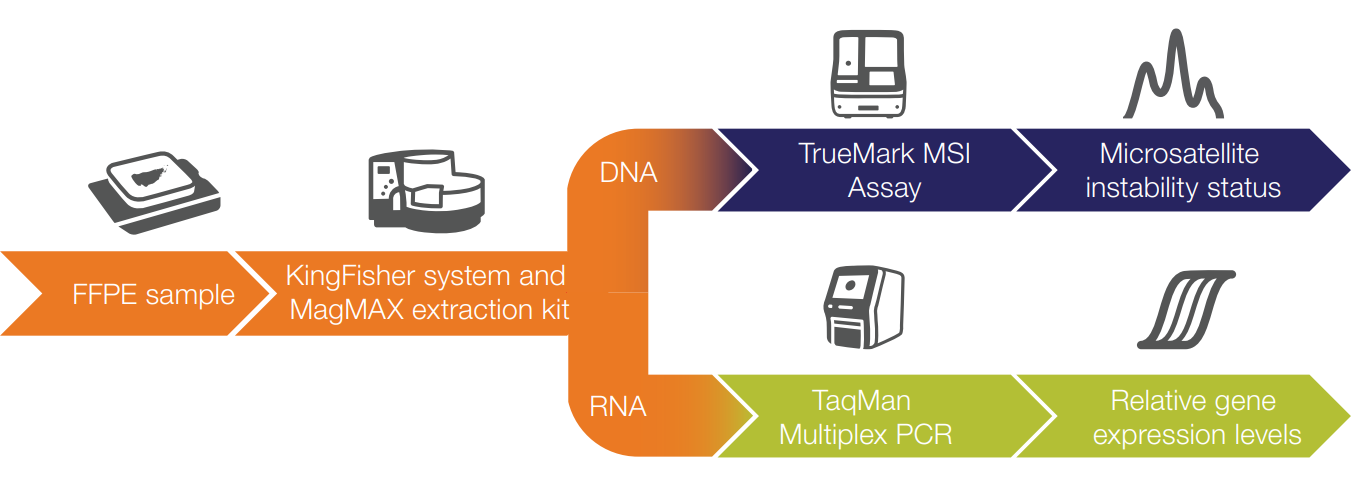
One way to optimize data collection from limited samples is through multiplex qPCR, which enables the simultaneous analysis of multiple gene targets within a single reaction. In multiplex qPCR, different fluorescent dyes, known as reporters, label specific target amplicons, allowing researchers to distinguish between multiple targets within the same sample. As long as the qPCR instrument can accurately measure each fluorophore, this approach provides comprehensive genetic insights while reducing sample volume requirements. A single multiplex qPCR reaction analyzing six different targets can significantly simplify pipetting, minimize sample consumption, and accelerate data acquisition from precious biological samples.