


Sponsored by:

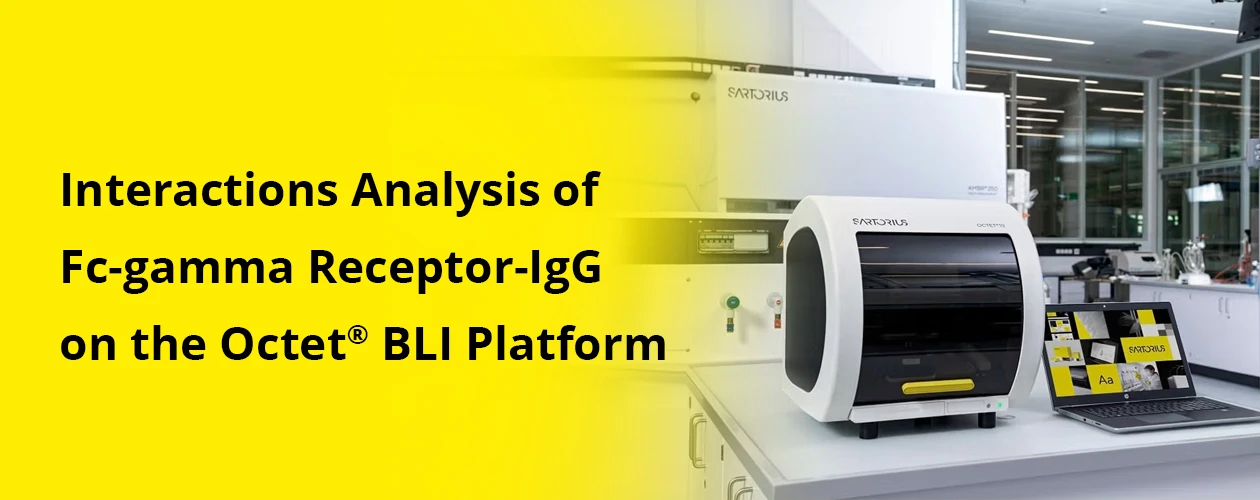
Optimizing Fc Gamma Receptor-IgG Interaction Analysis with the Octet® BLI Platform
A major mechanism of action for therapeutic monoclonal antibodies is the initiation of effector function via binding to Fc gamma receptors (FcγRs) expressed on the surface of immune effector cells.
A major mechanism of action for therapeutic monoclonal antibodies is the initiation of effector function via binding to Fc gamma receptors (FcγRs) expressed on the surface of immune effector cells. The ability of therapeutic monoclonal antibodies to bind FcγRs can greatly impact their safety and efficacy, and as such, efforts to analyze and enhance Fc interactions with FcγRs are an integral part of biotherapeutic development processes.
The Octet® BLI platform offers a high-throughput, rapid, flexible, and sensitive approach for the accurate and reliable measurement of the binding affinities of Fc gamma receptors to monoclonal antibodies. Octet® BLI systems utilizes Bio-Layer Interferometry (BLI), a label-free technology that measures molecular interactions in real-time for the purpose of detection, quantitation, and kinetic analysis.
Key Takeaways:
- Rational supporting the Octet® BLI platform as the technology of choice for analyzing Fc gamma receptor-IgG binding interactions.
- Advantages for detailed characterization of Fc receptor/IgG interactions in terms of throughput, ease of use, specificity, and flexibility.
- Best practices regarding biosensor selection, ligand loading, and analyte concentration/association.
- Key considerations for assay optimization, data acquisition, curve fitting and analysis of results.
- Yielding accurate, reproducible data and reliable kinetic and affinity constants.