


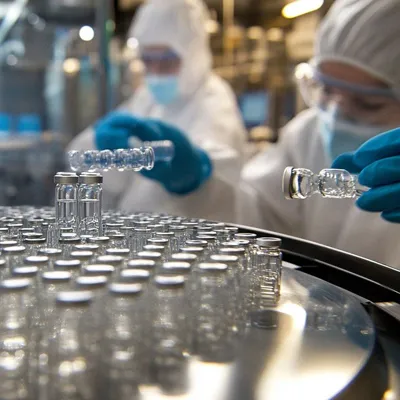
Pharmaceutical manufacturing has been revolving around the strategy of batch processing, which requires drugs to be manufactured in discrete, sequential units. Although batch production has worked for several decades, it suffers several limitations, among them being long production cycles, inconsistent risks, unreliable operation costs, and an increased risk of human mistakes. On the contrary, continuous manufacturing (CM) is a paradigm shift in the production of drug substances. CM incorporates new technologies, including monitoring of real-time processes, automation, and analytics, to support continuous production. Such a transition will bring about better efficiency, quality, and compliance; hence, CM will be a highly attractive alternative to the conventional practices.
Continuous production can also meet contemporary pharmaceutical needs, coverage of personalized medicine, high-throughput production and access to the demands of global production chains. It also gives manufacturers a chance to react to alterations in the market more efficiently, stick to their quality standards, and cause less environmental harm due to fewer waste products. The FDA and EMA, among the regulatory bodies, have identified the potential of CM and have promoted its use and offered models of implementation.
Continuous manufacturing fundamentals
Continuous manufacturing is the production of drug substances one stage at a time without intermission between producing raw materials and the final product. A major difference between CM and batch processing is that in the former, all steps are connected, whereas in the latter, they are discrete. Main values are:
1. Process Integration: All the various processing stages, such as synthesis product, crystallization, filtration and drying are connected in order to maintain the continuous process.
2. Real-Time monitoring: The information on critical quality attributes (CQAs) and process variables is accumulated via the best sensors and process analytical technologies (PAT).
3. Dynamic Process Control: The state of control systems displays parameter changes in real time to ensure the consistency of the product and reduce the difference.
4. CM Quality by Design (QbD): CM focuses on the design of processes that ensure quality is built in during the design of the process instead of simply testing the quality at the end of the process.
The observation of such principles, on the part of manufacturers, ensures a constant product quality, especially those concerning a shortened production time and an increased operating efficiency.
Benefits of Continuous Manufacturing
1. Enhanced Efficiency
Continuous manufacturing is faster in the aspect that manufacturing does not incur downtime in between the batches. Continuous feed of raw materials into reactors, filters and dryers means increased speed in drug substance manufacturing. This is transferred to quick lead time and faster delivery to the market and this is essential with life-saving drugs and in-demand drugs.
2. Better Quality of Product Supplied
CM enables quality monitoring and automatic quality adjustments in real-time and guarantees that all units have a predetermined standard. CM provides stability and repeatability, unlike in batch processes in which inter-batch variability might influence the performance of drugs.
3. Less Waste and Environmental Impact
A great strength of CM is waste reduction. Optimized process control reduces wastage of raw materials and off-specified product. There is also a smoother energy consumption since there are no on-off operations, which makes energy consumption more sustainable.
4. Flexibility and Scalability
CM systems are scalable and easily scalable down to travel with market demand. This versatility is especially useful in the manufacture of both blockbuster drugs in large quantities and niche therapies without the need to restructure to an extreme.
5. Regulatory Compliance
Repetitive processes improve the traceability and transparency of the processes and documentation, which facilitates the ease of adhering to the regulatory requirements. Strong validation and risk assessment are possible due to PAT and real-time monitoring as well.
Enabling Technologies for Continuous Manufacturing
1. Process analytical technology (PAT)
Such PAT tools continuously measure parameters that are critical to the process, and there is time within the measurement to arrest quality. The most typical PAT practices are near-infrared (NIR) spectroscopy, Raman spectroscopy, and high-performance liquid chromatography (HPLC).
2. State-of-the-art Automation Systems
Automation involves the use of sensors, controllers and software so as to have the stable operating conditions. Such systems minimize human failure and increase process consistency, and operators no longer need to make manual corrections.
3. Uninterrupted Stream Reactors
Reactions in continuous flow reactors have very exacting controls of the reaction conditions, such as temperature, pressure and residence time. This is a precision, which enhances the yields, minimizes side reactions, and makes handling reactive intermediates safe.
4. Data Analytics/Machine Learning
AI models and advanced analytics forecast deviations in processes, optimal reaction conditions and inefficiencies. Predictive maintenance and real time process optimization lower preventive maintenance and increase efficiency.
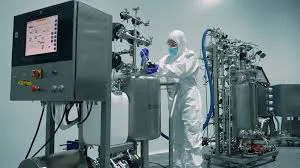
Drug Substance Production
1. SMI APIs
The production of small-molecule active pharmaceutical ingredients (APIs) has vast usage of continuous manufacturing. Multi-step synthesis has the advantage of an integrated process with bottlenecks reduced and a better overall yield.
2. Biologics
CM facilitates cell culture consistency, protein derivatization, and unified formulation of biologics. Stable yields and manufacturing quality is assured through continuous bioprocessing and are very important in processes that involve many different processes, like that of monoclonal antibodies.
3. Complex Formulations
CM is being used more in increasingly sophisticated formulations such as solid dispersions, nanoparticles, and combination products. The extended crystallization, milling and granulation can have effects of consistent particle size distribution and drug release properties.

Challenges and Considerations
1. Large Start-up Cost
The construction of continuous manufacturing plants implies huge investment in machinery, sensors, and automation hardware. Although operating costs are lower at the end of it, smaller companies may be unable to fund the initial cost.
2. Regulatory and Validation Customs
Validation and documentation are intense as per the various regulatory bodies. A change to continuous production may include the need to show that product quality is equivalent to or better than the previous batch process.
3. Technical Expertise
Operators and engineers have to be trained in process control and automation, data analysis, and maintenance. A skilled workforce is a key to the successful CM implementation.
4. Integration Complexity
Linking two or more stages of production together to form a one-flow process may be technically difficult. The data integration, equipment compatibility, and synchronization of the process should be well-controlled.
Future Perspectives
The potential of further development of continuous manufacturing in pharmaceuticals is good. Important trends are
Fusion with AI and Machine Learning: predictive control and optimization will also enhance process efficiency and product quality.
Personalized Medicine: CM will allow the production of small batch manufacturing of individualized treatments.
Sustainability: Energy saving and low-waste metabolism position CM to become the primary manufacturing practice in green production programs.
Global Adoption: Greater CM adoption will be fostered by regulators and advancing technologies across all industries in the pharmaceutical sector.
By adopting CM, pharmaceutical companies will enjoy a more sustainable ecosystem, balanced strengths, and renewed resilience on an efficient production scale.
Conclusion
Through continuous manufacturing, there is an opportunity to transform drug substance production by providing unprecedented speed of operation, quality, and flexibility versus batch operation. Modern technologies such as PAT, automation, and real-time analytics help to achieve consistent product quality and rapid production whilst ensuring that wastes and costs of operation are minimal. Despite the onset costs and regulatory verification, there is an opportunity to say that the long-term advantages of CM, including scalability, sustainability, and compliance, indicate its future definition as the geometry of pharmaceutical manufacturing. Continuous manufacturing will help the sector satisfy the increasing global market by increasing cost-efficient and safe medicine production at scale.