

Contract Development and Manufacturing in Pharma
A Sector on the Rise
Samatha, Editorial Team, Pharma Focus America
The CDMO pharmaceutical industry is experiencing a revolutionary change due to the rise in demand for drugs, advancement in technology, and the changing dynamics of pharmaceutical companies. With the expanding global healthcare demands and ever quickening biotech innovation demands, CDMOs have become central actors in bringing drugs through market at speed and efficiency. This article will discuss the motivating factors behind the explosive growth of this industry, some of the challenges inherent in its growth, and the future of this industry, thus examining the reasons why CDMOs have become invaluable assets to the contemporary pharmaceutical development and production processes.
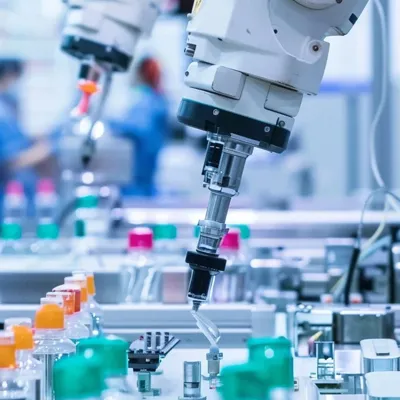
There is a major change that is taking place in the pharmaceutical scene. As drug development gets more complex, R&D costs rise, and pressure on pharmaceutical and biotechnology companies to bring a product to market as quickly as possible increases, they are seeking specialised partners to assume many of their product life cycle management functions. Contract Development and Manufacturing Organisation (CDMOs) come in at this point.
CDMOs have become an exceptional part of the pharmaceutical value chain, carrying out activities that include initial development to the commercial manufacturing and packaging. Outsourcing of such functions helps pharmaceutical companies to optimize their resources and cut costs on capital investment, also not to be engaged in segments that are not the core business of their companies, such as processes of drug discovery and drug marketing.
The international CDMO sector is displaying astronomical growth due to several factors, which include; the demand in generic drugs and biologics, emergence of small and virtual biotech companies, regulatory challenges, and the internationalization of pharmaceutical supply chain. This editorial examines the forces that move the CDMO market and the opportunities and significant challenges it brings, as well as potential future development in the global pharmaceutical ecosystem.
1. History of CDMOs
The outsourcing pharmaceutical concept is not new. Earlier, contract manufacturers were mainly used as an overflow production unit by pharmaceutical companies. As R&D increasingly became costly and clinical trials complicated, outsourcing has continued to expand both in-house towards development and even preclinical services.
Currently, the role of CDMOs is a broad-based service provider, including:
• Support to drug discovery
• Formulation development
• Clinical trial material production
• Support by regulation
• Commercial-scale production
• Logistics and package
They offer services throughout the product life cycle and turn them into being strategic partners rather than vendors.
2. Direction, Market, and Size
In 2023, the worldwide market size of the CDMO found itself around USD 130 billion, with a projected growth to over USD 250 billion by 2030, with an increasing compound annual growth rate (CAGR) of more than 9%. Some reasons are driving this upsurge:
• Biopharmaceutical Boom: Advancements in the use of biologics, cell and gene therapies, and biosimilars means that there is an emerging need to gain specific manufacturing expertise.
• Small Biotech Innovation: A great deal of new drug pipelines is provided by small and medium biotech companies which are filing heavily on CDMOs because they do not have sufficient in-house capacity.
• Cost Pressures: Outsourcing minimizes overhead, enhances the scalability, and shortens time to market.
• Regulatory Complexity: Global regulatory environments are challenging and taking them through this processes need specialized output, which CDMOs are also becoming specialists.
3. Principal Engineers of CDMO Growth
a. The increased Demand in Biologics and advanced Therapies
In contrast to conventional small-molecule pharmaceuticals, biologics possess complex production methodologies and existent quality controls. CDMOs have strongly invested in biologics capacity such as cell and mammalian culture, microbial fermentation and viral vectors.
It has become even more complex with the introduction of cell and gene therapies (CGTs), whose production necessitates personalized and small-scale manufacturing, and cold chain logistics. The ability to be able to do these complexities is what is needed by CDMOs.
b. Drift to Virtual Pharma Models
Most of the startups are virtual pharma companies that do not have their own manufacturing capability. The growth of this sector may be credited to the fact that these firms tend to outsource all formulations and productions to CDMOs.
c. Increasing the Generic and Biosimilar Markets
The existence of generics and biosimilars has been enabled by patent expiries of blockbuster drugs. They need to be cost-efficiently manufactured and easily scaled up to markets- which they are best placed to provide thanks to the CDMOs.
d. The topic of globalization and Supply Chain resilience.
The COVID-19 pandemic revealed weaknesses in pharmaceutical supply chains around the world. As a reaction, pharmaceutical companies are diversifying their supplies, are becoming more inclined towards CDMOs having a global location of the manufacturing facility.
Governments have also started favoring local productions and this will present opportunities to the CDMOs with local presence and compliance ability.
4. According to the latest changes in technology
CDMOs are incorporating the Industry 4.0 ideas to raise efficiency and quality. Innovations include:
• Continuous Manufacturing: Combining batch production with a continuous one in order to enhance scale and minimize waste.
• Digital Twins: Digital twins of manufacturing systems: An in-time simulation that enables model predictive control and optimization of the physical manufacturing system.
• AI and Machine Learning: AI and machine learning include tools to aid in drug design, developing processes and quality control.
• Advanced Analytics and PAT (Process Analytical Technology): Enhance the knowledge of the process and product consistency.
In addition, sterile manufacturing related to automation and robotics are enhancing compliance and lessening risk.

5. Integration and Consolidation brands
Consolidation is taking place very fast in the CDMO industry. Players are gaining the capability of providing end-to-end solution and are experiencing increased global access through mergers and acquisitions (M&A). Prominent ones can be seen in:
• The deal of Thermo Fisher Scientific buying Patheon and Brammer Bio
Catalent lined up aggressive investments in biologics and gene therapies
• Investment of cell and gene therapy in Lonza
This tendency of consolidation testifies to the fact that the market wants to have one-stop-shop providers that can do the whole drug lifecycle efficiently.
6. The law and enforcement
Basing operations on a variety of geographical locations is associated with a high level of adherence to the international standards including:
• U.S. FDA
• European Medicines Agency (EMA)
• PMDA (Japan)
• WHO GMP guidelines
CDMOs are now forming specific regulatory affairs groups, and Quality Management Systems (QMS) to prepare and support smooth compliance and access to audit and regulatory compliance management.
CDMOs who provide regulatory assistance especially during the launching process will be the most valued partners particularly by the small companies who are new to dealings with the international regulations.
7. The Biggest Hurdles in the CDMO World
Even with momentum, the industry has enormous challenges:
a. Capacity Constraints
Capacity bottlenecks have occurred due to the ever-increasing demand, particularly in biologics and CGTs. The manufacturing slot lead times could extend in months, which applies mostly to viral vectors and monoclonal antibodies.
b. Talent Shortages
There is also increasing shortage of competent staff having experience in both biologics and sterile production turnover and, quality assurance. It is competitive in terms of talent.
c. Temporary Availability of the Supply Chain
Although CDMOs will reduce risk by having a diversified supply chain, CDMOs are also exposed to the same risks of lack of raw materials, geopolitical problems, and logistic problems of transportation.
d. High requirements of Capital
Advanced therapies are capital intensive in terms of specialized infrastructure including single use bioreactors, isolators and cold chains. Smaller CDMOs will have a hard time keeping up.

8. CDMOs: The Future
Pharmaceutical CDMOs have bright future but they will be defined by a few emerging trends:
a. Custom Medicine and Precision Production
With greater personalization of treatment, CDMOs will have to establish their micro-batch, flexible manufacturing capabilities. This will imply agile systems, modular facilities and high-order data analytics.
b. Green Chemistry and sustainability
Regulatory pressure, together with environmental concerns, will drive CDMOs to sustainable green practices, such as the recovery of the solvent, energy consumption, and waste management.
c. The Competitor Digital Transformation
CDMOs that implement ERP systems, MES (Manufacturing Execution Systems), and real-time analytics will have a competitive advantage, i.e., they will be digitally mature.
d. Strategic partnerships and Co-Development Models
In future CDMO relationships we might even see an extension to risk-sharing relationships, with CDMOs taking equity or royalty positions in lieu of development services and manufacturing.
Conclusion
The pharmaceutical sector is shifting at a fast pace due to the influence of scientific discovery, control and increased healthcare needs. In this regard, CDMOs are no longer the peripheral ones who offer minor services but are the core participants in drug development and commercialization.
The CDMO market is not only increasing in size, but it is also growing in significance. Facilitating accelerated drug delivery at reduced risk and with reduced cost, pharmaceutical companies have the opportunity to roll out a new drug faster, with fewer risks, and at a lower cost by choosing a CDMO with end-to-end services who is predisposed to embrace digital transformation and who can alleviate the risks posed by complex biologic and regulatory contexts.
Author Bio

Samatha, Editorial Team at Pharma Focus America, leverages her extensive background in pharmaceutical communication to craft insightful and accessible content. With a passion for translating complex pharmaceutical concepts, Sam contributes to the team's mission of delivering up-to-date and impactful information to the global Pharmaceutical community.