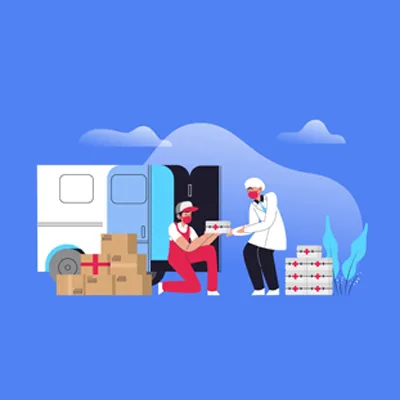
Pharmaceutical supply chain has been changing drastically within the last 20 years due to increased globalization, digitalisation and the growing workload of complex treatment services. Nonetheless, the final step of delivery, i.e., when medicines bridge distributing facilities to the point of sale in the pharmacies, hospitals, or even patients, is one of the most challenging to coordinate.
Pharmaceutical distribution does not allow safety, quality, and regulatory compliance to be flexible, as is the case in other industries. Biologics, vaccines and advanced therapy are very susceptible to environmental challenges and there are also challenges of counterfeit risks and cost pressures that make delivery that much more challenging. There is no question that last-mile distribution is not only a logistics problem but also a question of public health, especially in underserved areas or rural communities.
Key Challenges in Last-Mile Pharmaceutical Distribution
Temperature Control and Cold Chain Integrity
Retention of the cold chain is one of the most urgent demands of the last-mile delivery. Most biologics and vaccines have a range of storage that requires 2°C and 8°C; cell and gene therapies even more, as sometimes special refrigerators are needed at ultra-low temperatures. Products can be unsafe to use or become ineffective due to small deviations in temperature.
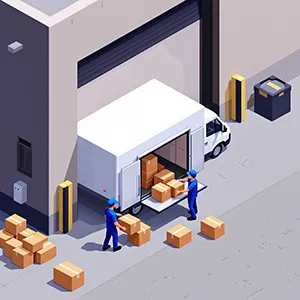
The last-mile routes constantly encounter several transfer points, diverse climatic conditions and poor infrastructure. Temperature excursions are increased by power outages, absence of cold storage, or mishandling in transport. With the emerging new apheresis temperature-sensitive treatments making their way into the marketplace, compliance with integrity in the final steps of delivery is going to become busier.
Urban vs Rural Distribution
The larger and more built-up urban centers are frequently well-serviced and have several distribution possibilities. In contrast, it is much more difficult in rural and remote areas: bad roads, large distances, lack of healthcare and less availability of places to store medicine. Such urban-rural contrast implies that in isolated locations, patients can be subjected to delays, shortages or limited availability of key drugs.
This is further enhanced by the fact that in emerging markets the healthcare systems are still in their formative stages and therefore have more bits and pieces of their infrastructure. The key challenge in reaching equity in medicines access is eliminating these disparities.
Regulatory Compliance and Traceability
Handling of pharmaceutical products is covered by strict regulations such as the Good Distribution Practices (GDP). Last-mile distributors are required to deliver documented information of handling, storage and transportation. Administrative and technological burden has also been augmented by serialization and track-and-trace requirements.
The need to enforce the rules in various jurisdictions makes it an added complexity, particularly within the global distribution channels. Inconsistencies in harmonization of the regulatory authorities may bring about bottlenecks and raise operational risks.
Cost Pressures and Inefficiencies
Pharma distribution can be capital intensive, with last-mile delivery being a significant cost. There is a series of transfers, bulk packaging, surveillance machinery and strict regulatory guidelines, all of which become costly.
Concurrently, companies have been put under increased pressure to lower costs and enhance access. Finding a logical balance of cost and compliance is one of the chief pain points in last-mile delivery.
Security Risks: Theft, Counterfeiting, and Diversion
The most targeted pharmaceutical products are associated with diversion and theft. The use of counterfeit medicines in the supply chain is causing great threats regarding the safety of patients as well as the integrity of the brand. Security breaches can be especially likely to occur in Last-mile routes, which are usually less efficient and require the use of smaller vehicles and the need for multiple transfers.
To overcome these dangers, it is necessary to build end-to-end visibility to ensure safe supply chain building.
The Innovations Changing the Last-mile Delivery with Technological Advances
IoT and Real-Time Monitoring
The smart sensors and trackers as Internet of Things (IoT) devices enable constant monitoring of temperature, humidity and tracking during delivery. Real-time alerts contribute to the solution of finding and fixing a problem even before products become compromised. The solutions can also enable auditable compliance records.
AI and Predictive Analytics
AI and predictive analytics are becoming more common as a means of enhancing delivery routes, minimizing delays, and foreshadowing risks like traffic jams, severe weather, etc. Its efficiency can reduce the costs of production and guarantee the delivery of life-saving drugs in a reasonable amount of time provided by AI.
Blockchain for Secure Traceability
A blockchain provides transparency and security where the movement of products is immutable. Blockchain provides authenticity by capturing every transaction on a supply chain, thereby preventing infiltration of counterfeits. It is gaining adoption in pilot programs with pharmaceuticals that have severe track-and-trace needs.
Drones and Autonomous Vehicles
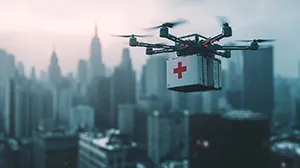
Automated cars and drones become a potential solution in last-mile delivery especially in non-accessible or rural locations. In Africa and Asia pilot projects have demonstrated the potential of drones to deliver vaccines and other basic medication to isolated, inhospitable environments. The existence of regulatory barriers and scalability problems notwithstanding, these innovations promise to close access gaps.
Digital Platforms and E-Pharmacies
Last-mile delivery is being transformed with the emergence of digital health platforms and e-pharmacies. Patients are able to purchase medicines online and literally follow the packages. Logistics partners are also incorporating digital programs into better aspects of transparency, minimizing mistakes, and the entire patient experience.
Case Studies and Industry Examples
• COVID-19 Vaccine Distribution
The pandemic revealed the weaknesses of the last-mile delivery systems as well as their strength. MRNA vaccine logistics demanded ultra-cold chains that made logistics providers innovate quickly and add sophisticated tracking and marking and specialized packaging.
• Drone Delivery Trials
Drones have been used with success in the transportation of blood supplies and vaccines, as well as essential medicines, in the remote regions of Rwanda and Ghana. Such projects show the technological ability to go around infrastructural constraints.
• Partnerships Between Pharma and Logistics Providers
As specialized logistics firms become more common in the pharmaceutical industry, major pharmaceutical companies become partners to advance complex last-mile operations. This kind of collaboration takes advantage of competitive skills, high technologies, and size to address difficulties.
Balancing Compliance, Cost, and Accessibility
The pharmaceutical sector is struggling with the challenging need to attain high levels of compliance without compromising cost constraints and increasing accessibility. Advanced technologies to be invested in are costly but may decrease long-term investments and inefficiency.
Balancing of these factors is also done by regulated authorities. The authorities can facilitate the industry to make the last-mile delivery systems stronger through their guidance and promotion of innovation.
The Road Ahead
Personalized Medicine and Last-Mile Complexity
Last-mile logistics will face new levels of complexity with the shift to personalized and precision therapies, which may often be manufactured in small batches and need custom delivery. Actual delivery to individual patients will require even greater coordination and technological complexity.
Sustainability in Last-Mile Delivery
Last-mile logistics is a frontier of inquiry in terms of its environmental ramifications. Green packaging and fuel-efficient vehicles, as well as optimized routes, are taking precedence. The need to balance aims in sustainability and stringent regulation is challenging but also an opportunity.
The Role of Digital Integration
The digitalization of future last-mile systems is probably going to be more integrated into the supply chain with real-time visibility. Localization and multilateral platforms, forecast modeling, and advanced analytics will help to make responses to interruptions more agile and resilient.
Conclusion
Last-mile drug delivery is regarded as one of the most complicated but critical parts of the supply chain. It dictates the efficacy of operations as well as the safety of the patient and the availability of basic medicines.
With the rise in demand of complex therapies moving forward and the transformation of healthcare systems, it is important to carefully balance the application of technology, compliance, cost management, and equity in last-mile delivery. The adoption of more innovative practices, as well as the enhancement of collaboration within the different parties, can make the industry achieve a consistent adoption of medicines for patients with safety, efficiency, and sustainability.