


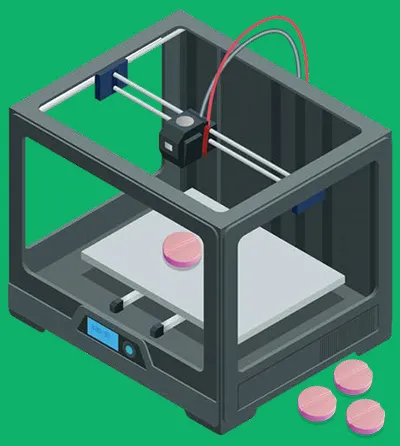
Introduction to Pharmaceutical 3D Printing
Three-dimensional (3D) printing is an advanced additive manufacturing technique that constructs complex products by layering materials according to a computer aided design (CAD) 3D model. 3D printing has marked a transformative paradigm shift in the healthcare sector since the 1990s, where it has played a crucial role in the fabrication of custom dental implants and personalised prosthetics, a development that even surprised innovator Charles Hull, cofounder of the pioneering company 3D Systems (1). 3D printing has also seen significant traction in tissue engineering research, enabling the creation of complex structures using innovative biomaterials to mimic natural tissues. The pharmaceutical sector witnessed the emergence of pharmaceutical 3D printing in the early 2010s, driven by pioneering academics striving to revolutionise medication forms to align with intricate and personalised patient needs (2). Its disruptive nature for pharmaceutical manufacturing holds immense promise for healthcare, poised to fundamentally transform the pharmaceutical industry.
Personalised Medicine and Automated Compounding
3D printing exploded as a manufacturing technique due to its ability to create bespoke objects with unparalleled precision and customisation. Unlike conventional methods, pharmaceutical 3D printing excels in creating complex drug-containing structures and combining multiple drugs into a single pill, unlocking new possibilities in drug development and advanced healthcare that caters to the unique needs of individual patients.
The current method to prepare personalised and non-commercially available prescriptions, pharmaceutical compounding, involves some-what old fashioned and imprecise techniques, including the breaking of tablets by hand and weighing powders to hand-fill capsules. This not only creates risk but restricts personalised medicine to specific treatments and fewer pharmacies. Pharmaceutical 3D printing automates this process while offering more personalisation options such as shape, colour, flavour and drug combinations (polypills) to increase treatment adherence. Automation reduces specialist workload and human error, making compounding more accessible and easier to implement. With increasing stakeholder investment, this unlocks personalisation for more treatment pathways, moving away from conventional “one-size-fits-all” doses and towards truly personalised medicine. As such, 3D printing paves the way for a new era in personalised medicine, where treatments are prepared to meet the distinct needs of each patient (3, 4, 5). Imagine a world where a person with polypharmacy can take one multi-drug chewable polypill with a personalised dose rather than five different large capsules, with a colour and flavour that suits their particular preferences.
Pharma-ink refers to the feedstock formulation that includes excipients and drugs to be printed, and is used to print tablets, or printlets (6). There are multiple 3D printing technologies fit for precision medicine, each using different pharma-ink forms. Semi-solid extrusion (SSE) is the most common technique being used by stakeholders. Pharmacists are able to use pastes or gels to print at room temperature, immediate release tablets, chewable tablets or fast disintegrating tablets. Fused deposition modelling (FDM), the most well-known technique, is also being investigated for use, with researchers developing filaments that are deposited with melting, useful for improving drug bioavailability and complex release profiles. Finally, direct powder extrusion (DPE) was developed as an alternative to FDM. Essentially a mini hot melt extruder, DPE offers the same benefits as FDM while avoiding the difficulties with filament pharma-ink development as it prints straight from powder. The University Medical Center Hamburg-Eppendorf have described the successful development and analysis of Levodopa printlets with rapid dissolution, printed using DPE. In addition, they evaluated the integration of machine-learning assisted medicine 3D printing into their hospital’s workflows (7, 8). An exciting step forward in the field.(Image 1)
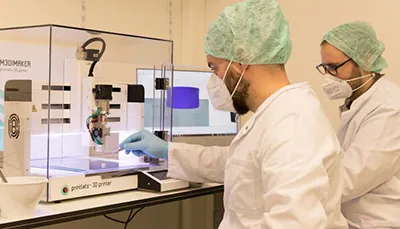
Image 1: The University Medical Center Hamburg-Eppendorf using a M3DIMAKER pharmaceutical printer with the DPE printhead
The University Medical Center Hamburg-Eppendorf using a M3DIMAKER pharmaceutical printer with the DPE printhead
UK Company FABRX has played a significant role in the field by actively exploring and implementing 3D printing technology for personalised medicine, as well as the opportunities for more efficient batch manufacture in clinical trials. Notably, they were first mover in embracing this transformative technology, conducting the first clinical study in the field in 2018 (9). Carried out at the Hospital Clinico Universitario de Santiago de Compostela, Spain, this study focused on paediatric patients with Maple Syrup Urine Disease (MSUD), a rare metabolic disorder. Chewable isoleucine tablets with personalised doses, flavours and colours demonstrated improved patient acceptability and enhanced bioavailability when compared to standard filled capsules. This success led to the development of the M3DIMAKER, the first ever pharmaceutical 3D printer designed for personalised medicine and small-batch manufacture, launched in 2020. FABRX now has two printers on the market, is involved in over 8 clinical studies for personalised medicine and is in the process of implementing 3D printing for automated compounding, in collaboration with hospitals and pharmaceutical companies across the world.(Image 2)
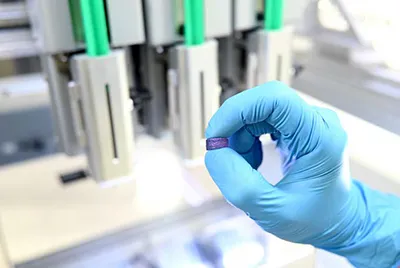
Image 2: Chewable Printlets (3D printed tablets) can be printed in different flavours, colour, and doses
Chewable Printlets (3D printed tablets) can be printed in different flavours, colour, and doses
Gustave Roussy Institute, recognised as the top oncology hospital in Europe, is conducting a clinical study targeting early-stage breast cancer, involving over 200 patients and evaluating novel, personalised, multi-drug printed tablets (polypill printlets). Specifically, combining anti-cancer therapy with anti-side effect treatment into a single pill using semi-solid extrusion, for more reliable personalised doses, improved adherence rates and overall patient wellbeing. This innovative approach challenges conventional compounding and mass manufacturing methods, providing accurate personalised doses and drug combinations for improved cancer treatment outcomes (10, 11, 12).
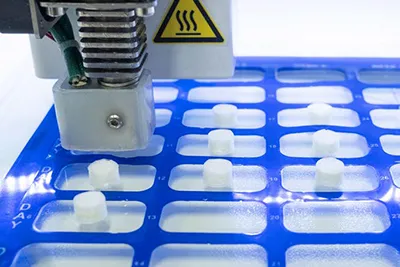
Image 3: Pharmaceutical 3D printing using direct powder extrusion (DPE) on to blister packing
Small Batch Manufacturing
Pharmaceutical 3D printing has emerged as a transformative force challenging typical mass manufacturing, revolutionising drug production processes and offering many advantages that contribute to operational efficiency, cost reduction, and waste minimisation. 3D printing produces small batches that cater to individual patient or clinical trial needs. Prototyping is made more efficient with rapid iterations and shorter development cycles, ultimately reducing time-to-market for new medications. The precision and small batch size of 3D printing minimises waste, depositing materials layer by layer and enhancing cost efficiency in drug production. The varied technologies available increase manufacturing versatility, allowing different dosage forms to be prepared. In short, pharmaceutical 3D printing emerges as a catalyst for streamlining drug production, ushering in a new era of efficient, cost-effective pharmaceutical manufacturing for personalised medicine and clinical trials (13).
Mass Manufacturing
Although 3D printing is known for small, bespoke creations, pharmaceutical 3D printing also holds the potential for large-scale production of novel dosage forms to unlock advanced release properties. Significant milestones for this mass manufacturing journey were made by companies Aprecia and Triastek.
Aprecia, based in the US, was the first company to enter the field for mass manufacturing. They implemented pharmaceutical binder jetting technology, leading to the first ever FDA approved 3D printed medication, SPRITAM® in 2016 (14, 15). This distinctive 3D printing method is a powder bed system. It uses a roller to move fresh powder mix over the printing area and a binder liquid to precisely define new layers, in line with the CAD 3D model. Binder jetting allows for the production of fast-dissolving oral dispersible tablets with high drug loading, especially good for Aprecia’s target use-case, epilepsy.
Triastek in China is another key player in pharmaceutical 3D printing, focusing on Melt Extrusion Deposition (MED®) for mass production. This advanced technique involves melting powder feedstocks into softened states, allowing for deposition, similar to a hot melt extruder. This approach grants the mass manufacturing of complex oral solid dosage release profiles and can increase the bioavailability of drugs. Triastek gained FDA approval for their rheumatoid arthritis formulation for enhanced drug delivery control in 2021, securing its place as pioneers in the field (16, 17).
Environmental impacts
Pharmaceutical 3D printing stands as a promising avenue for environmentally sustainable drug manufacturing. Unlike traditional methods, 3D printing allows for on-demand production of medications in small batches, minimising material waste and reducing the environmental impact associated with mass production and transportation. The decentralised approach of small-batch 3D printing when implemented at the point-of-care for personalised medicine reduces transportation requirements further. Additionally, the technology’s flexibility in design and the ability to utilise biodegradable materials contribute to environmentally friendly practices.
The precision and versatility of 3D printing technologies for complex release profiles and precision dosing, as well as improved treatment adherence from multidrug polypills and personalised flavours and colours, enable the creation of more effective healthcare. This, in theory, will lower the overall quantity of pharmaceuticals needed, reducing its environmental impact in new ways (18). While acknowledging the energy consumption challenges associated with 3D printing, ongoing research aims to optimise processes and reduce carbon emissions, aligning pharmaceutical 3D printing with the broader industry shift towards sustainable practices and environmental stewardship. Overall, the adaptability and efficiency offered by pharmaceutical 3D printing hold promise in fostering a more sustainable and eco-conscious approach to drug production (19).
Challenges and Future Directions
The utilisation of 3D printing in drug manufacturing presents both exciting opportunities and challenges that require careful consideration for the advancement of the field.
One key challenge lies in the need for standardisation and scalability of 3D printing processes to enable reliable production of pharmaceuticals. Establishing consistent quality control measures and regulatory frameworks is essential to ensure the reliability and safety of 3D printed medications. Additionally, the selection and optimisation of suitable printing materials for diverse drug formulations pose a significant challenge, demanding additional research into the compatibility, stability, and bioavailability of various pharmaceutical compounds within the 3D printing context. Unfortunately, there is no one pharma-ink that works with multiple drugs at clinically-relevant doses because the addition of different drugs effects excipient mixes differently, with varying consistencies and release profiles created. Each drug formulation needs developing, optimising and testing separately to allow for useful drug concentrations fit for patient use. Novel pharma-ink for each drug needs to be manufactured, meaning significant time and effort from stakeholders. The good news is that more and more researchers in academia and industry are getting involved. Collaboration is key, with companies working together alongside universities and hospitals to reach exciting new milestones (6).
Regulatory attention focuses on the potential of 3D printing to revolutionise dosage form development. The FDA proposed guidance in 2017 for regulating 3D-printed medical devices, but challenges remain, especially for patient-specific products, as 3D printed pharmaceuticals are not counted as medical devices. Ongoing efforts within the FDA’s Office of Testing and Research indicate a push towards practical solutions. In fact, the FDA (US), EMA (EU) and MHRA (UK) regulatory agencies are all preparing new regulations for decentralised and point-of-care manufacturing (20, 21, 22). All three agencies have described similar future frameworks, with hub sites acting as points of contact for the agencies to mass audit the spokes, pharmacies in hospitals and communities who 3D print. Pharmaceutical 3D printing for automated compounding and personalised medicine fits under this, meaning clearer guidelines will be published in the next year or so for larger scale implementation.
The 3D printing process involves several stages: modelling, slicing, printing, post-processing and quality control. Technical challenges such as nozzle clogging, binder migration, and power feed differences, impact completion rates and formulation performance. Pioneering companies are investigating these problems to speed up real-world implementation. As an example, Aprecia has developed a powder recycling system for their mass manufacturing binder jetting machine, reducing waste. Additionally, FABRX have developed in-built near-infrared spectroscopy and a balance print-bed to enable in-line scanning and weighing respectively of each individual printlet post-printing for automated quality control.
Developing formulations for printing can be a lengthy trial and error process. Mechanical properties of dosage forms are a key consideration in ensuring quality control. This is influenced by factors such as viscosity, surface tension, and nozzle size. Post-printing methods such as drying methods, drying time and drying temperature may also affect product appearance and quality. To help streamline the development process AI-driven software like M3DISEEN (available for free at M3DISEEN.COM) can be used to predict the 3D printability of pharma-inks. Despite advancements, challenges persist, such as the limited availability of suitable excipients, requiring accelerated research for broader pharmaceutical applications. Addressing these challenges is vital for realising the full potential of 3D printing in pharmaceuticals (23). New companies are working with pharmaceutical companies to test well-known and novel excipients that they supply for 3D printing. Universities are also getting involved, publishing new tried and tested formulations every year.
Closing Remarks
In summary, the strides made in pharmaceutical engineering herald a groundbreaking era for healthcare. Aprecia and Triastek exemplify the transformative potential in mass manufacturing, having navigated regulatory challenges for innovative formulations. The activities of world leading hospitals in collaboration with companies such as FABRX, particularly in paediatric care and oncology collaborations, highlight the profound impact of 3D printing in personalised medicine and small batch manufacturing. As challenges in standardisation and material optimisation persist, ongoing research initiatives signal a commitment to refining and expanding the applications of pharmaceutical 3D printing to bring it closer to wide-spread adoption.
Looking ahead, the long-term impact on healthcare for patient treatments and general wellbeing is exceptionally positive. This technology promises a future where medications are precisely tailored, enhancing treatment efficacy and minimising side effects. Patients stand to benefit from more accurate dosages, improved acceptability, and innovative drug delivery systems designed for their unique needs. Furthermore, the eco-friendly aspects of on-demand and small-batch production not only contribute to sustainable practices in drug manufacturing but also ensure a healthier and more environmentally conscious future for all.
To actively participate in this transformative journey, connecting with innovative companies becomes crucial. There is also a new consortium to get involved in, The International Pharmaceutical 3D Printing initiative (PHARMA3DPI.ORG), where all stakeholders can get together to discuss ideas and challenges. Collaboration and engagement within the evolving landscape of pharmaceutical 3D printing, as explored in this article, not only contribute to advancements but also play a pivotal role in shaping a future healthcare paradigm centred around personalised, efficient, and sustainable practices.
References
1. Central Scanning. (2023, August 23). The history of 3D printing - where, when & how. https://www.central-scanning.co.uk/history-3d-printing/
2. Tripathi S, Mandal SS, Bauri S, Maiti P. 3D bioprinting and its innovative approach for biomedical applications. MedComm (2020). 2022 Dec 24;4(1):e194. doi: 10.1002/mco2.194. PMID: 36582305; PMCID: PMC9790048
3. Pawar, R., & Pawar, A. (2022). 3D printing of pharmaceuticals: Approach from Bench Scale to commercial development. Future Journal of Pharmaceutical Sciences, 8(1). https://doi.org/10.1186/s43094-022-00439-z
4. Pathak, K., Saikia, R., Das, A., Das, D., Islam, M. A., Pramanik, P., Parasar, A., Borthakur, P. P., Sarmah, P., Saikia, M., & Borthakur, B. (2023). 3D printing in Biomedicine: Advancing Personalized Care through additive manufacturing. Exploration of Medicine, 1135–1167. https://doi.org/10.37349/emed.2023.00200
5. Akhondzadeh S. Personalized medicine: a tailor made medicine. Avicenna J Med Biotechnol. 2014 Oct;6(4):191. PMID: 25414780; PMCID: PMC4224657.
6. Seoane-Viano, I., Xu, X., Ong, J., Teyeb, A., Gainsford, S., Campos-Alavarez, A., Stulz, A., Marcuta, C., Kraschew, L., Mohr, W., Basit, A. (2023). A case study on decentralized manufacturing of 3D printed medicines. International Journal of Pharmaceutics: X, 5, 100184. https://doi.org/10.1016/j.ijpx.2023.100184
7. Rosch, M., Gutowski, T., Baehr, M., Eggert, J., Gottfried, K., Gundler, C., Nürnberg, S., Langebrake, C., & Dadkhah, A. (2023). Development of an immediate release excipient composition for 3D printing via direct powder extrusion in a hospital. International Journal of Pharmaceutics, 643, 123218. https://doi.org/10.1016/j.ijpharm.2023.123218
8. Langebrake, C., Gottfried, K., Dadkhah, A., Eggert, J., Gutowski, T., Rosch, M., Schönbeck, N., Gundler, C., Nürnberg, S., Ückert, F., & Baehr, M. (2023). Patient-individual 3D-printing of drugs within a machine-learning-assisted closed-loop medication management – design and first results of a feasibility study. Clinical eHealth, 6, 3–9. https://doi.org/10.1016/j.ceh.2023.05.001
9. Listek, V. (2021, October 20). Fabrx: The First Clinical Study using personalized 3D printed pills (in humans) - 3dprint.com: The Voice of 3D printing / additive manufacturing. 3DPrint.com | The Voice of 3D Printing / Additive Manufacturing.
10. Englezos, K., Wang, L., Tan, E. C. K., & Kang, L. (2023). 3D printing for personalised medicines: Implications for policy and Practice. International Journal of Pharmaceutics, 635, 122785. https://doi.org/10.1016/j.ijpharm.2023.122785
11. oyanes A, Madla CM, Umerji A, Duran-Pineiro G, Giraldez-Montero JM, Lamas-Diaz MJ, Gonzalez-Barcia M, Taherali F, Sanchez-Pintos P, Couce ML, Gaisford S, Basit AW (2019), Int. J. Pharm (567), 118497; DOI: 10.1016/j.ijpharm.2019.118497
12. Roussy, G. (2024, January 8). Gustave Roussy on Linkedin: #RejoinsGustave. Gustave Roussy on LinkedIn: #rejoinsgustave | 12 comments. https://www.linkedin.com/posts/gustave-roussy_rejoinsgustave-activity-7150135947500687360-8YS5/?utm_source=share&utm_medium=member_desktop
13. FABRX. (2021). Fabrx and Gustave Roussy enter into an agreement to develop a novel, personalised, multi-drug dosage form for the treatment of patients with early-stage breast cancer. FABRX. Retrieved January 10, 2023, from https://fabrx.co.uk/2021/06/25/fabrx-and-gustave-roussy-enter-into-an-agreement-to-develop-a-novel-personalised-multi-drug-dosage-form-for-the-treatment-of-patients-with-early-stage-breast-cancer
14. Aprecia PR Newswire (2016), Blue Ash. “FIRST FDA-APPROVED MEDICINE MANUFACTURED USING 3D PRINTING TECHNOLOGY NOW AVAILABLE.”. Accessed January 9, 2023.
https://www.multivu.com/players/English/7764551-aprecia-pharmaceuticals-spritam/
15. Sen, K., Mehta, T., Sansare, S., Sharifi, L., Ma, A. W. K., & Chaudhuri, B. (2021). Pharmaceutical applications of powder-based binder jet 3D printing process – A Review. Advanced Drug Delivery Reviews, 177, 113943. https://doi.org/10.1016/j.addr.2021.113943
16. Shaikhnag, A., Tyrer-Jones, A., Hanaphy, P., Everett, H., & Petch, M. (2021, February 10). Triastek receives FDA ind clearance for 3D printed drug to treat rheumatoid arthritis. 3D Printing Industry. https://3dprintingindustry.com/news/triastek-receives-fda-ind-clearance-for-3d-printed-drug-to-treat-rheumatoid-arthritis-184159/
17. Zheng, Y., Deng, F., Wang, B., Wu, Y., Luo, Q., Zuo, X., Liu, X., Cao, L., Li, M., Lu, H., Cheng, S., & Li, X. (2021). Melt extrusion deposition (medTM) 3d Printing Technology – a paradigm shift in design and development of modified release drug products. International Journal of Pharmaceutics, 602, 120639. https://doi.org/10.1016/j.ijpharm.2021.120639
18. Abdul W Basit & Sarah J Trenfield (2022, May 19). 3D printing of Pharmaceuticals and the role of Pharmacy. The Pharmaceutical Journal. https://pharmaceutical-journal.com/article/research/3d-printing-of-pharmaceuticals-and-the-role-of-pharmacy
19. Li, H., Alkahtani, M. E., Basit, A. W., Elbadawi, M., & Gaisford, S. (2023). Optimizing Environmental Sustainability in pharmaceutical 3D printing through Machine Learning. International Journal of Pharmaceutics, 648, 123561. https://doi.org/10.1016/j.ijpharm.2023.123561
20. Government response to consultation on proposals to support the regulation of medicines manufactured at the point of care. GOV.UK. (2023, January 25). https://www.gov.uk/government/consultations/point-of-care-consultation/outcome/government-response-to-consultation-on-proposals-to-support-the-regulation-of-medicines-manufactured-at-the-point-of-care
21. Distributed Manufacturing and Point-of-Care Manufacturing of Drugs. U.S. Food and Drug Administration (FDA). (2022, October). https://www.fda.gov/media/162157/download
22. Quality Innovation Group (QIG): Listen and Learn Focus Group (LLFG) meeting report. European Medicines Agency. (2023, May 12). https://www.ema.europa.eu/en/documents/report/report-listen-and-learn-focus-group-meeting-quality-innovation-group_en.pdf
23. Cui, M., Pan, H., Su, Y., Fang, D., Qiao, S., Ding, P., & Pan, W. (2021). Opportunities and challenges of three-dimensional printing technology in pharmaceutical formulation development. Acta Pharmaceutica Sinica B, 11(8), 2488–2504. https://doi.org/10.1016/j.apsb.2021.03.015