


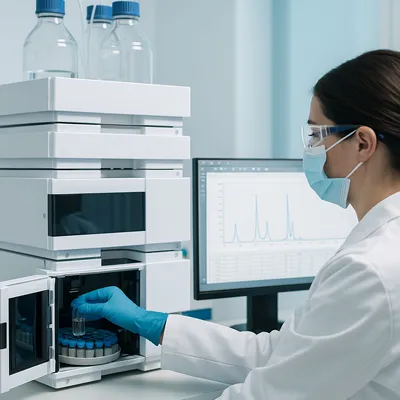
The analytical tool requirement in the ever-changing environment of pharmaceutical research and development (R&D) has never been more pertinent since the necessity of accuracy, reliability, and scalability of the tools is essential. One of these instruments has been chromatography. Whether in the study of raw materials, tracking of impurities or in regulatory submissions, chromatography can be used in all stages of the drug development stream. As the molecules increase in complexity, as the quality bar is raised higher, and as regulatory scrutiny of drugs increases, chromatographic techniques are advancing to help pharmaceutical scientists to fulfill such needs more effectively and efficiently.
The recent trends are moving towards automation and digitalization. Laboratory Information Management Systems (LIMS) and Chromatography Data Systems (CDS) will bring the ease of handling data, greater traceability and compliance with regulatory matters. Furthermore, artificial intelligence (AI) is under development as a technique to aid in the development of methods and in the analysis of data, saving manual trial-and-error.
The FDA and EMA require the submission of validated chromatography as regulatory agencies that approve new drugs. The parameters like accuracy, precision, linearity, and robustness should be proven, which ensures reliability. There is also the use of chromatography in Good manufacturing Practice (GMP) inspection, where it is deployed during the quality control and release testing.
Chromatography has its problems despite its benefits. There is the time-consuming problem of developing good algorithms for complex matrices. The samples can produce a matrix effect in biological samples. In addition to that, it is necessary to take care of equipment and data integrity.
Chromatography Principles of Drug Development:
In pharmaceuticals chromatography can assist in the identification, quantification and purification of active pharmaceutical ingredients, excipients, impurities and degradation products.
The most popular are those ones:
• High Performance Liquid Chromatography (HPCL)
• Gas Chromatography (GC)
• Thin-Layer Chromatography (TLC)
• Ion Exchange Chromatography (IEC)
• Size-Exclusion Chromatography (SEC)
The methods are used to fulfill certain analytical requirements, which are different based on the assay type and on the regulatory requirements.
R&D Lifecycle Applications:
The process of chromatography is closely rooted in all drug research and development stages:
| R&D Stage | Chromatographic Application |
| Preclinical | Impurity Profiling, Metabolite Analysis |
| Clinical | Bioanalytical, Pharmacokinetics |
| Formulation | Excipient Compatibility, Profiling of Dissolution |
| Stability Studies | Degradation Product Analysis, Shelf-life Prediction |
| Manufacturing | Control in Process, Testing of Quality |
These programs make sure that the drug products are safe, effective, and acceptable during development.
Chromatographic Technologies Research and Development:
Chromatography field has adopted a couple of innovations to deal with the complex molecules, biologics and massive datasets:
Ultra-High-Performance Liquid Chromatography
UHPLC runs pressurized,which means that run times are faster, resolutions are higher, and there is more throughput, but it also increases sensitivity as well due to the high pressures involved so it can be used in the early stages of drug discovery in screening large sample sets.
Chromatography Two-dimensional (2D)
The 2D chromatography is more efficient prospectively, as it uses the combination of two separation mechanisms. It is especially helpful when the biological matrices we are trying to analyze are complex or when we are looking at monoclonal antibodies, in which case co-elution can mask important data.
Coupling with Mass Spectrometry (LC-MS, GC-MS)
Chromatographic separation combined with mass spectrometric detection in techniques such as bioanalysis or metabolite identification, allows increased sensitivity and specificity.
| Technology | Key Advantage | Application |
| UHPLC | Faster and higher resolution | Method screening, impurity testing |
| LC-MS/MS | High sensitivity and selectivity | Bioanalytical assays |
| 2D Chromatography | Enhanced peak capacity | Complex sample profiling |
Robotization and Computerization:
Over the last few years, the use of automation and digitalization has tremendously transformed the processing of chromatographic data in pharmaceutical R&D. Chemical labs have increasingly taken up end-to-end digital environments, with instruments, software, and analytical departments becoming interoperable with the help of Laboratory Information Management Systems (LIMS) and Chromatography Data Systems (CDS).

Orientations I: These systems offer:
• Data storage over a centralized system, hence decreasing the probability of loss or edit of such data as it is.
• Visualization dashboard of chromatographic data in real-time
• The version controls and audit trail features, which guarantee complete adherence to the 21 CFR Part 11 and other data integrity requirements
Also, there has been increased security of remote access to chromatographic results using the cloud-based platforms, which can now support decentralized research models and collaborative research, particularly in pharma companies, which are global.
AI/ML application is not left behind. As an example, it is possible to train machine learning on large chromatographic data to:
• Forecast of optimum separation conditions
• Find anomalies in the system or drift in instruments
• Mobile phase gradients optimize
• Undescribed peaks
Those instruments are facilitating the decrease in development time of an analytical innovation, which is taking weeks to days, and imagined quicker insight and decision-making capacities.
Regulatory Compliance and Quality Control/Assurance:

Chromatography plays a key role in satisfying the regulatory expectations of the world. There are specific guidelines given by an agency like FDA, EMA and ICH regarding the process of developing analysis techniques, as well as validation and documentation as a part of the analytical method.
The Key requirements are:
• Precise and specific
• Accuracy and linearity
• Detection limits and quantification limits
Suitability and fitness of systems Robustness and fitness of systems
All this is vital to pass the drug, and data by adhering to these standards succeeds because of data integrity, regulatory preparedness, and reproducibility.
Issues and Problems:
Although it has its advantages, chromatography has some drawbacks, coupled with the fact that it has limitations, particularly in the pharmaceutical sense:
• New chemical entities (NCEs) require a long process to develop methods.
• Biological analytes may react with the matrix, which can impact detection sensitivity.
• Quality control must be quite hard in instrument calibration and maintenance.
• High-throughput techniques present data overload that requires high-performance processing systems.
At stake, in resolving these problems, are costs, efficiency, and analytical resolution, especially within rapidly moving development pipelines.
Future Outlook:
With the evolution of R&D towards rare diseases, complex immunotherapy and multiple-targeted drugs, the requirement to identify with high sensitivity and selectivity of analytical tools will increase. The core of this evolution will be chromatography, though not the classical one.
New technologies such as lab-on-a-chip chromatography are emerging as a focus of point-of-care or bedside, diagnostics. Such miniaturized systems would allow results to be available near-instantaneously using very small sample volumes and could be used in clinical trials in hitherto remote locations.
Pharma companies are also entering into strategic alliances with instrument manufacturers and other vendors of AI software to develop unified platforms covering the analysis of chromatographic data as well as method development and management of compliance.
In the future, we would only have to anticipate that chromatography would move forward to a more connected, predictive, smart system and be fully integrated as part of the digital drug development ecosystem.
Conclusion
Chromatography remains an innovation driver in many pharmaceutical research and development programs. It is adaptable and precise and versatile and it is required as part of every step of the lifecycle of drugs, development to regulatory approval. There can only be greater effects of chromatographic methods towards the speed of drug development as well as the enhancement of quality outcomes as they continue developing.
In prospect, the invention of miniaturized systems, green chromatography, and microfluidics will promote an efficient and sustainable chromatography.
Its emerging functionalities, coupled with the digital segmentation, make it one of the most powerful assets for devising accelerated drug development and, consequently, positive patient outcomes.
Modern chromatographic technologies and workflows are not only a scientific need, but they are also a strategic essential in pharmaceutical innovation.