


The adventure of a biopharmaceutical product from studies to market is complicated, demanding rigorous evaluation at each level. In this developed landscape, advanced analytical processes perform an important function, not only in ensuring the best guarantee, but when it comes in shaping product improvement strategies. With biology, mobile treatment options, and adapted treatment on the upward rise, it emphasizes accurate analysis.

The Expanding Role of Analytics across the Development Lifecycle
In conventional pharmaceutical development, analytics have been commonly deployed all throughout late-stage clinical management. Today, this role spans the entire life cycle for the improvement of drugs. From goal identification and verification to system optimization and final product launch, ensure data management analysis.
Effective giving high-resolution mass spectrometry, nuclear magnetic resonance (NMR), and monitoring of Multi-Multendant (MAM) have a first level of development benefits, which helps researchers understand the molecular structure and form. These units are important to mark protein folding, glycosylation styling, and capacity pollution, which establishes a solid base for improvement downstream.
In addition, the first implementation of analytical correction matches the principle of "unsuccessful rapidly, studies rapidly", which remembers the improvement of repetition design and sharp transitions for scalable strategy. This approach reduces the value and time related to the previously payable disasters, and improves the return on investment.
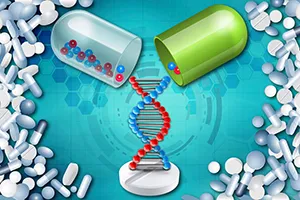
Accelerating process development through analytical innovation
In bioprocessing, the collection and evaluation of real-time statistics is important for product stability and security. Processes allow advanced analytical tool researchers to consistently excellent outstanding properties (CQAS) and Essential System Parameters (CPPS), consisting of analytical technology, Raman spectroscopy, and near-infrared (NIR) spectroscopy.
By using these devices, the bi-shape business variable first-class track process on the go can reduce the risk of batch screw and increase scalability. For example, in mobile cultures, the best conditions for inline monitoring of business levels and metabolic sub-products can help capture conditions and improve the yield in the end.
This approach additionally supports continuous manufacturing, a shift from traditional batch production that complements flexibility, reduces waste, and improves responsiveness to marketplace needs. Real-time launch testing, enabled through these analytics, minimizes product launch instances without compromising on safety or pleasant.
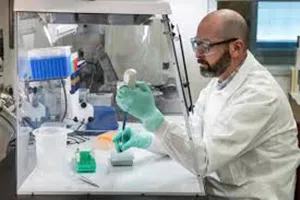
Quality by design (QbD) and analytical hardness
Regulatory emphasis on quality by design (QbD) has provided an essential change in how analytical techniques have been included in the biopharma workflow. QbD encourages a deeper information about techniques and emphasizes the first speed of the product from the beginning, as it is against analyzing it when released.
Techniques consisting of chemometric modeling and Multivariate Data Analysis (MVDA) can become aware of diffused method developments and deviations, permitting predictive management rather than reactive troubleshooting.
Incorporating analytics into QbD frameworks no longer most effective enhances product exceptional but also strengthens regulatory submissions. The availability of a strong information set supports a technology and chance-based approach for submission of regulations, resulting in rapid approval and minor questions from companies.

Digital Change: Analytics meets automation and AI
Digital changes have unlocked new opportunities in Biopharma Analytics. Cloud computing, Artificial Intelligence (AI), and Machine Learning (ML) with laboratory information management systems (LIMS). Digital twins, virtual copies of bioprocesses, allow developers to mimic and optimize approaches without running physical experiments.
AI-driven analytics can locate patterns and predict consequences with higher accuracy than conventional statistical strategies. For instance, ML algorithms can forecast batch deviations or expect product degradation, bearing in mind real-time interventions. Such predictive competencies drastically reduce time-to-marketplace and enhance regulatory self-belief.
Data lakes and integrated informatics platforms are allowing seamless fact aggregation from disparate assets, helping to foster better, more useful collaboration. These systems additionally offer compliance benefits, together with preserving electronic batch records (EBRs) and ensuring records integrity in accordance with ALCOA+ principles (Attributable, Legible, Contemporaneous, Original, Accurate, plus Complete, Consistent, Enduring, and Available).
Analytical approach in advanced treatments: Cell and gene therapy
Advanced treatment such as cell and gene therapy (CGT) introduces new analytical demand conditions due to their underlying complexity and variability. Unlike small molecules or perhaps monoclonal antibodies, CGT requires analysis of host cells, viral vectors, and nucleic acids.
Flow cytometry, droplet digital PCR (DDPCR), and next-generation sequencing (NGS) are some of the cutting-edge tools used to characterize these therapies. To ensure identity, purity, efficiency, and safety, strong demonstrated techniques are needed that are able to detect minute variations. In addition, as this treatment is sent to the industrial scale, scalable and automatic analysis becomes important.
Cell phenotypes, viability, and vector replication volume require a combination of orthogonal techniques. The automation of these surveys and deficiencies is important to reduce treatment time and to start secure products in clinically relevant windows.
Biosimilars and the Need for Analytical Equivalence
The analysis position in the biopharma has risen above the top of bio similarities. A radical analytical evaluation is required with reference biological to perform biosimilarity. Regulatory groups estimate the exact tests of structure, characteristic, and medical performance.
Advanced analytical structures, including capillary electrophoresis, peptide mapping, and bioassays, are used to establish equality in glycosylation patterns, price variation and organic activity. High equality should be verified clinically without meaningful differences, making analyses valuable for biosimilar approval paths.
In addition, comparative analytical properties indicate that clinical design takes a look at helps to streamline developments. A strong analytical bundle can reduce the need for medical tests large and scales, by saving time and assets, ensuring the patient's safety regularly.
Regulatory alignment and global harmonization
As analytical technologies develop, there are regulatory expectations. The FDA, EMA and ICH Inclusive agencies emphasize the integrity, the approach verification and random approaches to more and more facts. Companies must spend money on harmony in their analytical practices, with demands worldwide to facilitate steady approval and market access.
Regulators now expect real-time release testing (RTRT), enhanced traceability, and digital audit trails. Ensuring compliance with these expectations requires not only robust instrumentation but also skilled personnel and well-documented protocols. Training, continuous improvement, and cross-functional collaboration are essential for analytical excellence.
Global regulatory convergence initiatives, such as ICH Q12, support lifecycle management of analytical methods. Companies that proactively align with these guidelines benefit from smoother post-approval changes and better access to international markets.
Problems and possibilities in the future
While there have been improvements, biopharma companies still face problems when adopting new analytics methods. Because of the high costs of capital, difficulties in linking new systems to old ones, the presence of data silos and needing workers with different backgrounds, many companies are held back from using advanced analytics. Often, coming up with reliable methods for testing new modalities takes trial and error and lots of optimization.
Another worry now is cybersecurity, as firms start using cloud-based services. Protecting products of the mind and paying attention to privacy laws such as GDPR and HIPAA, are both vital.
The upsides of sustainability development outnumber the difficulties. Thanks to the rise of personalized medicine, biosimilars, and CGTs, the need for analytics that are prompt, adjusted and automated will also rise. Alliances with tech suppliers, CRO companies, and academic partners may resolve any skills shortages.
Ensuring the workforce receives good training and support will become extremely important. Now, analytical scientists must understand machines, data analysis, how to comply with regulations and how to use automation technology.
Conclusion
Biopharmaceuticals need advances in analytical technology to move forward. With the help of advanced analytics, pharmaceutical companies can characterize difficult molecules and make sure manufacturing is always the same. With growth in personalized and detailed therapies, using digital tools, observing patients live and predicting problems will help companies win.
Making data analysis part of every development phase allows biopharma companies to speed up new discoveries, reduce dangers and get life-saving medicines to patients faster and with greater certainty. It is no longer just the beginning; the laboratory is at the core of how biopharma gets to market.