


Preclinical testing is the foundation of drug discovery which gives the important information before the drug goes to human testing, in terms of safety, efficacy, and pharmacodynamics. Nevertheless, immortalized cell lines as well as animal models, especially the latter, are increasingly criticized because they do not faithfully capture human physiological conditions.
As rates of drug attrition insidiously persist at a rate of over 90 percent, with drug candidates being rejected during the clinical trials process, the biomedical community is seeking more predictive and more humane approaches. Along comes organoids and artificial organs: radical advances that recreate some of the most important functional properties of human organs, either in vitro or using bioengineered systems.
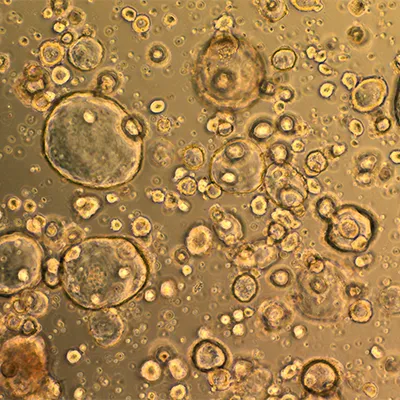
Self-organizing three-dimensional mini-organs (organoids) made up of stem cells, and artificial organs man-made systems that emulate the behavior of organs can provide a human-relevant platform to test therapies in a relevant manner. The future of preclinical testing becomes redefined according to this editorial as these technologies transform it by establishing new benchmarks of accuracy, ethical considerations, and translational power.
1. Limitations to Traditional Preclinical Models
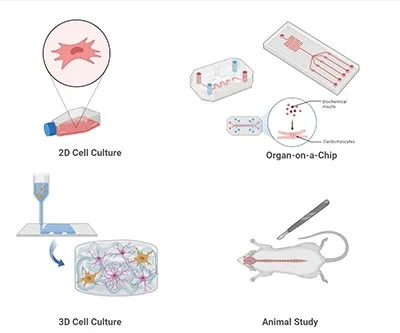
Two-Dimensional Cell Cultures
The 2D cell cultures that served as a workhorse of the biomedical research during the past decades do not recapitulate tissue complexity. In 2D it is not possible to allow cells to interact with their microenvironment physiologically relevantly, which results in the distorted reaction to drugs and stimuli.
Animal Models: Social, Moral, and Scientific Issues
Although animal testing has some degree of prediction regarding the effect in the whole body, the interspecies variations make the information non-transferable into the human physiology. Animals such as the rodents biochemically process drugs through different ways and also have immune response that differs considerably with that of humans. Ethical costs are also not minor, and an election towards 3Rs - Replacement, Reduction and Refinement of animal use in research, is underway at a global level.
2. Organoids: Mini Systems on the Rise
Organoids: What are they?
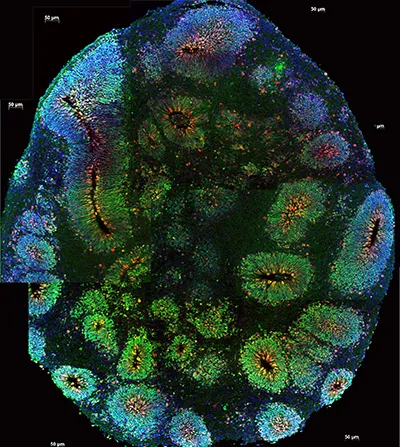
Organoids are three-dimensional constructs that are generated under the self-organizing conditions in pluripotent stem cells or progenitor cells that are found in adults. They share important features of their in vivo equivalents; in particular, cell heterogeneity, spatial structure, and functional incompleteness.
Organoid types
• Brain organoids can be used to model neurodegenerative diseases and early neurodevelopment.
• Liver organoids, Metabolism, and detoxification.
• Intestinal organoids can be utilized in studies regarding interaction with microbiome.
• Kidney and lung organoids open the way to nephrotoxicity and pulmonary research respectively.
Preclinical Testing Uses Applications
Organoids have the capability of being patient-derived and thus they have the ability of being used to conduct a personal drug screening. They are advantageous as highly useful models in assessing drug efficacy, toxicity and descendent of action in a genetically and physiologically relevant setting.
Case Study: Drug screening Cystic fibrosis
Intestinal organoids isolated (using patient-derived cells) have been tested in the context of responsiveness to cystic fibrosis transmembrane conductance regulator (CFTR) modulators. These organoids were able to indeed forecast a patient-specific response, outdoing the accuracy of genotyping-alone in guiding treatment.
3. Artificial Organs: Surrogating complexity
What Is An Artificial Organ?
Artificial organs are the man-made systems which imitate the shape and activity of the human organs. These may comprise organ-on-chip devices and bioprinted tissues, which can mimic dynamic physiology (e.g. fluid flow, mechanical stress and strain, and biochemical gradients).
Organ-on-a-Chip: Meeting the Engineering and Biology Needs
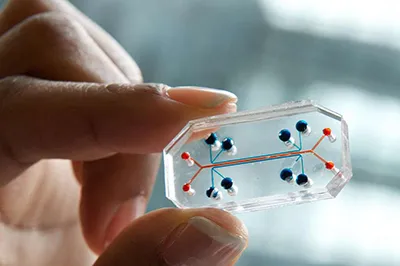
Organ-on-chip devices were developed with microfluidic technology by enclosing live cells in permanently perfused chambers, which enables the simulation of blood flow and mechanical loads. For instance:
• A lung-on-a-chip simulates the aero-blood barrier and respiratory mucosa.
• A heart-on-a-chip simulates the electronics and contractility of a myocardium.
• Multi-organ chip: It interlinks various tissue modules to examine systemic drugs effects.
Bioprinting: The Next Evolution Tissue Production
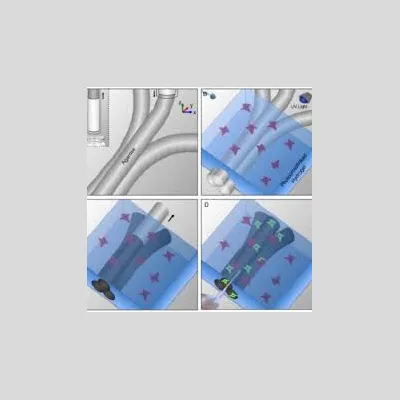
Bioprinting refers to the capacity to build three-dimensional printed products using cells, biomaterials, and growth factors into layers to form functional constructs of tissues. This makes the models of a human tissue architecture highly customized, replicable, and expandable.
4. Advantages over the Traditional Models
| Feature | Traditional Models | Organoids | Artificial Organs |
| Human relevance | Low to moderate | High | Very high |
| Scalability | High | Moderate | Moderate to high |
| Reproducibility | Moderate | Variable (improving) | High |
| Ethical considerations | Major concerns | Minimal | Minimal |
| Cost | Low to moderate | Moderate to high | High (initial) |
| Throughput | High | Medium | Medium |
5. Hurdles and Stalls
Reproducibility and standardization
Organoids (particularly those generated using patients) have batch-to-batch vulnerability. Variation on the protocols and growth media, as well as the cell source affects reproducibility between labs and experiments.
Regulatory Uncertainty
Regulatory routes on the data generated using organoids and chip are non-clear despite their promise. Such agencies as FDA are starting to realize the utility of them, but consistent validation plans are still under development.
Connection to Pre-existing Pipelines
There are still pharmaceutical companies that are following traditional preclinical procedures. Such joinery of organoids and artificial organs data to existing workflows position infrastructural and cultural change.
Price and Availability
The likelihood of high setup and running costs, particularly, those relating to organ-on-chip platforms, is still a deterrence to their widespread use. Some of these limitations can be improved by democratizing entry by access to shared facilities, or cloud-based testing platforms.
6. Hybrid Testing Ecosystem Part of the Way
Instead of directly replacing traditional models, organoids and artificial organs would probably work alongside the former ones in a hybrid testing environment. This sort of integration can be done it on a tiered basis:
1. Primary screening with 2D cultures of high throughput.
2. Toxicity tests in organoid and chip studies and a mechanistic study.
3. Confirmation in fine animal models or in human-on-chip systems.
The multilayered system would help in decreasing attrition rates, the use of animals, and increasing time-to-market on novel therapies considerably.
7. Personalized Medicine and Beyond Implications
Preclinical testing on organoids leads to precision medicine, in which before a clinical trial, a treatment can be tested on the patient-derived cells. This especially makes a difference in:
• Oncology, in which tumor-derived organoids have predictive capacity to whether they will respond to something.
• Diseases that are rare, in which animal models are unpractical or unavailable.
• Gene therapy where off-target effects and efficacy can be measured in the model relevant to the human being.
In addition, the organ chips allow real-time measurements of dynamic drug response leading to additional pharmacokinetic and pharmacodynamic characterization.
Conclusion:
The application of stem cell biology, bioengineering and microfluidics is on the doorstep of a revolution in preclinical testing. Organoids and artificial organs are not just technological achievement but the sign of transition to human-centric, ethical, and predictive science.
Although some problems still exist in the areas of standardization, cost, and regulatory visibility, the train has left the station. With maturing systems, we look forward not only to lowering the rate of failures during drug development but also to speeding innovation and benefiting patients eventually.
Future of preclinical testing does not only imply models but it also implies reimagining what can be human testing in every sense.