

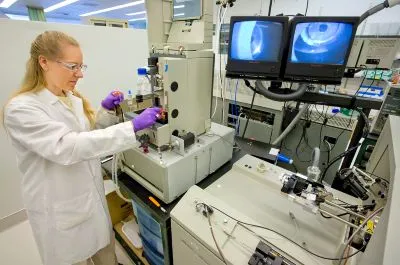
Large-scale proteomics study has appeared as one of the cores of contemporary biology and biomedical research. Mass spectrometry (MS) has been instrumental in this revolution and has turned out to be the most sensitive instrument to identify, quantify, and analyze the structure of proteins in complex biological mixtures. Originally, MS was used in the study of small molecules but it has now taken a giant leap to satisfy the challenging needs of proteomics. This paper discusses the issues of mass spectrometry and how it specialized in the domain of proteomics with an analysis of the principles involved and developments that have taken place over the previous years, as well as some of the emerging trends that are influencing the future of protein science.
Mass Spectrometry
Mass spectrometry (MS) is an efficient tool of sensitive analysis; it determines the mass-to-charge (m/z) ratio of ions. It helps scientists identify the molecular weight and structure of compounds with great accuracy. Proteomics Proteins and peptides are studied using MS, which breaks them up into charged parts, separates those parts using their mass, and measures them with high sensitivity.
The MS process entails three major stages as follows:
1. Ionization: modifies the molecule to ions, typically proteins and peptides are used in Electrospray Ionization (ESI) and Matrix-Assisted Laser Desorption/Ionization (MALDI).
2. Mass Analysis: Isolates the ions depending on their mass to charge ratio to distinguish them with the help of such instruments as quadrupoles, time-of-flight (TOF ) analyzers or Orbitraps.
3. Detection: Quantifies the number of each ion and produces a mass spectrum that can be interpreted to conclude about the molecular composition of the sample.
The principles allow the variety of proteins to be identified, quantified and their structure determined within complex biological systems, and as such MS is an invaluable tool within modern proteomics.
The principles of Mass Spectrometry in Proteomics
Analytical techniques Mass spectrometry Mass spectrometry is an analysis method to determine a ratio between the mass (m) and charge (z) of ions. An MS system also has its most significant components (mass analyzer, detector and ionization source). Proteomics In proteomics two classes of ionization processes are normally used: matrix-assisted laser desorption/ionization (MALDI) and electrospray ionization (ESI). The methods enable the conversion of the peptides and proteins into ions with gases, which can then be analyzed.
Typical MS setups consist of
• MALDI-TOF/ToF (Time-of-Flight): It is used to analyze a combination of peptides by rapid profiling.
• ESI-MS: The instrument is appropriate to apply with a liquid chromatography (LC-MS), enabling intensive separation and quantification of peptides.
• Tandem MS (Mass Spectrometry (ms) / mass Spectrometry (ms): Allows fragmentation of peptides to identify the sequence.
Principles of Proteomics Mass Spectrometry
The mass spectrometry enhances a wide list of proteomic assays:
• Protein Identification: the identification of the proteins in complex mixtures.
• Quantitation: Measurement of the amount relative or absolute abundance in a label-free or stable isotope labeling.
• Position of Post-Translational Modifications (PTMs): Detection of the glycosylation and phosphorylation.
• Structural Proteomics: The study of the shapes of proteins and associations between them.
• Biomarker Discovery: Determination of proteins signatures of diseases.
• Systems Biology: Mapping of networks and pathways of proteins.
Innovation and Evolution in Technology
Over the last decade, MS-based proteomics has experienced enormous technological advances:
• High-Resolution Instruments: Orbitrap and Q-TOF will be more characteristic in the regard of mass and sensitivity.
• Data-Independent Acquisition (DIA): Non-specific and reproducible quantitation strategies such as SWATH-MS are used.
• Top-Down Proteomics: Conducts an analysis on intact proteins rather than the peptides.
• Isobaric Labeling Techniques: Tandem Mass Tags (TMT), as well as iTRAQ boost the multiplexed quantification.
Proteomics and Data Analysis by Computation
Such data are complex and require sophisticated high-computing tools to study MS:
• Machine Learning, AI: Help in identifying the peptides, analysis of the PTM, and the detecting of the invariants.
• Cloud-Based Platforms: Enables sharing of data and team-level analysis on a big scale.
• Standardization: Initiatives: Programs like Proteome exchange have tried to increase reproducibility of data and standardization of format.
Recent Studies Highlights
The recent research proves the growing influence of MS in proteomics:
• Cancer Proteomics: MS has also been applied to identify the novel biomarkers used to make early diagnoses, determine responses to drug treatment, and drive precision medicine strategies. As an illustration, phosphoproteomic profiling has revealed ere changes in tumor subtypes signaling.
• Neurodegenerative Diseases: MS has helped to profile protein aggregations that include amyloid-beta and tau in the condition of Alzheimer disease and enhanced our comprehension of the pathology of the disease. MS also played a significant role in the monitoring of the oxidative stress-linked PTMs of neurodegenerative disorders.
• Single-Cell Proteomics: Proteomic analysis at the low-resolution level has been possible through techniques including SCoPE-MS, which has provided information about cellular heterogeneity and lineage differentiation of specific proteins.
• Spatial Proteomics: MS has been used in combination with imaging technology such as MALDI imaging or laser capture micro-dissection to enable researchers to localize tissue-specific proteins in tissue sections, which has aided in untangling tissue-specific protein behaviors.
• COVID-19 Research: MS has been used to profile the host proteomic specifics of SARS-CoV-2 infection to enable the identification of possible therapeutic options.
Future trends
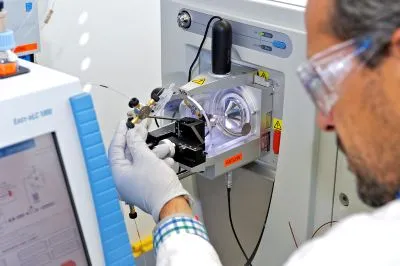
A number of future trends indicate that mass spectrometry in proteomics is headed towards:
• Miniaturized and Portable MS Devices: The growth of small MS systems will make on site and on demand diagnostics available in both clinical and environmental applications.
• In Vivo and Real Time Proteomics: Future perspective of MS is the capability to sample in vivo and record proteins modifications in real-time which is of prime significance of dynamic living bodies.
• Translation of Clinical Use: More emphasis is being given to clinical translation of the ideas carried out in MS. Concerted effort is being put by regulatory agencies and consortia to standardize the diagnostic application workflows.
• Artificial Intelligence Incorporation: AI is also becoming centralized in the analysis of MS data, the enhancement of spectral matching, and the identification of new peptides and PTMs.
• Sustainable Technologies: Other advancements in the area of sustainability are also on the area of sustainable technologies involving reducing reagents consumption, energy and waste generation.
• Single-Cell and Spatial Proteomics: A synergy of increased sensitivity and throughput is making single-cell and spatial proteomics more practical and higher-performance in an ever-growing number of biological and medical research applications.
Hurdles and constraints
Notwithstanding its merits, MS-based proteomics has a number of issues:
Sensitivity and Dynamic Range: The identification of low-abundance proteins in a fraction of highly abundant species is still a key challenge, especially with clinical samples, e.g., plasma.
• Sample Preparation: The difference in sample processing, digestion of the proteins, and enrichment methods may result in variation in the results.
• Costs and Availability of Instrumentation: Expensive costs of purchasing and maintaining advanced MS systems curtail the implementation of advanced MS in resource-low areas.
• Data Overload and Interpretation: There is a huge amount of data being generated and this would need skilled bioinformatics infrastructure and expertise that cannot be equally distributed.
• Reproducibility: Inter-laboratory variance in sample processing and data analysis pipelines is a problem; thus, a standard process is a necessity.
Conclusion
The emergence of mass spectrometry has revolutionized the outlook of proteomics, which has found its way into both systems genomics and clinical research. With the current technological wave, MS has an exciting future that includes the potential to reveal new findings of protein structure and function, malady processes, and therapeutic molecules. Further interdisciplinary research and integration with computing tools will keep it at the center of life science in the future.