


The sterile drug outsourcing segment in the pharmaceutical industry undergoes a significant change. New therapeutic methods such as biology, cell and gene therapy, and other special treatment are given traction, there is a growing change to low-volume drug products. This development has greatly pushed the global offering of parental development and production services.
Small and medium-sized biotechnology companies, which are responsible for a large proportion of these innovations, are often dependent on the outsourcing partners to bring their products through clinical development. However, these companies face increasing challenges related to sterile production capacity, deadline and technical complexity. Initiation of clinical tests extends to 18 months in some cases of initiation deadline, and when significant sterile fill finish services have become an important bottleneck.
Changing Demand Dynamics in Parenteral Drug Manufacturing:
Large-scale, traditional pharmaceutical production infrastructure was created to meet high-volume production. However, the demand profile of the industry changes rapidly. The increase in individual medical and targeted means has increased with unique formulation and distribution requirements in small batch biology and other sterile products. Unlike traditional medicines, these treatments often require more adaptation, sharp treatment time and more flexible production processes.
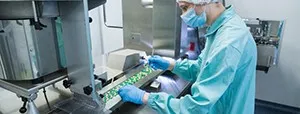
As a result, sterile construction should now meet small batch size, more frequent changes and more stiff pollution control. This changed advanced fill-finish skills and convenience designs are necessary who prefer prioritize agility over the output volume. The need for such flexibility is continued by the complex nature of many medicines today, which may require special handling and alternative processing technology.
Lack of Capacity and Their Implications:
One of the most important problems affecting sterile outsourcing is the lack of available production capacity, especially for small batch and early phase production. Facilities equipped to handle the novels and small production races are limited, and their services are often higher than the offer. This imbalance leads to long-term leadership, delay in clinical programs and uncertainty for companies seeking new treatment for patients.
The results of these delays are long. Especially the initial stage biotechnology company depends on timely progress in clinical trials to complete the milestone and secure future financing. Production tracks or formulation development can jeopardize the entire development programs. For example, capacity plan and allocation medicine have become an important aspect of outsourcing strategy.
Complexity of Fill-Finish Operation:
Procedures for sterile fill-finish present challenges, especially when non-standard products work with formats or new technologies. These tasks require accurate environmental control, verification and efficient handling. Many contract development and manufacturing organizations (CDMO) focus on large-scale commercial filling due to their economic capacity, and often leave small, complex parties.
For companies that develop innovative formulations such as powder, leopard products or high-central biological borders are particularly acute. These products may not be suitable for traditional fill finish lines, and they often require dedicated infrastructure, procedural adjustment or special equipment to adjust them. In addition, the transfer of such complex processes between websites may be time-sized and risk bands, delay in further development.
The Emergence of Powder-Based Sterile Products:
In the form of pharmaceutical science, several products that require powder-based formulations are developed. They may be required by the instability of the active drug component, or solution problems in liquid or frozen conditions that limit the achievable dose. Although freeze-drying has traditionally been used to stabilize such formulations, it is not always effective for new biologics with high concentrations.

An alternative method, aseptic spray drying, is aware of the ability to produce stable powder shapes in a sterile environment. However, integration of this technique into sterile production introduces new challenges. Powder treatment under due conditions is more complex than fluid filling and requires greater technical expertise, increased functional design and new equipment verification protocol.
Currently, many functions lack the ability to handle sterile powder on a scale. This difference causes further stress on sterile outsourcing ecosystems, especially as the demand for such formulations is increasing. CDMOs equipped with both specialization and infrastructure are in low supply to manage powder-based sterile products.
Analytical Requirements and Product Characterization:
The complexity of modern biology also extends to analytical testing. In both powder and fluid formats, products will have to undergo strict characterization to ensure quality, stability and regulatory compliance. It requires a wide range of analytical abilities, including particle size, moisture material analysis, and strength testing and microorganism assessment.
It is necessary to develop strong analysis methods to fit the unique properties of each formulation, but time and intensity. In the development of the initial phase, delay in analytical emergency preparedness can only prevent progress as obstacles to production capacity. Therefore, integration of analytical development into outsourcing relationships is important to maintain the project deadline.
Facility Design Ideas in a Changing Landscape:
Production facilities designed for traditional drug production are often ill-suited for today's sterile construction needs. Large-scale, high-throughput operations do not provide flexibility required for frequent product changes, small batch races and multi-product flowers.
The revised connection of the GMP guidelines for the EU implemented in August 2023 emphasizes the change in the industry towards closed processing systems and isolation technology. These systems reduce human intervention, low pollution risk and support rapid production cycles by simplifying cleaning and verification processes.
Insulators also enable more efficient environmental control, making them compatible with the needs of sterile product production. On the other hand, open cleaned design requires extensive monitoring and dressing protocols that slow down operations and increase operating costs.
Design or retrofitting functions with flexibility such as modular cleansing, quick change suites and disposable technologies can increase responsibility and throw. These adjustments are particularly valuable in early clinical development, where speed and adaptability are needed.
Reduce the Load of Technical Transfer:
Technical transfer between production sites is another important factor affecting the sterile outsourcing timeline. The transfer of one procedure from one function to another, often includes on ranking equipment, withdraws employees, renegotiating contracts and addresses regulatory implications. For complex sterile products, this process can take six months or more time.
Consolidation will reduce these risks in development, clinical construction and upscaling in the same location. When development teams and production personnel work together in one place, it is easy to maintain continuity, detect real-time challenges and coordinate long-term goals. This integrated approach not only reduces delays, but also increases product quality and regulatory preparedness.
Lack of Talent in Sterile Construction:
While technological progress is formed sterile drug production, a significant obstacle remains: Lack of qualified personnel. Aseptic production requires a high effective workforce with special knowledge of contamination control, cleanroom operations, formulation science and regulatory compliance.
This talent difference is particularly problematic because facilities become more complex and as industries are using new processing technologies. In order to maintain operational quality and innovation, it is necessary to recruit and maintain experienced professionals. In addition to technical expertise, successful sterile construction also depends on effective collaboration in works including quality assurance, engineering science and analytical services.
Investment in workforce development, training programs and cross-functional team integration is important for addressing this skill and ensuring long -term stability in sterile outsourcing.
Strategic Views for Outsourcing Success:
Developed demand for sterile product development requires the restoration of outsourcing strategies. Companies should look beyond the availability of capacity and evaluate the full range of the possibilities provided by CDMO, including:
• Specialization in both traditional and advanced frame technologies.
• Flexibility to adjust small, complex parts.
• Integrated services that reduce the requirement for technical transfer.
• Modern function design that supports multi-product agility.
• Advanced analytical abilities to support early development.
• A stable, well-trained workforce to ensure continuation of the project.
Instead of seeing CDMOs, only as suppliers of production services, pharmaceutical developers quickly trust as a strategic expansion of their own R&D and operating team. It is necessary to ensure adaptation between internal purposes and external ability to navigate the challenges of sterile drug growth and commercialization.
Conclusion:
The sterile outsourcing landscape is more complex, competitive and capacity. The growth of advanced biological, individual medicines and innovative distribution formats has accelerated the demand for special development and production skills.
Small and medium-sized biotechnology companies, which run most parts of this innovation, require timely and reliable access to sterile construction. However, limited capacity, extended timelines and technical transfer challenges interfere with progress.
To solve these problems, CDMOS and their customers must use more general and forward-looking approaches. This includes investing in convenience flexibility, new technologies create specialization, integrate analytical services and promote strong, collaborative project groups.
As the pharmaceutical industry continues to develop, the success of sterile outsourcing will not only depend on infrastructure and capacity, but will also depend on the ability to adapt to complex needs and to distribute high-quality solutions quickly and efficiently. It is important to identify and respond to these changed needs and to implement clinical programs and bring new funds to the market.