n the life sciences industry, quality is foundational. It underpins patient trust, ensures a reliable supply of medicines, and sustains long-term operational excellence. While regulatory compliance remains essential, organisations increasingly recognise that quality must extend far beyond meeting requirements. In an environment defined by growing product complexity, globalised manufacturing networks, and accelerating innovation, quality must be embedded into the way work is performed every day.
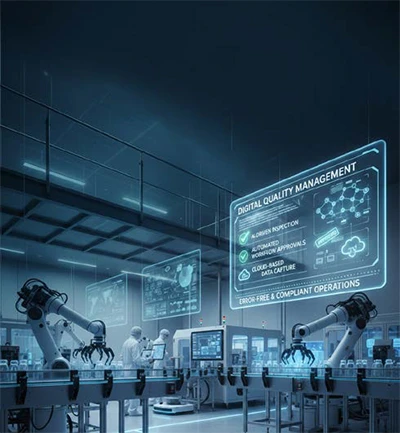
Digital transformation has become a powerful catalyst in this evolution. Among the most impactful developments is the emergence of modern Digital Quality Management Systems (DQMS) not as standalone technology implementations, but as strategic enablers of patient-centric, world-class development and manufacturing excellence. When thoughtfully designed and implemented, a DQMS transforms quality from a reactive control function into a proactive, integrated driver of performance across the product lifecycle.
The Evolving Role of Quality in a Complex Landscape
The pharmaceutical and biotechnology sectors are operating in an increasingly complex environment. Advanced modalities, accelerated development timelines, global supply chains, and heightened regulatory expectations demand new ways of working. Traditional, fragmented quality systems, often built over time through localised solutions, struggle to keep pace with this complexity. Disconnected tools, manual handoffs, and inconsistent processes can introduce variability, slow decision-making, and limit transparency across the enterprise.
In this context, quality excellence depends not only on robust procedures but on the ability to execute them consistently and intelligently at scale. Organisations must understand both the what and the why behind each process step, supported by timely, reliable data that enables proactive risk management. This is where a modern DQMS plays a critical role.
From Fragmentation to Integration: The Digital Quality Foundation
At its core, DQMS provides a single, integrated digital foundation for quality. Rather than relying on multiple unconnected systems, a DQMS unifies critical quality processes within a standardised, intuitive platform. This integration strengthens data integrity, improves traceability, and enables enterprise-wide visibility across development and manufacturing operations.
By embedding quality directly into digital workflows, organisations move beyond siloed execution. End-to-end processes become easier to follow, simpler to govern, and more reliable to execute. Standardisation does not eliminate flexibility; rather, it creates a consistent framework within which teams can operate efficiently while adapting to local and product-specific needs.
The value of this digital backbone extends beyond operational convenience. Integrated data allows organisations to move from retrospective analysis to proactive, risk-based decision-making. Leaders gain clearer insights into trends, emerging risks, and systemic opportunities for improvement—enabling earlier intervention and more effective resource allocation.
Streamlining Critical Quality Processes
One of the most tangible benefits of a DQMS is the ability to streamline and harmonise critical quality processes across the enterprise. Digitally enabling processes such as deviations, corrective and preventive actions (CAPA), change management, supplier quality, audits, inspections, and risk management reduces complexity and variability.
When these processes are managed through intuitive, end-to-end digital workflows, execution becomes more consistent and efficient. Manual handoffs are reduced, data entry errors are minimised, and cycle times improve. Importantly, quality professionals can spend less time navigating systems and more time focusing on analysis, problem-solving, and continuous improvement.
This streamlined execution directly supports the goal of “right-first-time” manufacturing. By making quality processes easier to follow and govern, organisations strengthen their ability to deliver high-quality products consistently, reducing rework, minimising disruptions, and enhancing supply reliability for patients.
Data Integrity, Transparency, and Informed Decision-Making
High-quality data is the lifeblood of effective quality management. A DQMS strengthens data integrity by reducing duplication, enforcing standardised data structures, and providing clear audit trails. When quality data is reliable and connected, it becomes a powerful asset rather than a reporting burden.
Integrated data creates transparency across development and manufacturing functions, enabling teams to see the full picture rather than isolated snapshots. This visibility supports faster, better-informed decisions, particularly in complex or time-sensitive situations. Leaders can assess risk holistically, understand cross-functional impacts, and respond with confidence.
Moreover, a strong digital data foundation enables the application of advanced analytics and emerging technologies. Trend analysis, predictive insights, and continuous monitoring become possible when data is standardised and accessible. Over time, this capability supports a shift from reactive issue management to proactive quality oversight.
Strengthening Accountability for Patient-Centric Outcomes
Quality ultimately exists to serve patients. A DQMS reinforces this purpose by strengthening accountability for patient-centric outcomes across the organisation. As a centralised source of quality information and processes, it enables consistent oversight and clearer ownership at every level.
In global organisations, alignment across sites, regions, and functions is essential. A DQMS supports this alignment by establishing shared ways of working and common visibility into performance. Teams operate within a unified quality framework, fostering a collective responsibility for outcomes rather than fragmented accountability.
This enterprise-wide accountability is critical to sustaining a “one quality” mindset where quality is not owned by a single function, but embraced as a shared responsibility across development, manufacturing, and technical organisations.
Technology Enabled by People, Process, and Culture
While digital systems are powerful enablers, technology alone does not deliver quality excellence. The success of any DQMS depends on people, processes, and culture working together. Organisations that focus solely on system deployment without addressing these dimensions often struggle to realise the full value of their investment.
Effective DQMS implementations prioritise end-user experience from the outset. Designing workflows that align with how people actually work and eliminating unnecessary complexity encourages adoption and consistent use. When users experience quality systems as intuitive and supportive, rather than burdensome, quality becomes embedded in daily execution.
Change management is equally critical. Clear communication, role-based training, and leadership alignment help teams understand not only how processes are changing, but why those changes matter. When people see the connection between digital quality systems and patient outcomes, engagement deepens, and cultural transformation accelerates.
Strong collaboration between quality and information technology teams further enhances success. By combining deep process expertise with digital capability, organisations can design solutions that are both compliant and a practical fit for purpose today and scalable for the future.
Building Future-Ready Quality Capabilities
As the industry continues to evolve, quality organizations must be prepared for what comes next. A DQMS supports this readiness by creating a flexible, scalable foundation that can adapt to new products, technologies, and regulatory expectations.
Standardised digital workflows make it easier to onboard new sites, integrate acquisitions, and support growth without compromising consistency. At the same time, the availability of integrated data positions organisations to leverage future innovations in analytics, automation, and artificial intelligence.
Perhaps most importantly, a DQMS supports the development of future-ready quality talent. By reducing administrative burden and increasing access to meaningful data, quality professionals can focus on higher-value activities, strengthening technical expertise, driving innovation, and contributing strategically to organisational goals.
A Strategic Investment in Quality and Patient Trust
Ultimately, a Digital Quality Management System is far more than a software implementation. It is a strategic investment in how quality is delivered and sustained. By embedding quality into digital workflows and enterprise execution, a DQMS strengthens development and manufacturing excellence while supporting proactive, risk-balanced decision-making.
In an industry where patients depend on the consistent availability of safe, effective medicines, this capability is essential. Organisations that view DQMS as a strategic enabler rather than a compliance tool are better positioned to meet regulatory expectations, drive operational excellence, and, most importantly, serve patients with integrity and reliability.
As digital transformation continues to reshape the life sciences landscape, quality must remain at its center. A well-designed Digital Quality Management System provides the foundation to ensure that quality is not an afterthought, but a defining characteristic of how medicines are developed, manufactured, and delivered to patients worldwide.