

Enhancing Patient Care with Digital Tools in the Pharmaceutical Sector
Kate Williamson, Editorial Team, Pharma Focus America
Digital tools are proliferating productive millennium patients care in the global pharmaceutical Industry by widening access, liabilities, and tailored therapy. Using such technologies as mobile applications, wearable devices, telemedicine, and artificial intelligence, consumers get more anticipatory and convenient treatment. They enhance the process of data gathering, facilitate remote data acquisition and enhance patents engagement but still the issues in question include data safety and data sharing between different tools.
Introduction:
In the last few years, the adoption of technology has revolutionized almost all businesses across industries including the business of selling drugs. Digital technologies, therefore, the health field has already affected or has given positives to the patient in regard to concern the treatment efficiency and patients’ access to the Health care delivered. From apps on portable handheld devices to smart clothing, and artificial intelligence solutions, all of these are now influencing the changing dynamics of the pharmaceutical manufacturing companies’ interface with patients, physicians, and government agencies.
It goes a long way in enhancing the supply to fit the increasing patient need, patient individualized care, and general enhanced patient care delivery processes.
Importance of Digital Tools in the Pharmaceutical Sector
The advanced technology is an enabler in healthcare because it helps in making the system efficient and expeditious ensuring that data, information exchange in the healthcare value chain was effective. They help healthcare providers to have a better understanding of their patients, their improvement and their needs, it also helps healthcare provider to serve their patients faster. From the perspective of patients these tools are seen as convenient, readily available and improve the chances of early intervention. In the pharmaceutical industry it is possible to address key business processes with the help of digital tools: research and development (R & D), compliance, and supply chain.
Types of Digital Tools Enhancing Patient Care
In the pharmaceutical industry, there are different forms of digital tools required for improving patient care and each of them has its significance. Here are some key categories:
a. Mobile Health (mHealth) Applications
Mobile health applications help in enhancing patients’ self-management because they ensure that patients can easily get correct information on their conditions, are able to be reminded of the right time to take their medications, and have means through which they can be monitored in real time. Such applications can even monitor the patient’s compliance to certain medication regimens, and inform him of appointment dates, or aid in managing certain diseases such as diabetes, hypertension among others. The distinctive characteristic of these applications seems to offer information and educational content for patients – pharmaceutical firms using the applications as a means of passing information on drug information, side effects, among others, on safe use of the drugs.
b. Wearable Devices
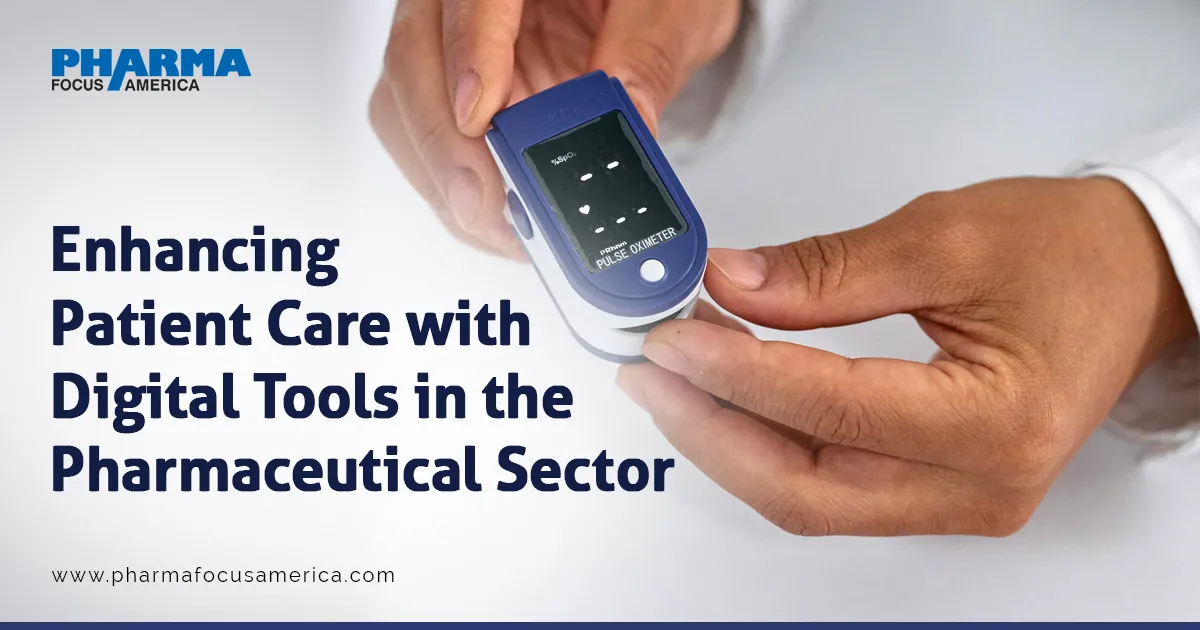
Smart clothing and wearable devices like effective fitness tracker or smart-watches can track a patient’s biometrics, physical exertion, and other health related characteristics and parameters persistently. For instance, wearables can monitor pulse, sleeping behavior and even blood oxygen levels which are beneficial information to the doctors. The following are the benefits of this type of information: convenient intervention, fewer visits to healthcare facilities, and improved treatment of chronic illness. In clinical trials, these are used to gather patient data in real time and monitor how the drugs affect a person’s life.

c. Telemedicine Platforms
Telemedicine enable physicians to access clients without physically being present with them hence patients can be attended to from the comfort of their homes.
Of particular use in rural and other poorly served communities telemedicine minimizes physical visits and offers timely access to physicians and specialists. To pharmaceutical companies telemedicine platforms can be used to consult with patients in clinical trial phases and monitor their reactions, as well as to make use of post-market drug monitoring.
d. Artificial Intelligence (AI) and Machine Learning (ML)
AI and ML is extending to identification of patient data, estimation of disease and risk factor outcomes and personal diagnosis and treatments. In the pharma especially the research process these tools enhance drug discovery, reduce the time and cost in clinical trials and increase the chances of selecting suitable patient for the tests. What AI accomplishes in the clinical setting is to present the doctor with a more accurate diagnosis in the set of individual treatment and can eliminate the risk of a medication error to the barest minimum.
e. Electronic Health Records (EHRs) and Patient Portals
EHRs contain and manage patient care information in electronic format for which health care givers need comprehensive report on a patient’s health history. This data accessibility contributes to increasing the effectiveness of care, as well as decreasing the number of tests carried out.
An example is patient portals which are integrated with EHRs enabling the patient to access his records, reviewing tests results among other features which enable patients to manage themselves. Providers can use EHRs to present and individualize clinical trials and study the effectiveness of pharmaceutical products progressively.
Chatbots and Virtual Health Assistants
They can ensure patients’ constant support by answering their questions, informing about the time for taking a particular medication, and help patients check their symptoms. These tools also employ AI to provide appropriate feedback to patients’ questions as well as addresses their concerns thus improving patient’s experience. Finally, for pharma companies, and firms in related industries there is the following opportunity: information on drug interactions, additional dosing tips, or frequently posed patient questions can be provided by a Virtual Assistant thus freeing up the time and workload on the healthcare staff.

Benefits of Digital Tools in Patient Care
Digital tools offer a multitude of benefits to both patients and the pharmaceutical sector:
- Improved Access to Information
It is now friendly for patient to get information concerning his/her health status, drugs, and other treatments. Patients are able to make the right choices on their health via mobile applications, websites, and tools sustained by AI hence pharma industries utilize these platforms to pass on certain indices regarding safe medication.
- Enhanced Patient Engagement
Use of technology in the management of patients means that the patients can play an active part in the management of their conditions, which is very important. Functions such as medicine alerts, treatment follow-up and healthy tips also improve up-take of prescribed treatments, by improving patient involvement and therefore conformity. - Better Data Collection and Analysis
Digital solutions gather a tremendous amount of information about a person’s health, which can be utilized to enhance the impact of the given treatment. This data can point out trends, patterns and risk factors that are difficult perhaps to see otherwise and that can help doctors and pharmaceutical companies to further adapt their strategies and act on new evidence.
- Personalized Care
AI and ML can predict each patient’s response and needs, and deliver personalized care to meet or surpass those needs with less harm. Big pharmaceuticals are now using personal information to come up with therapies that will meet the needs of certain genotypes of the population or disease indicators.
- Remote Monitoring and Reduced Hospital Visits
This article argues that wearable devices and telemedicine solutions can relieve healthcare providers from the burden of constant site visits to their patients. This is especially the case with patients who have chronic diseases, or those who have complications that allow them to easily be taken care of without having to travel.
Challenges in Implementing Digital Tools
While digital tools offer great promise, there are challenges in implementing them within the pharmaceutical sector:
1. Data Privacy and Security
As more and more devices enter the digital health space, consumer data must be secured most especially. To avoid revelation of patient information companies in Europe have to abide by GDPR while in the U.S. they need to follow HIPAA laws. Cybersecurity is vital to patients’ trust and avoid compromising the latter’s personal information.
2. Regulatory Compliance
The use of technology tools in healthcare and the pharmaceutical sector, it is mandatory to follow legal standards. Every tool and particularly the ones that capture patient data has to go through rigorous validation in order to meet safety and efficacy requirements.
3. Integration with Existing Systems
Currently, there are many healthcare facilities and even pharmacies that are still operating with outdated systems which are incapable of integration with brand new digital tools. Adapting digital solutions is expensive and time-consuming when implemented to the current IT system whilst remains as a measure of maintaining patient reliable data and patient care.
4. Patient and Provider Adoption
Electronic tools can only complement the approval and satisfaction of patients and the healthcare industry personnel. Some of these tools require to be brought into the patients’ awareness as to the described benefits as well as the simplicity of their use; other tools require the healthcare workers to be trained in their usage.
Future Trends in Digital Patient Care
Looking ahead, several trends are expected to further revolutionize patient care in the pharmaceutical sector:
- Expansion of AI in Predictive Analytics
It is also expected that AI and its asset – predictive analytics – will be used even more actively in identifying patients with complications, preventing them and improving treatment regimens.
- Growth of Remote Clinical Trials
mTechnology-enabled and displaced clinical trials will continue expanding by reaching various patients worldwide for pharma companies which in return enhances trial accessibility and participation.
- Blockchain for Secure Health Data
Pharmaceutical firms will observe more utilization of virtual and decentralized clinical trials in light of which more patients from all over the world will be represented.
- Integration of Augmented Reality (AR) and Virtual Reality (VR)
AR and VR tools could complement patient self-education, frame the knowledge acquisition of healthcare providers, and provide the background for consultations via telemedicine with realistic simulations and immediate interactions.
Conclusion
Currently, the use of technology in the management of the pharmaceutical segment is extending the benefits of patient care. Technologies such as apps for mobile, wearables, artificial intelligence, and EHRs help healthcare providers and pharmaceutical firms to make clients, patients, and consumers receive exceptional care with ease. It is crucial to classify such controversies as emerging technologies are progressing continually, and patient-centered outcomes are brilliantly targeted with increased security. Thus, patient education and communication tools are crucial in contemporary healthcare and digital tools improve patient results while raising the likelihood of a satisfying outcome.

Kate, Editorial Team at Pharma Focus America, leverages her extensive background in pharmaceutical communication to craft insightful and accessible content. With a passion for translating complex pharmaceutical concepts, Kate contributes to the team's mission of delivering up-to-date and impactful information to the global Pharmaceutical community.