
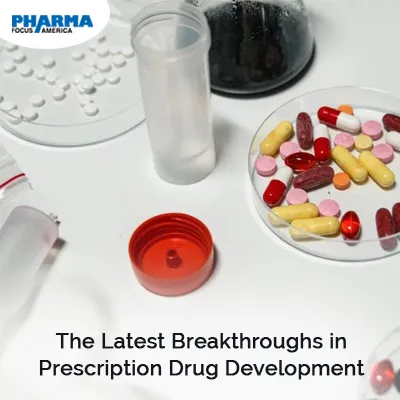
The Latest Breakthroughs in Prescription Drug Development
Kate Williamson, Editorial Team, Pharma Focus America
New classes of prescription drugs include but are not limited to the following; Personalized medicine; mRNA; gene therapy; Artificial intelligence in drug discovery; Biologics; Long acting formulations; Immunotherapy; Biosimilar. Those innovations are altering the medication, offering enhanced, secure and accessible treatments for different diseases for millions of patients worldwide.
Introduction:
The field of prescription drugs is very dynamic and ant always scientists and manufacturers are on the lookout for methods to alleviate diseases. Just as discoveries knowledge is giving millions of people hope for longer and a higher quality of life in addition to altering perceptions towards drugs. Here are certain details that you should know about some of the more modern features, which created such controversy.
1. Personalized Medicine: Tailoring Drugs to Individuals
The next big breakthrough is one of the most discussed topics in recent years it is the treatment of individuals not as the member of the group, but as the individual. While traditional treatment methods prescribe a solution that should suit anyone, personalized medicine deals with the patient’s genes. That is why, knowing what particular genes can affect the body’s reaction to specific medications, doctors can suggest treatments that will have fewer or no side effects at all. This is especially good for cancer; with certain mutations in tumor DNA now dictating which treatment work best in combating the disease and the likelihood of success.
2. mRNA Technology: Beyond COVID-19 Vaccines
In addition to vaccines, the mRNA jump shot used in the COVID-19 has set possibility for other applications in the medical field. Scientists are currently looking at how mRNA can be applied to numerous illness and diseases, including cancer and genetic diseases. mRNA vaccines operate by giving cells instructions for proteins that create an immune response and the same principle can be applied for personalized cancer vaccines and certain rare diseases. The principle of mRNA technology is not limited to vaccines only, and in the following years, the development of mRNA medicines can change many aspects of diseases treatment.

3. Gene Therapy: Fixing Problems at the Source
One other approach that has been deemed to have lots of potentials is gene therapy. It means making a change in the person’s genes for a particular disease or its prevention. For example, in the case of some inherited diseases, it possible to replace harmful genes with the healthy ones and eradicate the disease completely. More recently gene therapy has received attention from the popular press in that it is being used to cure diseases such as spinal muscular atrophy, a disease that is fatal in children. As it was mentioned above it is believed that the effectiveness of the genetic therapy rises with time, therefore, number of patients suffering from genetic diseases, who up to the recent past have been told that their conditions cannot be treated, will undergo the therapy.
4. Artificial Intelligence in Drug Discovery
However, particularly, as to the significance of deep learning, the importance is rising gradually in the process of seeking for the new medicine. Thus, employing AI in the study, researchers are able to process a large of data within a super short time as it would take human researchers. That accelerates the discovery, and allows scientists to find better future treatments faster than the other methods. AI can also forecast the type of effect that a particular compound will have on the body and therefore save a lot of time that could otherwise be used in the process of drug testing. This technology is already used to create new treatments for diseases like Alzheimer’s and diabetes and is set to expand as a forming industry.
5. Biologics: The Power of Natural Proteins
Biologics however are relatively recent in the market and are derived from living organisms. Unlike chemicals that make conventional drugs this type of treatment uses proteins, antibodies or even the whole cells to cure diseases. These drugs have been found to be very efficient when it comes to diseases that are auto- immune in nature and some kinds of cancer. That is why biologic therapy is sometimes capable of performing the operations that traditional chemistry is unable to do, and patients who have not responded to other treatments can use biologics instead.

6. Long-Acting Medications: Reducing Doses and Increasing Convenience
Another innovation which has been keenly developed is the long-acting medications.
These drugs are intended to be long acting and remain in the body for some time thereby requiring the patient to take them occasionally. For instance, there are new effective medications for HIV that must be taken once a month instead of a daily dose of pills. This not only makes life easy for the patient but also ensures that they complete their course as is expected of them especially in chronic diseases. In the case of the theme of the long-action preparations it means that they are discussed with regard to virtually all diseases that are known at present depending on the nature of the pathology it can be questioned with regard to forms of mental illnesses, certain forms of diabetes, etc.
7. Immunotherapy: Boosting the Body’s Natural Defenses
The other modern treatment method that is been discussed is the immunotherapy that is especially used to treat cancer. This therapy operates by means of improving efficiency of immune response against cancer cells. Certain types of immunotherapy include using agents that inhibit proteins on cancer cells which makes it easier for the immune system to destroy them. Others are increasing the rate of immune cells to be able to attack tumors effectively. It’s been realized that immunotherapy is helpful to cancer patients of the latest; however, the quest to make immunotherapy more accessible continues.
8. Biosimilars: Affordable Alternatives to Expensive Drugs
Biosimilars are thus the imitation bio- logical products that are similar to the brand-name biologic drugs but is more affordable. In many countries, the availability of more biologics means that the arrival of biosimilars is easing the cost burden for patients and the health service. Due to high costs of biologics, biosimilars are cheaper but have an equal efficiency as those of biologics. This is more so for patients with long-term conditions to ensure they have a steady supply of biologics they need for management of their health States.
Conclusion: A Promising Future for Prescription Drugs
Innovations in prescription drugs are now helping to treat a multitude of conditions that has had previous treatments that were much less effective. Molecular medicine and targets therapy, the concept of gene therapy, smart drugs discovery mechanisms, Biologic as well as advanced AI techniques in medical diagnosis, drug discovery and delivery systems are some of such innovations with the ability to enhance efficacy, reduce the adverse effects and increase the availability of the drugs. New studies show that researchers are not sparing efforts in providing even more innovation in future and such treatments give hope to millions of patients in the whole wide world.

Kate, Editorial Team at Pharma Focus America, leverages her extensive background in pharmaceutical communication to craft insightful and accessible content. With a passion for translating complex pharmaceutical concepts, Kate contributes to the team's mission of delivering up-to-date and impactful information to the global Pharmaceutical community.