
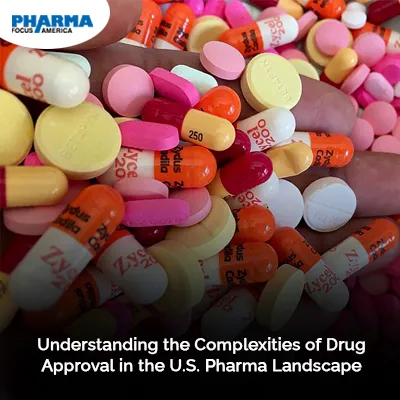
Understanding the Complexities of Drug Approval in the U.S. Pharma Landscape
Debi Jones, Editorial Team, Pharma Focus America
The stages of approval of the drugs in the United States involve the new drugs in check by the FDA to determine whether they are fit for consumption in humans as they are effective in tackling various diseases and conditions and the process is as follows; the preclinical testing, clinical trial in three stages and the post approval.
Introduction:
The drug approval process in United States is one of the most stringent and lengthy across the globe with the purpose of reminding that the newly approved drugs to be safe as well as effective for use. This process is regulated by the U. S Food and Drug administration usually taking several steps of testing, evaluation, and review. Although its aim is to protect the health of the citizens, it is fraught with a large number of processes and measures that can take a lot of time to be fulfilled, which is rather disadvantageous for the pharmaceutical firms.
Preclinical Research: Laying the Foundation
As a rule, a drug prospective subject to the experiment cannot be tested on people without preceding pre-clinicals. This stage involves conducting a series of experiments that include lab testing on animals in order to ascertain if the drug is capable of curing a certain disease as well as establishing the effects it will have on the body. Scientists seek for any severe adverse effects and also how the drug is metabolized within the body. Although the results obtained from preclinical studies do not always translate in different success in humans, they offer valuable information needed to justify a transition and going for human trials.
Clinical Trials: Phased Human Testing
Once any specific drug of interest is discovered to have some potential through these preclinical studies it becomes necessary for the pharmaceuticals involved to apply for an Investigational New Drug (IND) permit from the FDA. If approved, the drug can enter clinical trials, which are conducted in three phases:
- Phase I: The direct target population of this phase is the healthy volunteers ranging from 20-100 that will help to determine the safety, dosage as well as the side effects of the new drug in question.
- Phase II: Next the drug is tested in a comparatively large sample of people (100-300 people) and infected with the disease the drug is supposed to treat. Professionals aim at effectiveness and, second, at the issue of the safety that deserves the same attention.
- Phase III: In this phase, thousands of patients participate in order to ensure efficacy of the drug and control side-effects of the new medicine in comparison with the existing medication.
This stage is very important because it gives the large amount of data that will be used for the FDA review as earlier stated.
Clinical trial process is time consuming and expensive and takes years to conduct the trial for a given drug. It is important to point out the fact that during the clinical trial stage a small amount of drugs pass through FDA approval.
New Drug Application (NDA): Requesting FDA Approval
If the trials get positive results, the company marketing the new drug fills a New Drug Application (NDA) form to the FDA. That is why it is crucial to mention that the NDA should include all preclinical and clinical data about the drug as well as the detailed information about the drug production, its indication, and usage.
The FDA evaluates the NDA with the view of deciding whether drug is safe for use in the manner proposed and whether its use is in the best interest of the society or not.
The overall review process can take between a few months to up to a year and the FDA may also ask for more information or trials. In the case of drugs that address a major clinical need or provide notable enhancements in treatment as compared to previously approved drugs, the FDA offers additional means to fasten this process, including priority review or certain other expedited programs.
Post-Approval Monitoring: Ensuring Long-Term Safety
Not just in stages of clinical trial but even after a drug has made its way to shelves and has been bought by people, the FDA continues to keep tabs on it. The post-marketing surveillance is conducted in the fourth phase of a drug’s clinical trial, referred to as Phase IV. It is required that all pharmaceutical companies report any and all side effects and the FDA can make changes in the labeling and in some cases, withdraw the drug from the market.
Another benefit of post-approval monitoring it aids in the identification of other risks or side effects which may not have been seen during the clinical trials stage.
Regulatory Challenges and Market Access
It remains a daunting task when going through the FDA approval process given its stringent policies, long time span. A new drug is not discovered and approved so easily it may take 10 years and billions of dollar to get through the process. This gives rise to challenges particularly notable in the small firms which lacks large capital base to deal with.
Secondly, even after a drug is approved for use performance of other activities including pricing of the drug, insurance reimbursement for patients, and the competition that pharma companies get into play.
It is not a secret that expensive product development translates to expensive products, which creates a never-ending discussion about the cost of medical care in the United States.
Innovative Pathways and Future Trends
Since its formation, the FDA has come up with new ways of approving some drugs in order to shorten the time taken. Priority review and lot of them are fast track, breakthrough therapy designation, and accelerated approval, enable drugs that fall under serious or life threatening conditions to be approved with lesser evidence. These programs assist in providing treatments to patients much earlier than other forms of treatments such as chemotherapy, genetics and other related diseases.
Other therapeutic categories are also experiencing changes including precision medicine, biologics, and gene therapies. However, these new treatment modalities have their own regulation concerns that makes the FDA to continually adapt to techniques of approving them.
Conclusion
Pharmaceutical release in the U. S is an elaborate system designed to ensure that only safe, and quality medicinal products released to the market. Even though this process is thorough, it takes lots of time and is expensive it fulfills its function of preserving public health. The FDA has made a commitment to develop new pathways and regulatory changes to accept speed alongside safer alternatives to deliver life-saving treatments to patients, and at the same time regulate the healthcare standards rigorously. Knowledge of this complex process is essential to getting the perspective of the development of the pharmaceuticals industry and the provision of new treatments to the society.

Debi Jones, Editorial Team at Pharma Focus America, leverages her extensive background in pharmaceutical communication to craft insightful and accessible content. With a passion for translating complex pharmaceutical concepts, Debi contributes to the team's mission of delivering up-to-date and impactful information to the global Pharmaceutical community.